Earth could see more years of extreme heat, top weather experts warn
Global News
There's an 80 per cent chance the world will break another annual temperature record in the next five years, top weather forecasters say.
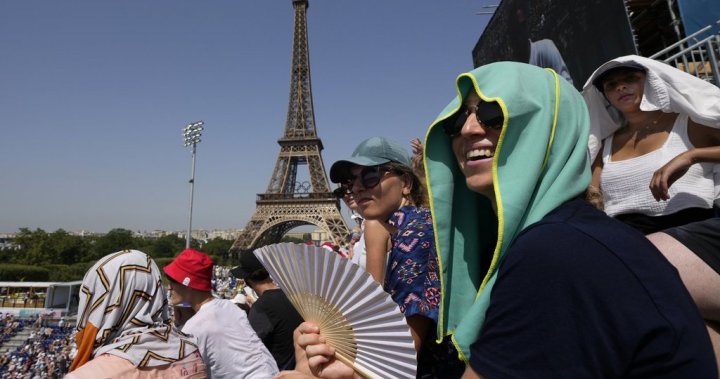
Get ready for several years of even more record-breaking heat that pushes Earth to more deadly, fiery and uncomfortable extremes, two of the world’s top weather agencies forecast.
There’s an 80 per cent chance the world will break another annual temperature record in the next five years, and it’s even more probable that the world will again exceed the international temperature threshold set 10 years ago, according to a five-year forecast released Wednesday by the World Meteorological Organization and the U.K. Meteorological Office.
“Higher global mean temperatures may sound abstract, but it translates in real life to a higher chance of extreme weather: stronger hurricanes, stronger precipitation, droughts,” said Cornell University climate scientist Natalie Mahowald, who wasn’t part of the calculations but said they made sense. “So higher global mean temperatures translates to more lives lost.”
With every tenth of a degree the world warms from human-caused climate change “we will experience higher frequency and more extreme events (particularly heat waves but also droughts, floods, fires and human-reinforced hurricanes/typhoons),” emailed Johan Rockstrom, director of the Potsdam Institute for Climate Impact Research in Germany. He was not part of the research.
And for the first time there’s a chance — albeit slight — that before the end of the decade, the world’s annual temperature will shoot past the Paris climate accord goal of limiting warming to 1.5C (2.7F) and hit a more alarming 2C (3.6F) of heating since the mid-1800s, the two agencies said.
There’s an 86 per cent chance that one of the next five years will pass 1.5 degrees and a 70% chance that the five years as a whole will average more than that global milestone, they figured.
The projections come from more than 200 forecasts using computer simulations run by 10 global centers of scientists.
Ten years ago, the same teams figured there was a similar remote chance — about 1% — that one of the upcoming years would exceed that critical 1.5 degree threshold and then it happened last year. This year, a two-degree Celsius above pre-industrial year enters the equation in a similar manner, something UK Met Office longer term predictions chief Adam Scaife and science scientist Leon Hermanson called “shocking.”


Ukrainian President Volodymyr Zelenskyy blasted his European allies Thursday for what he portrayed as the continent’s slow, fragmented and inadequate response to Russia’s invasion nearly four years ago and its continued international aggression. Addressing the World Economic Forum in Davos, Switzerland, Zelenskyy listed a litany of grievances and criticisms of Europe that he said have left Ukraine at...

U.S.-based Estée Lauder is the flagship brand and parent company of Clinique, MAC Cosmetics, Bobbi Brown, Jo Malone London, Aveda and Tom Ford among dozens of others.

Their feud took off after the U.S. billionaire called O'Leary an 'utter idiot' for brushing off Starlink on Ryanair planes, as well as an offer to purchase the budget airline.

New research out of Canada is pitching ideas for how to make the Winter Olympics and Paralympics more resilient to climate change.

Tetsuya Yamagami, 45, earlier admitted to killing Abe in July 2022 as the former prime minister was giving a campaign speech in the western city of Nara.

A yearlong push by the Trump administration to stop the fighting hasn’t yielded any breakthrough, despite the American president issuing a series of deadlines.

Universally known by his first name, Valentino was adored by generations of royals, first ladies and movie stars, from Jackie Kennedy Onassis to Julia Roberts.

Prince Harry tried to explain what it’s like living under what he called '24-hour surveillance' before the judge intervened and told him not to argue with the defence lawyer.

U.S. President Donald Trump's speech comes a day after world leaders and allies of the U.S. repudiated his expansionist threats to annex Greenland.

Trump has repeatedly refused to rule out military action to take over Greenland, a move that polls suggest a large majority of Americans do not support.

Prime Minister Mark Carney gave a forceful speech in Davos, Switzerland, on the 'new world order' and how middle powers like Canada can benefit by working together.

Trump said he would impose a 10 per cent import tax starting in February on goods from eight European nations because of their opposition to American control of Greenland.

Approximately 10,000 Danes marched outside Copenhagen City Hall in defiance of the U.S. president's pursuit of Greenland.