Drones continue to buzz over US bases. The military isn’t sure why or how to stop them
CNN
A series of drone sightings over military bases across the country have renewed concerns that the US doesn’t have clear government-wide policy for how to deal with unauthorized incursions that could potentially pose a national security threat.
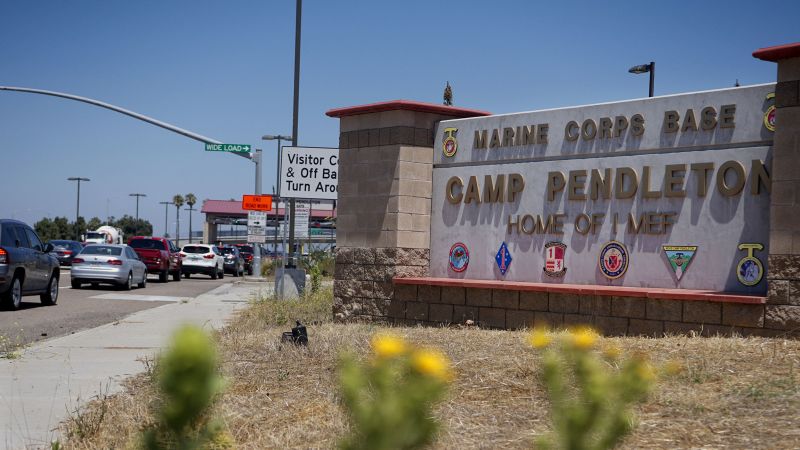
A series of drone sightings over military bases across the country has renewed concerns that the US doesn’t have clear government-wide policy for how to deal with unauthorized incursions that could potentially pose a national security threat. “We’re one year past Langley drone incursions and almost two years past the PRC spy balloon. Why don’t we have a single [point of contact] who is responsible for coordination across all organizations in the government to address this?” the recently retired head of US Northern Command and NORAD, Gen. Glen VanHerck, told CNN. “Instead, everybody’s pointing their fingers at each other saying it’s not our responsibility.” Indeed, there have been multiple instances of drone incursions over military bases since mysterious drone swarms were spotted around Joint Base Langley-Eustis and other sensitive military sites in Virginia last year, and since a Chinese spy balloon transited the continental US in 2023. Over a period of six days earlier this month, there were six instances of unmanned aerial systems, or drones, entering the airspace of the Marine Corps base Camp Pendleton in California, a spokesperson confirmed to CNN, adding that they posed “no threat to installation operations and no impact to air and ground operations.” There have also been incidents in the last month at Wright-Patterson Air Force Base, Ohio; Picatinny Arsenal, New Jersey; Naval Weapons Station Earle, New Jersey; and Vandenberg Space Force Base, California. A Chinese citizen, who is a lawful permanent resident of the US, was recently arrested in connection to the California incident. The drone incidents are “a problem that has been brewing for over a decade and we have basically failed to address it,” said retired Air Force Brig. Gen. Rob Spalding, who previously served as the chief China strategist for the Joint Chiefs of Staff and senior director for strategic planning on the National Security Council.


A transparency law passed by Congress has forced the release of more Epstein files than ever before, but some lawmakers and victims are exploring ways to push the Justice Department to disclose even more information from the voluminous trove that’s being withheld.

Former US National Counterterrorism Center Director Joe Kent sat Wednesday for an extensive interview with former Fox News host and right-wing podcaster Tucker Carlson, his first public comments since he resigned from his post, citing concerns about the war with Iran.

When Attorney General Pam Bondi and Deputy Attorney General Todd Blanche arrived on Capitol Hill Wednesday afternoon, they hoped to boost members’ confidence on their handling of the Jeffrey Epstein investigation. Within half an hour, Democratic lawmakers had walked out.

Cuba is going dark under US pressure. How the crisis unfolded and why its troubles are far from over
Almost three months after the US effectively imposed an oil blockade on Cuba that worsened its energy crunch, nearly every aspect of Cuban society has been feeling the strain.

The Department of Homeland Security has been ensnared by a partial government shutdown as Congress did not act to fund the agency by the end of Friday. But nearly all DHS workers will remain on the job — even if many won’t get paid until the lapse ends — and the public probably won’t notice much of a change.

The USS Gerald R. Ford aircraft carrier is moving away from operations tied to the Iran war and sailing to the US Navy’s base in Crete for repairs after a fire broke out in the ship’s laundry area last week, a US official said.

An American college student visiting friends for spring break has gone missing in Spain, his family said, adding police have his phone.

A typically friendly setting for one of their own turned tense on Capitol Hill Wednesday with senators grilling Markwayne Mullin for roughly three hours as he vies to become President Donald Trump’s next Department of Homeland Security chief.

Top Trump administration officials testified publicly Wednesday for the first time since the launch of the Iran war three weeks ago.

The White House is temporarily lifting key limits on the shipping of oil, gas and other commodities throughout the US, in its latest effort to counter rising energy prices sparked by its war with Iran.

Any attempt by the United States to take control of Cuba would be met with “impregnable resistance,” Cuban President Miguel Díaz-Canel said Tuesday, as power returned to some parts of the island following a nationwide grid collapse.

Deputy Attorney General Todd Blanche defended the Justice Department’s handling of the Jeffrey Epstein files and asserted it does not have new evidence to prosecute anyone for crimes related to the convicted sex offender, in an interview released Tuesday.

TSA workers face reality of working without pay as passengers unaware of the shutdown see long lines
More than a third of the security screeners at Hartsfield-Jackson Atlanta International Airport didn’t show up to work Tuesday, the airport’s general manager said, causing passengers to have to wait in line for up to two hours.