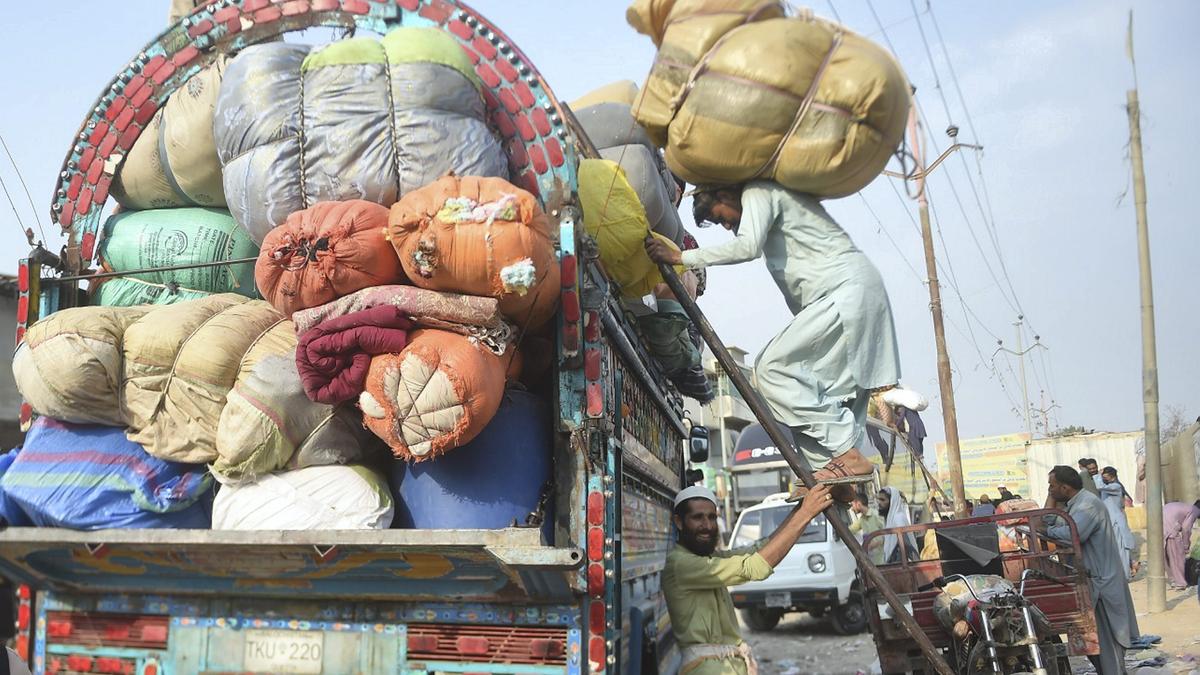
Driven out of Pakistan, Afghans to lose their homes, and businesses yet again
The Hindu
A visit to Al-Asif Square and these settlements gives an impression of being in mini Kabul with Afghan people milling around many of their shops and different restaurants offering Afghan delicacies.
Haji Mubarak Shinwari had come to Pakistan in 1982 with his five sons and two brothers. He worked assiduously to build a healthy network of businesses including cloth, fabrics, transport, and giving loans and now owns numerous properties at Al-Asif Square on the outskirts of Karachi.
“We have lived here without documents for all these years and set up our businesses with the help of locals,” Mr. Shinwari said.
He is not alone.
Barely a few kilometres north of downtown Karachi is the Al-Asif Square, which is known for its huge Afghan population. Close by are two big settlements of Afghan labourers and small business owners.
A visit to Al-Asif Square and these settlements gives an impression of being in mini Kabul with Afghan people milling around many of their shops and different restaurants offering Afghan delicacies.
Tens and thousands of Afghans, mainly those who came to Pakistan as refugees since the Soviet invasion in 1978, have done business and work in all major cities of Pakistan for decades with Karachi in Sindh province and Quetta in the Balochistan province being their main centres.
Sadiq Ullah Kakar, legal adviser for the Afghan consulate in Karachi, explained that the majority of the Afghan refugees in Pakistan belong to the lower middle class. “So, they do not possess any qualifications or even a tertiary level education,” he said.


Israel plans to occupy southern Lebanon amid escalating violence, targeting Hezbollah and causing widespread destruction and civilian casualties.

Trump reveals Secretary Hegseth was pivotal in discussing military action against Iran amid escalating tensions in the Middle East.

Iran arrests 466 individuals for online activities threatening national security amid ongoing tensions with Israel and the U.S.

China protests to Japan over a break-in at its Tokyo embassy, demanding a thorough investigation and accountability.

After securing a historic mandate in Nepal’s polls, Balendra Shah and the RSP face the task of navigating the West Asia conflict and managing ties with India, China and the U.S.

A magnitude 7.6 earthquake struck near Tonga, prompting evacuations but no tsunami warnings or immediate damage reports.

Iran launches missile attacks on Israel, rejecting Trump's negotiation claims as 'fake news,' escalating regional tensions and market volatility.

A large explosion at Valero refinery in Port Arthur, Texas, prompts shelter-in-place order for nearby residents, no injuries reported.

Kim Jong Un vows to solidify North Korea's nuclear status and labels South Korea as its "most hostile" adversary.

U.S.-Israel war on Iran LIVE: Follow The Hindu for updates on the West Asia conflict on March 24, 2026

Trump claims “very good” talks with Iran, despite Tehran’s denial, as U.S. negotiators plan potential meetings in Pakistan.

Netanyahu discusses U.S.-Israeli military gains with Trump, emphasizing commitment to protect Israel's interests amid ongoing conflicts.

Pakistan reaffirms commitment to combat terrorism as Afghan ceasefire approaches end amid rising tensions and recent casualties.