Domestic violence persists as nuclear families ruin resolution scope, say conciliators
The Hindu
Persistent domestic violence in Coimbatore despite decreasing reported cases, highlighting the need for awareness, legal aid, and support systems.
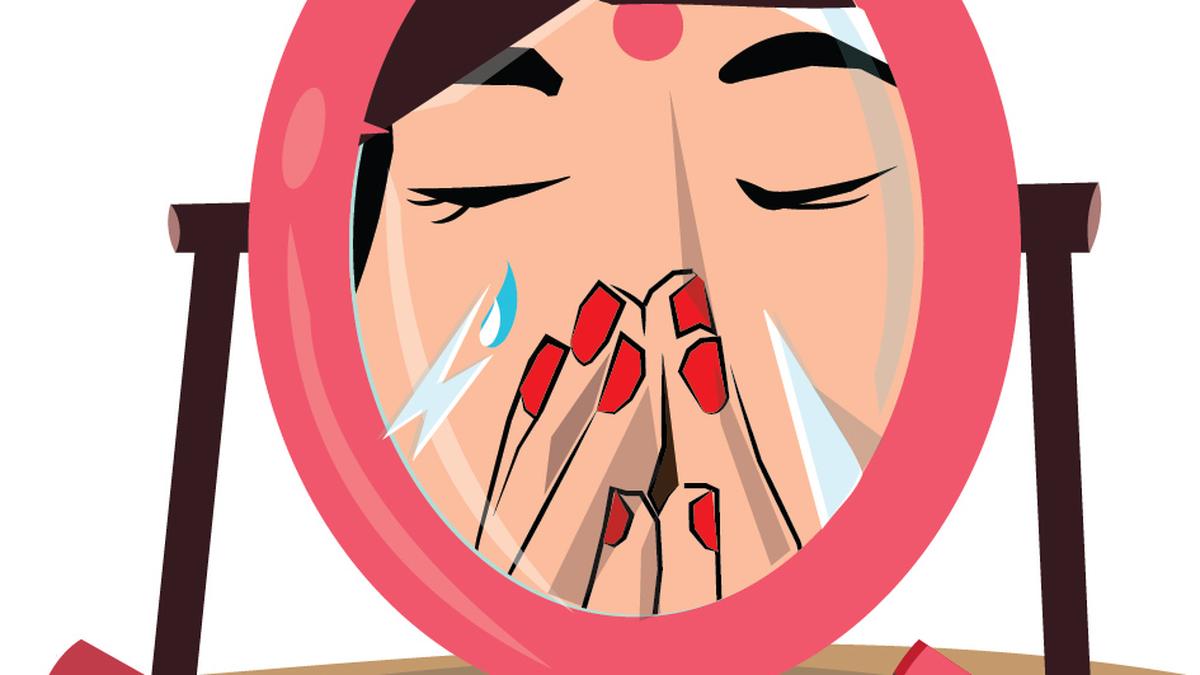
Persistence of domestic violence remains a pressing issue, even as discussions on gender equality and safety take centre stage in observance of Women’s Day, going by the crime data on this aspect pertaining to Coimbatore district made available by the Social Welfare Department.
In 2022, the District Social Welfare Department had handled 432 cases of domestic violence. Though the complaints came down to 402 cases in 2023 and 370 in 2024, officials, all the same, point out that many cases go unreported due to fear, social stigma, and lack of awareness.
A senior official from the department stated that more cases were reported in urban areas, largely due to greater awareness of legal aid options. Women in these areas usually seek help through helplines such as 181 or by filing petitions. “We try to resolve cases through the One Stop Centre, where senior counsellors provide guidance. If a resolution is not possible, cases are forwarded to the special court dealing with domestic violence cases,” the official said.
Apart from the Social Welfare Department, domestic violence cases are also handled at All-Women Police Stations (AWPS) in the city. A senior police department official said over 50% of the cases reported at AWPS were resolved through counselling sessions. Cases involving physical harassment or prolonged verbal abuse were forwarded to the court, a woman Inspector said.
Advocate M. Vennila, who takes up domestic violence cases, pointed out that several factors contributed to the issue, including lack of understanding and morality, alcohol consumption, and the crumbling of joint family system. She explained that misunderstandings and lack of mutual respect often escalated into conflicts and violence, while alcohol consumption further worsened the situation by leading to aggression and loss of self-control.
Additionally, the shift away from joint families had removed a traditional support system where elders acted as mediators during disputes. In nuclear families, conflicts often remained unresolved, leaving women more vulnerable to domestic violence without immediate familial intervention, she said.
Ms. Vennila noted that while legal frameworks existed to protect women, delays in case resolution often made the process ineffective.


Bengaluru commuters demand platform screen doors for safety, but high costs and engineering challenges hinder implementation on existing metro routes.

Madras HC to hear appeals on December 12 regarding the lighting of Mahadeepam at Thirupparankundram temple.

N. Ram warns that hate politics threatens India’s democracy, urging the South to remain a bastion against these forces.

Nanjil Sampath joins Vijay's Tamilaga Vettri Kazhagam, revitalizing his political career after six years away from party politics.

D.K. Shivakumar announces that five Blue Line stations will open once construction is completed, enhancing Bengaluru's airport connectivity.

Russia begins fuel shipments for Kudankulam's third reactor, enhancing efficiency and extending operational cycles for the nuclear power project.

Supreme Court urges governments to simplify administration, warning that excessive rules may lead to judicial review and citizen burdens.

Trinamool MP Shatabdi Roy's remarks on Bangla-speaking deportations spark protests in Lok Sabha, igniting a heated political debate.

Sunali Khatun returns to India with her son after six months in Bangladesh, following Supreme Court intervention.

Warangal will be developed on the lines of Hyderabad, says Revanth

Three-tier security measures and traffic restrictions are in place for the India-South Africa ODI match in Vizag.

A seven-year-old girl dies from severe dengue shock syndrome in Bengaluru, highlighting the challenges faced by migrant families in healthcare access.

DGP reviews security arrangements for Global Summit