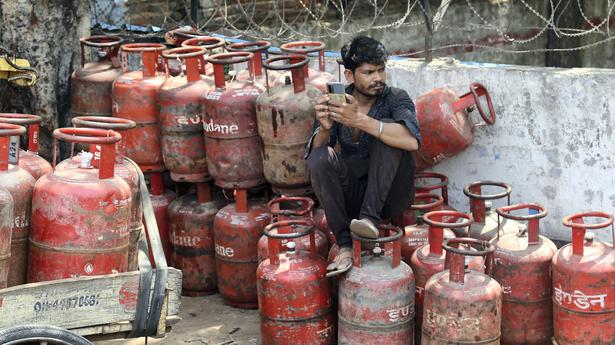
Domestic LPG cylinder price breaches ₹1,000 mark in several cities
The Hindu
The price of a cylinder containing 14.2 kg of liquefied petroleum gas in Chennai now stands at ₹1,015.50
Domestic cooking gas cylinder prices crossed the ₹1,000 mark on May 7 with oil marketing companies (OMCs) revising the prices by ₹50 per cylinder.
The price of a cylinder containing 14.2 kg of liquefied petroleum gas in Chennai now stands at ₹1,015.50. It was previously ₹965.50 in the city. In Coimbatore, the price will now be ₹1,029 per bottle.
Similarly, prices of 5 kg cylinders that are used by roadside vendors too have gone up from ₹355 per cylinder to ₹373 per cylinder.
The OMCs have, however, reduced commercial LPG prices by ₹8 per 19 kg bottle.
Padma Santhanam, a resident of West Mambalam, said at a time when prices of all goods were skyrocketing, this comes as a huge blow to household budgets. “I remember that sometime in 2014, prices had gone up and crossed ₹1,000 but the then Central Government had stepped in with a subsidy to help consumers since this is an essential item. This government, however, has done away with subsidy and we have been buying LPG at the market rate for over two years now,” she said.
Consumer activist T. Sadagopan who called the hike extremely unfair said the DMK had promised a subsidy of ₹100 per cylinder pre-elections. “It’s been exactly a year since they came to power in the State. We are yet to see this promise being kept,” he pointed out. He also said that the pricing of LPG was not transparent. “Nobody knows how much it costs the government. At least in the case of petrol and diesel, some information comes in from time to time,” Mr. Sadagopan added.


The government plans to amend the FCRA, introducing new regulations for NGO asset management and accountability for key functionaries.

The draft policy for “Responsible Digital Use Among Students”, released on Monday by the Department of Health and Family Welfare, has recommended that parents set structured routines with clear screen-time rules and prioritise privacy, safety, and open conversation with children on digital well-being.

Police Observer Sushant Kumar Saxena conducts surprise inspection at Shencottai police station, reviewing warrants and security arrangements ahead of elections.

Andhra Pradesh government to launch key projects in April, focusing on industrial growth and infrastructure development, says Nara Lokesh.

Lok Sabha refers the Corporate Laws (Amendment) Bill to a JPC amid opposition concerns over CSR provisions dilution.

SHG members in Kanniyakumari use snakes and ladders to raise election awareness and boost voter turnout.

Government accelerates consultations for early implementation of the Women’s Reservation Act to ensure women’s representation in 2029 elections.

CM A. Revanth Reddy distributes ₹1 crore insurance cheques to families of deceased Electricity department employees, enhancing financial security for workers.

The Bengaluru Traffic Police (BTP) registered 634 cases of drunk driving during a week-long special enforcement drive conducted across the city between March 16 and March 22.

GHMC intensifies action against property tax defaulters, seizing properties and offering a One Time Settlement scheme for payments.

CCB arrests three drug peddlers in Mangaluru, seizing ₹2.5 lakh worth of MDMA and other valuables.

TVK's 28 candidates in Puducherry include former BJP MLAs, a sitting Independent, and a retired police IG.

BRS submits notice on private member bill to Speaker