DOGE layoffs may have compromised the accuracy of government data
CNN
In the early days of President Donald Trump’s second term in office, federal websites went dark and data disappeared as the newly formed Department of Government Efficiency set its sights on streamlining the government.
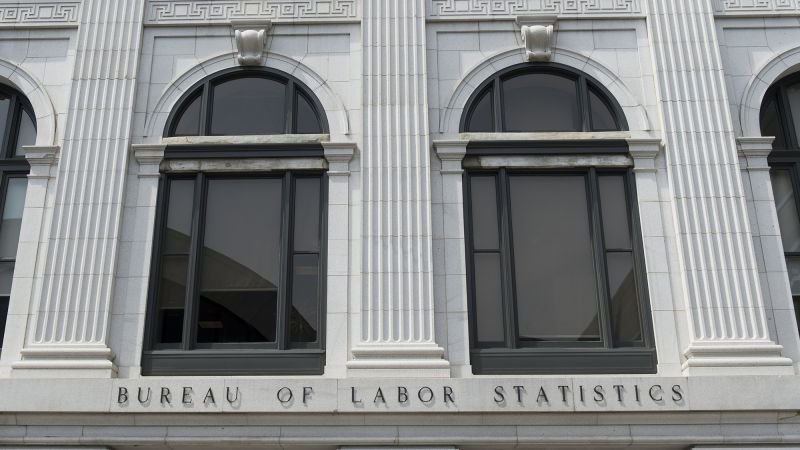
The Consumer Price Index is more than just the most widely used inflation gauge and a measurement of Americans’ purchasing power. Its robust data plays a key role in the US economy’s trajectory as well as monthly mortgage payments, Social Security checks, financial aid packages, business contracts, pay negotiations and curiosity salves for those who wonder what Kevin McCallister’s $19.83 grocery bill in “Home Alone” might cost today. However, this gold standard piece of economic data has become a little less precise recently: The Bureau of Labor Statistics posted a notice on Wednesday stating that it stopped collecting data in three not-so-small cities (Lincoln, Nebraska; Buffalo, New York; and Provo, Utah) and increased “imputations” for certain items (a statistical technique that, when boiled down to very rough terms, essentially means more educated guesses). The BLS notice states that the collection reductions “may increase the volatility of subnational or item-specific indexes” and are expected to have “minimal impact” on the overall index. The Trump administration’s drastic cutbacks of government spending and the federal workforce have economists, researchers and statisticians sounding the alarm that the reliability and accuracy of economic data could become a casualty to those efforts. “The BLS’s need to infer more data points due to personnel and funding constraints is deeply concerning,” Gregory Daco, EY-Parthenon’s chief economist, told CNN. “It raises legitimate questions about the reliability and timeliness of critical economic indicators.”


Gerald Rodriguez, the general manager of an NPR affiliate in rural Colorado, expected federal funding for public media to shrink. He didn’t expect it to disappear almost overnight.

The much-touted new tax breaks for tips, overtime, seniors and car loan interest have a lot of income tax filers expecting a big bump in their refunds this year – or a big cut in their tax bill.

Looking out his shop window, across the street, just to the right, Paloma Clothing co-owner Mike Roach sees one of Portland, Oregon’s, most expensive gas stations.

Oil and liquefied natural gas tankers moving through the Strait of Hormuz carry around 20% of the world’s supply. But for countries on the Persian Gulf, the waterway is more than just an energy route – it’s a lifeline for more than 100 million people.

A California jury has largely sided with Twitter shareholders who accused billionaire Elon Musk of defrauding them by intentionally driving down the social media company’s stock ahead of his $44 billion acquisition in 2022.

The war with Iran is disrupting global oil flows, damaging energy infrastructure and raising fears of prolonged conflict. But gold, usually considered a safe haven during periods of economic uncertainty, has slumped.

US stocks and bonds fell, oil prices rose and gold had its worst week in four decades as the Iran war continues to ripple through financial markets.

The White House on Friday released its long-awaited national artificial intelligence legislative framework, a move to prevent states from enacting their own laws and enforce the Trump administration’s light-touch approach to AI regulation.

“Today is a difficult day,” CBS executives wrote to staff, explaining the cuts as a tough but necessary reallocation of newsroom resources.

President Donald Trump has repeatedly promised that Americans will get larger tax refunds this year thanks to his “big, beautiful bill.”

President Donald Trump has repeatedly promised that Americans will get larger tax refunds this year thanks to his “big, beautiful bill.”

Oil prices edged lower on Friday after a tumultuous day that saw the international benchmark surge above $119 a barrel as the Middle East conflict deepened energy supply fears.

The war in Iran has delivered what economists call a “black swan” event — an unforeseen shock so destructive, no one is immune to it.