Does India have laws against invasive species from ballast water? Premium
The Hindu
Tamil Nadu seeks funds from Kamarajar Port to remove invasive mussels, highlighting the impact of ballast water on marine ecosystems
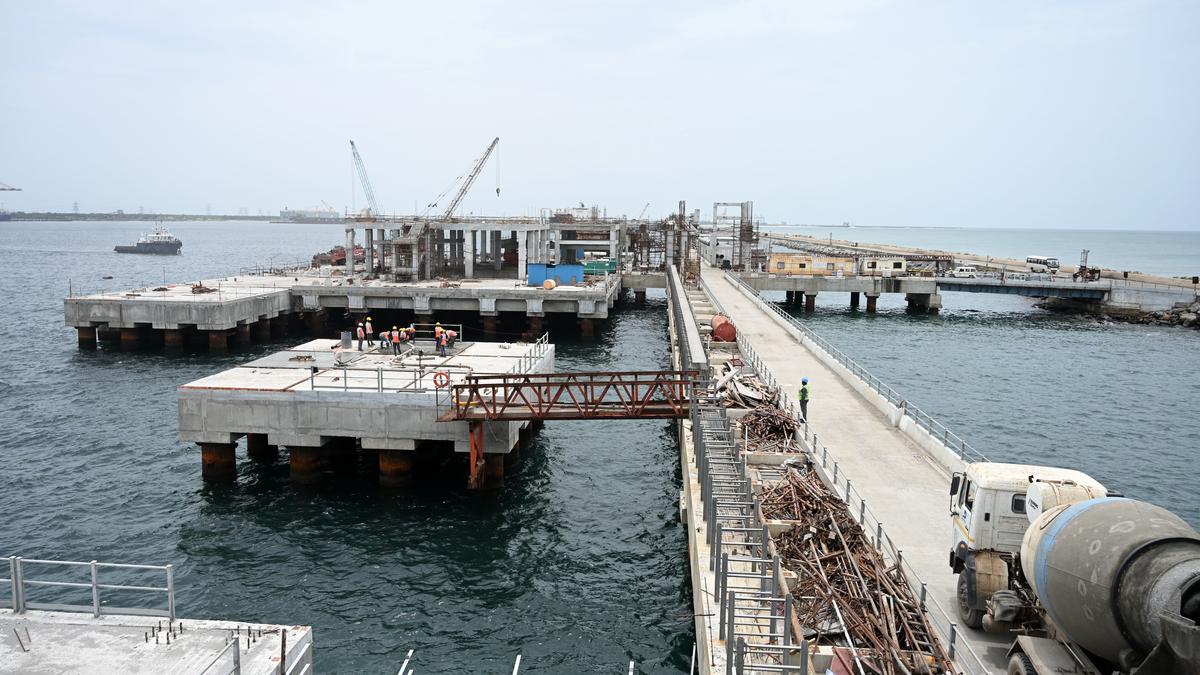
The story so far: The Tamil Nadu Water Resources Department (WRD) has informed the National Green Tribunal that it has sought ₹160 crore from the Kamarajar Port in Ennore, Tamil Nadu, to facilitate the removing of invasive mussels on the coast near the port in connection with an ongoing case on the proliferation of Mytella strigata, or charru mussel that harms marine ecosystems and hinders fisher boat movements, affecting their livelihood. The WRD has charged that Kamarajar Port is the main reason for the spread of the invasive species by not regulating the ballast water from ships.
Also Read: Invasive mussel species from Central and South America wiping out native variant in Kerala
Ships need to have a certain level of immersion into the sea to be stable. When a ship discharges cargo, it rises up in the water and therefore, to keep a minimum level of immersion, ship staff take in sea water called ballast water inside tanks in the ship. And when the ship loads cargo, leading to more immersion, the ballast water is pumped out of the ship. Until recently, there was no bar on taking in and pumping out of ballast water at ports, in the ocean, along the coast and so on. Since ballast water carries invasive species into other countries that destroy ecosystems, global shipping has sought to regulate ballast water discharge.
In India, scientists have recorded nearly 30 invasive species coming from ship ballast water. Among the most harmful in recent times is the charru mussel, Mytella Rigata, says Biju Kumar, professor and head of the department of aquatic biology and fisheries at the University of Kerala. In the Pulicat lake in Tamil Nadu, as in Ashtamudi lake in Kerala, this mussel has replaced almost all other species, he says. Its survival rate and egg production is very high. Though of marine origin, it can survive even in fresh water, he adds.
The Ballast Water Management (BWM) Convention of the International Maritime Organization (IMO) came into force in 2017 to help prevent the spread of potentially harmful aquatic organisms and pathogens in ships’ ballast water. From September 8, 2017, ships must manage their ballast water so that aquatic organisms and pathogens are removed or rendered harmless before the ballast water is released in a new location.
Recently constructed ships with functioning ballast water management systems continuously take a small portion of the ballast water they had taken in after discharge of cargo and dose it with chemicals so that all the water is rendered free of any biological organism before the water is pumped out during the loading of cargo. Ships built before the BWM convention that don’t have these systems are required to exchange the ballast water they took in a port with “neutral” water from the middle of the oceans enroute to the loading port.
Among the countries most serious about preventing ship ballast water damaging their marine ecosystems are Australia and New Zealand. Australia, as a major supplier of coal and iron and other raw materials, sees much ballast water pumping out in ports. Australia is home to ecologically sensitive areas such as the Great Barrier Reef where such water can cause immense harm. Ships calling on Australian ports are often subject to rigorous checks including of ballast water management systems.


Palla urges NDA leaders to unite for grassroots outreach, enhancing public trust through balanced welfare and development initiatives.

Horses shone at Auroville's 2026 event, showcasing equestrian talent through dressage, derby, and show jumping competitions.

Telangana Governor Shiv Pratap Shukla attends Bihar Foundation Day celebrations in Hyderabad, honoring Bihar's historical and cultural contributions.

Samsung workers protest for the reinstatement of 27 suspended employees, citing unfulfilled promises from the Labour Minister.

The Vice-Chancellor of Rajiv Gandhi University of Health Sciences (RGUHS) B. C. Bhagavan said on Sunday that the university will soon open a research centre on Yoga and Naturopathy on 60-acre land in Bengaluru.

UT Matters: Construction of Uppar drain road overbridge in Puducherry to be completed in four months, amid traffic regulations.

Union Minister Dharmendra Pradhan highlights Bharat Innovates' aim to elevate Indian deep-tech startups to the global stage.

In an exclusive interview, DMK MLA Ezhilan discusses Tamil Nadu's 2026 elections, party structure, and local governance challenges.

Minister Satish Jarkiholi asserts confidence in retaining Davangere and Bagalkot seats in upcoming bypolls amid addressing internal discontent.

Sunil Ambekar of RSS emphasizes national unity, defending road prayer restrictions and promoting awareness of shared ancestry in India.

Opposition MPs and activists voice strong concerns against proposed amendments to the Transgender Persons Act at a Delhi hearing.

Four Assam police commandos injured in an extremist attack during a gunfight in Tinsukia district, officials report.

Campaigning intensifies in Ernakulam district as candidates engage voters ahead of the crucial Assembly polls.