Doctors’ agitation highlights India’s need for universal healthcare | Analysis
The Hindu
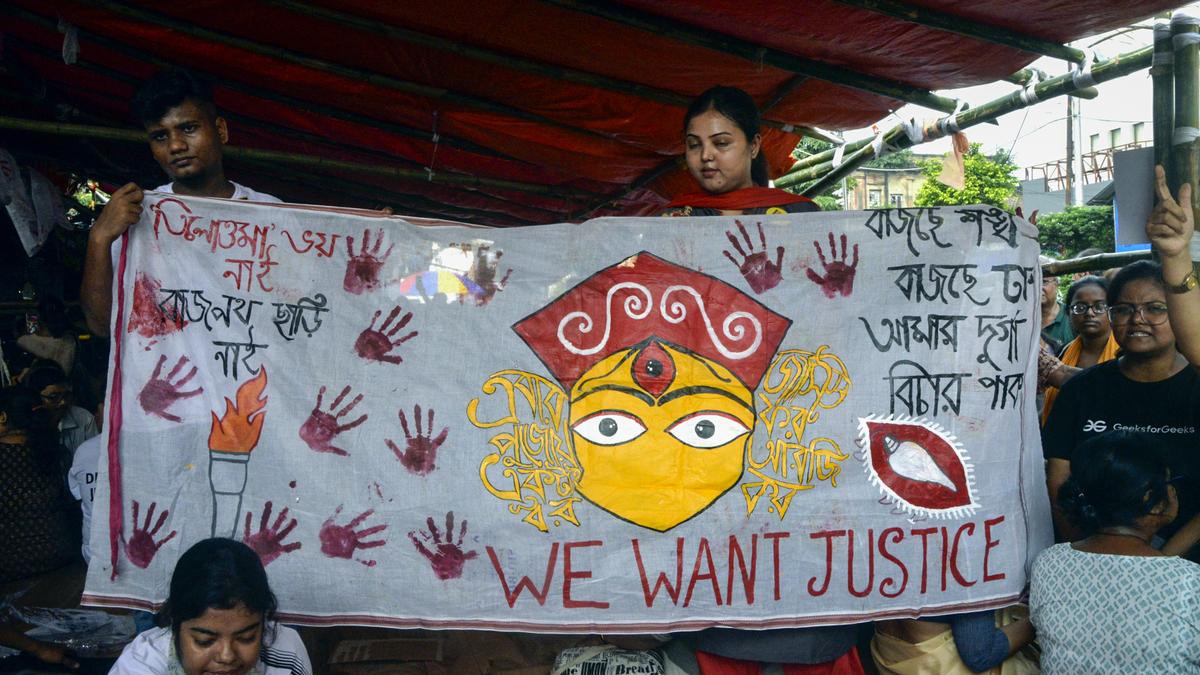
Nationwide protests sparked by the rape and murder of a doctor in Kolkata highlight systemic issues in India's healthcare sector.
The rape and murder of the doctor at Kolkata’s R.G. Kar Medical College triggered nationwide protests. At present, junior doctors in Kolkata have been on hunger strike for nine days and their peers in other parts of the state have expressed support with symbolic strikes of their own. Three doctors on hunger strike have already had to be hospitalised after their conditions deteriorated. The State government has thus far punished many police and administrative officials.
Even through breaks in their agitation, the health workers have maintained that their underlying issues are far from resolved. Their protest has sought among other things a complete overhaul of the healthcare system. They have reported working 36-hour shifts with meagre allowances, no proper rest rooms or toilets, and being left vulnerable to violence in the workplace.
These working conditions for health workers are not restricted to West Bengal. A report of the Indian Medical Association in 2018 said 75% of doctors in India have at some point been exposed to harassment or physical violence inside health centres or hospitals, largely due to lack of infrastructure, medicines, long working hours, and excessive political interference. Yet successive governments, both at the Centre and in the States, have swept these pressing issues under the rug.
India’s declared expenditure on healthcare is only 2% of its GDP, compared to the 5-10% in China and Brazil. The success story of Cuba’s healthcare system is rooted in its spending 14% of its GP on health. In India, continued state-led apathy towards favourable government policies, plus long-standing low-quality healthcare infrastructure, has allowed the private sectors to flourish at the public sector’s expense. From 8% in 1950, the private sector captured nearly 70% of India’s total healthcare market in 2024.
According to the National Sample Survey, the cost of treatment in private hospitals is seven-times that in government hospitals, yet only 14% of the rural and 19% of the urban populations have health insurance to help cover the resulting costs.
The consequences have been disastrous. Even as India’s public sector per-capita expenditure on healthcare has steadily declined, out-of-pocket expenses for individuals have soared. According to official data, of every 100 rupees an individual spends on healthcare in India, they spend Rs 52 from their savings, while the Central and the relevant State governments together contribute Rs 35. To compare, Brazilian and Cuban citizens spend Rs 22 and Rs 8, respectively, out of their pockets.
A study by IIT Mandi published in December 2023 reported that much-touted government health schemes — including the Centre’s Ayushman Bharat Pradhan Mantri Jan Arogya Yojana and West Bengal’s ‘Swasthya Sathi’ — mostly cover treatment costs for inpatient admissions but provide almost no coverage for outpatient services, whereas the latter accounts for up to 80% of the total healthcare expenses in India.


Community Health Officers in Vijayawada protest for reduced workload and continued incentives amid growing dissatisfaction over salary changes.

Telangana faces 13,929 healthcare vacancies, primarily in doctors and nurses, as recruitment efforts aim to address the shortage.

For most patients with TB who are severely underweight, nutritional support is an essential and not optional part of treatment

Family of custodial death victims demands harsh punishment for nine convicted policemen to prevent future abuses of power.

Rajinikanth refutes TVK leader's claims about DMK threats preventing his political entry, expressing gratitude to supportive political figures.

CM announces Cabinet Sub-Committee on Musi rejuvenation; rehabilitation for all displaced

Ramanathapuram identifies 145 polling stations as sensitive, ensuring security with paramilitary forces ahead of assembly elections, says DEO.

BJP Puducherry president V. P Ramalingam files nomination for Raj Bhavan, joined by Union Minister Mandaviya and Khushbu Sundar.

History-sheeter 'Thoppai' Ganesh shot dead by police in Chennai after attacking officers during attempted escape.

The government plans to amend the FCRA, introducing new regulations for NGO asset management and accountability for key functionaries.

The draft policy for “Responsible Digital Use Among Students”, released on Monday by the Department of Health and Family Welfare, has recommended that parents set structured routines with clear screen-time rules and prioritise privacy, safety, and open conversation with children on digital well-being.

Police Observer Sushant Kumar Saxena conducts surprise inspection at Shencottai police station, reviewing warrants and security arrangements ahead of elections.

Andhra Pradesh government to launch key projects in April, focusing on industrial growth and infrastructure development, says Nara Lokesh.