Discover the spiritual journey of Naga sadhus at Bandeep Singh’s photography exhibition in New Delhi Premium
The Hindu
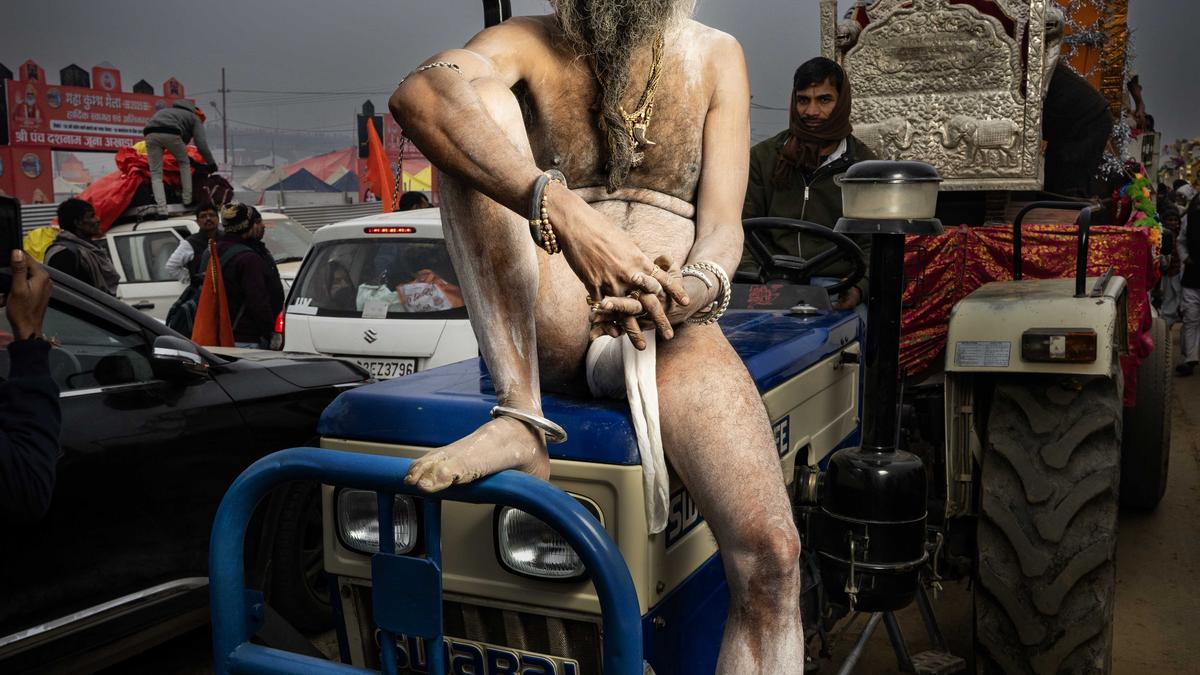
Photographer Bandeep Singh explores the spiritual and religious ideology of the Naga sadhus through 35 portraits at an exhibition, titled Bhasmang: The Way of the Naga Sadhus
The Naga sadhus (unclothed Hindu ascetics) first caught photographer Bandeep Singh’s attention in 2013. Six years later, he found himself photographing them in a deliberate attempt to capture the core of their spiritual and religious ideology.
The ongoing exhibition titled Bhasmang: The Way of the Naga Sadhus at Travancore Palace, Kasturba Gandhi Marg, New Delhi, displays 35 portraits of the Naga sadhus clicked by Bandeep from 2019 to 2025. “I had my first encounter with Naga sadhus on my maiden trip to the kumbh in 2013. There, one of the images that stuck with me was that of a Naga, surrounded by several people, having a conversation on his mobile phone. I was intrigued by how he was completely unmindful about his nudity, almost as if it didn’t exist. That kind of detachment from his body was interesting to me,” says Bandeep.
His curiosity led him to the Juna akhara at the kumbh in 2019. Akharas are monastic institutions, with facilities for billeting and training, in the context of Indian martial artistes or for religious renunciates. The Juna akhara is predominantly associated with Naga sadhus.
“Before the kumbh began, I was invited by one of the mahamandaleshwars of the Juna akhara to photograph the Naga sadhus and stay in the akhara. In fact, after photographing them at the kumbh, I followed them to their deras and ashrams in Rishikesh and Haridwar. While photographing them for six years I also interacted with them and learnt that Naga sadhus were actually warrior saints. There were astradhaaris (who are adept at using weapons) and shastradhaaris (who have the knowledge of scriptures),” Bandeep informs.
In his portraits, Bandeep pits his subjects against a pitch-black backdrop and uses strobe light instead of natural light. He captures the ash-covered bodies of the Naga sadhus and toys with shadows to hide their intimate body parts.
Bandeep says, “These are studied portraits, the ones in which subjects are formally posing for the camera. I use a Nikon DSLR D850 and Nikon Z8. I photographed Naga sadhus like one would photograph specimens in a lab setting. This controlled imagery was done by isolating elements of the Naga sadhus’ life, body language and material culture.”
One of the most interesting learnings, says Bandeep, was that of ash being revered as a deity by these ascetics. He shares, the central element that defines Naga sadhus from any other sadhu is the white ash that they cover themselves with; it is called bhasma or bhabhoot.


Set between the Siwalik hills and the plains, Butwal offers travellers a mix of regional cuisine, pilgrimage trails to Lumbini and the comfort of Hyatt’s new hospitality landmark

Explore 2026's wallpaper trends in India, highlighting botanicals and handmade designs that enhance modern homes with nature-inspired aesthetics.

Mercedes-Benz CLA 250+ with EQ Technology review: design, performance, range and features explained. Discover how the new electric CLA combines advanced AI, long range, fast charging and futuristic styling for the next generation of luxury EVs.

AI tool for sparrow conservation

BTS’s comeback with ‘Arirang’ marks a major global music event. When does the album release, and where can you watch their concert live stream? We have all the details

The 2026 U.S. cholesterol guidelines urge starting screening and treatment at 30 to prevent cardiovascular disease effectively.

Olam Festival 2026 in Thiruvananthapuram returns March 27-29 with 120+ vendors, music, art, and cultural zones.

A few storytellers in Thiruvananthapuram share their journeys, challenges, and evolving methods on World Storytelling Day, inspiring young minds.

76-year-old Kurian Jacob from Kerala triumphs with seven medals, including five golds, at the Open Masters Games in Abu Dhabi.

Explore the nature of the human mind as an emergent property of brain activity and complex neural interactions.

CERN's Large Hadron Collider discovers the Xi-cc-plus particle, enhancing understanding of quantum mechanics and baryon behavior.

Vibha Batra’s latest book, Spotless (Hachette India) is a novel in verse for young adults

In its first edition, the Madras Art Salon spotlights the works of journalist and artist Narayan Lakshman at The Botanical Club, a social space in the British Deputy High Commission, Chennai