'Devastating' funding crisis in Canadian sport is reaching a breaking point
CBC
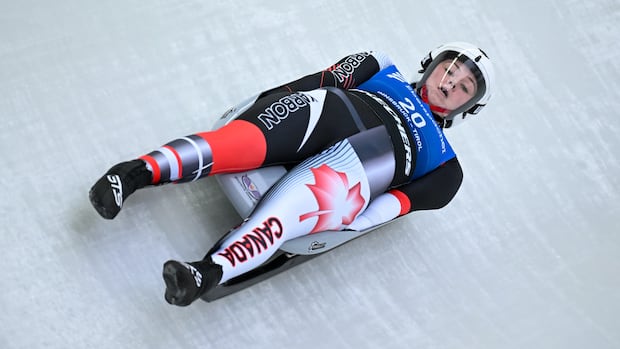
In an ideal world, Canadian luger Caitlin Nash would be peaking in time for the 2030 Olympics.
But Nash fears she may not even get the chance to compete.
“I'm at a point where financially I can't sustain this lifestyle for that long,” Nash, 23, told CBC Sports. “I think it's pretty devastating to have that decision kind of being played out for me and it's not my decision. That's not, obviously, how I would want my career to end.
“I think if things don't change, we will see a lot of people retire after this quad across a lot of different sports in Canada.”
For 20 years, core funding for sport from the federal government has not increased — even though inflation has caused prices to rise by more than 50 per cent. According to the Bank of Canada, an item that would have cost $100 in 2005 would now cost $153.50. But that problem is two decades old.
In recent months, some national sport organizations (NSOs) have been informed that their funding is set to be slashed by the federal government. Total spending might remain the same, but there are many more mouths to feed now than there were in 2005.
Every year, the problem grows. And as the problem grows, the responsibilities of the financial burden get shifted down through the system. Not only do many NSOs struggle to operate efficiently — they struggle to operate at all. Thus, costs are increased across the board, from senior national athlete team fees to youth registration.
Nash, for example, will pay $25,000 in team fees for this Olympic season. On top of that, she will have to pay out of pocket to attend events from Lake Placid, N.Y., to Lillehammer, Norway.
Last season, she said her fee was $20,000, and it included everything.
“This year, to qualify for the Olympics, we need to go to all of the races that we can. And so that's why to make up a little bit of that deficit, more of the cost is falling onto the athletes,” Nash said.
Nash and her fellow lugers are not the only athletes suffering this fate. At Bobsleigh Canada Skeleton (BCS), team fees have risen from $2,000 in 2022 to $25,000 this season.
Originally slated to be $30,000, BCS was able to slash $5,000 per athlete thanks to some newfound corporate sponsorship and donation dollars.
The increase from 2022 also comes with additional inclusions such as travel and accommodations for World Cup stops in Europe. However, in the past, some bobsleigh pilots have shouldered that cost for their crew. Now, that’s no longer tenable.
Brakemen like Cesar De Guzman, whose pilot used to pay for travel, could be facing a major increase.


Alphonso Davies covered his face with his shirt as he left the field with an injury in Bayern Munich's game against Atalanta in the Champions League on Tuesday in Bergamo, Italy, raising questions about the Canadian star's availability for the World Cup.

Canadian Para nordic skiing star Natalie Wilkie has now won a medal of every colour at the Milano-Cortina Paralympics, adding bronze in the women's standing sprint classic on Tuesday in Val di Fiemme.

This is an excerpt from The Buzzer, CBC Sports' daily email newsletter. Get up to speed on what's happening in sports by subscribing here.

Canadian Para alpine skier Kalle Eriksson and guide Sierra Smith continued their impressive Paralympic debut on Monday by racing to bronze in the men's visually impaired super-G for their second medal.

Matt Dunstone won his first Canadian men's curling championship after knocking hard on the Brier's door in recent years.

Natalie Wilkie won Canada's first gold medal of the Milano-Cortina Paralympics, topping the podium in the women's standing biathlon on Sunday.

Most Paralympic athletes live relatively normal lives when they’re not competing.

Para alpine skier Kalle Eriksson and guide Sierra Smith took silver in the men's visually impaired downhill competition for Canada's first medal of the Milano-Cortina Paralympics on Saturday in Cortina d'Ampezzo, Italy.

The Milano-Cortina Winter Paralympics officially opened Friday amid the tensions of war in the Middle East, and with some countries boycotting the opening ceremony because of the return of the Russian flag to the global sports stage.

Iran will not participate in the Milan Cortina Paralympics because its only athlete set to compete can't safely travel to Italy amid the intensifying Middle East conflict, the International Paralympic Committee said Friday.

This is an excerpt from The Buzzer, CBC Sports' daily email newsletter. Get up to speed on what's happening in sports by subscribing here.

Canadian phenom Summer McIntosh had a chance to redeem herself against United States legend Katie Ledecky but came up short by nearly two seconds on Wednesday night at a Pro Swim Series meet in Westmont, Ill.

Her first real foray into the kitchen was back when she was barely a teenager. Zoë Rhooms knew the athlete in the family had a sweet tooth and she always looked out for her big brother, Aaron. When he was nine, Aaron told Zoë and their parents that when he grew up, he was going to be the next Batman. Then a few weeks later, Aaron came home from school and declared to everyone he had changed career paths — a basketball player he’d be.