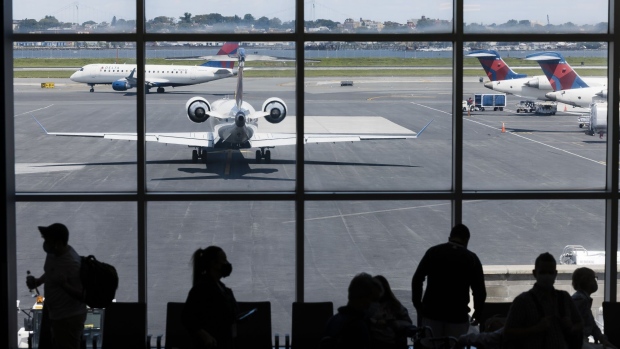
Delta Air profit overshadowed by warning on jet fuel prices
BNN Bloomberg
Delta Air Lines Inc. reported the first quarterly profit excluding federal aid at a major U.S. carrier since the start of the pandemic but said rising jet fuel prices are a threat to staying in the black.
Delta Air Lines Inc. reported the first quarterly profit excluding federal aid at a major U.S. carrier since the start of the pandemic but said rising jet fuel prices are a threat to staying in the black.
The strong performance in the just-ended quarter exceeded analysts’ expectations as the Atlanta-based airline overcame a temporary slowing of demand amid a resurgence of coronavirus-linked fears stemming from the delta variant.
Third-quarter net income, excluding US$1.3 billion in government aid, came to US$194 million, or 30 cents a share, the airline said Wednesday. Analysts had expected a 17 cents a share profit for the period, according to the average of estimates compiled by Bloomberg.
Delta warned that it may see a return to red ink in the current quarter due mainly to higher fuel costs, which it forecasts rising as high as an average of US$2.40 a gallon, up from US$1.94 in the third quarter.
“That’s going to be a limiter on our ability to post a profit in the quarter. At these current fuel levels, it looks like we’ll have a modest loss,” Chief Executive Officer Ed Bastian said in an interview.
Delta shares were little changed at US$43.49 before the start of regular trading in New York. The stock gained 8.3 per cent this year through Tuesday, the worst performance in the S&P 500 Airlines Index.


From rolled steel to kitchen cabinets, Canadian businesses hit by targeted U.S. tariffs are struggling to respond as the trade war drags into its second year.

Global benchmarks mostly rebounded Tuesday, in a mood of cautious relief after U.S. President Donald Trump said the United States has talked with Iran about a possible end to their war.

It’s that time of the year again, tax time, a time to file your annual return with the Canadian Revenue Agency.


Gold seen as overbought as Iran tensions ease, with falling oil prices lifting stocks and shifting investor sentiment toward risk assets.

Stock markets in Canada and the U.S. rallied after President Donald Trump said the United States has talked with Iran about a possible end to the war.

A cautious relief swept through financial markets Monday after President Donald Trump said the United States has talked with Iran about a possible end to their war.

A pipeline leak in Sarnia, Ont., has been located more than a week after a sheen reportedly turned up on the St. Clair River.

U.S. President Donald Trump on Monday said the U.S. was talking with a “respected” Iranian leader and claimed the Islamic Republic was eager for a deal to end the war. He also extended a deadline for Iran to reopen the crucial Strait of Hormuz or face attacks on its power plants, saying it has an additional five days.

Berkshire Hathaway, the conglomerate built by Warren Buffett, is buying a 2.49 per cent stake in Japanese insurer Tokio Marine Holdings for about US$1.8 billion as part of a new strategic partnership, deepening its financial commitment to Japan.

Relief is ripping through financial markets after U.S. President Donald Trump said the United States has talked with Iran about a possible end to their war, despite Iran’s denials.

Asset management giant BlackRock’s CEO Larry Fink urged clients to stay invested despite ongoing market volatility, and highlighted that artificial intelligence is reshaping investment strategies and the broader economy.

Jurors wade through daunting evidence in high-stakes Meta trial about social media risks to children
A stream of testimony and evidence has been presented in a New Mexico case exploring what Meta knew about the effects of its platforms on children.