Delhi’s Indicā reimagines dining as a sustainable storytelling experience
The Hindu
Indicā in Delhi's Ghitorni neighborhood offers a unique dining experience focused on sustainability and indigenous ingredients.
Delhi’s Ghitorni neighbourhood is more about furniture than food, making you wonder why the city’s new gastronomy hub, Indicā chose to occupy space in one of its alleys.
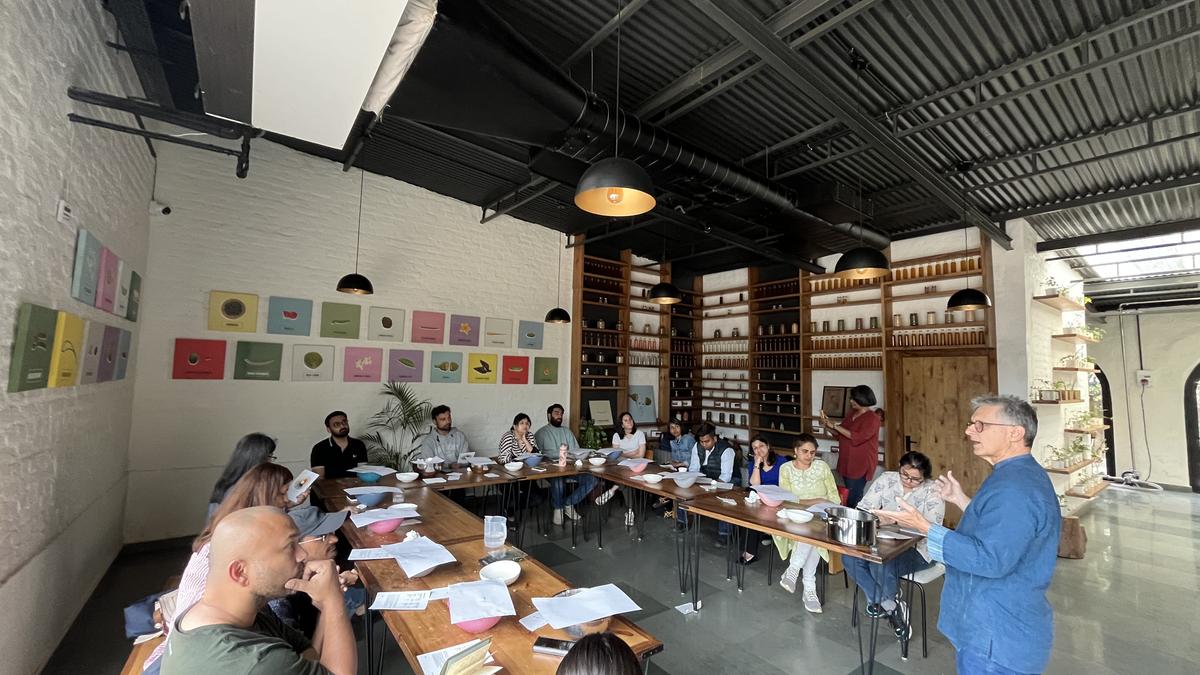
As you make your way inside, it all begins to make sense. Indicā goes beyond the traditional dining experience, encouraging conversations around food through the lens of sustainability.
Within the space, there’s an application lab that concocts distinctive non-alcoholic beverages and products that harness indigenous ingredients. Also, check out the ingredient library, laden with everything from oils to herbs used to prepare food along with artwork that spotlights forgotten or lesser-known indigenous vegetables.
The idea for Indicā struck former journalist and food writer Damini Ralleigh. Upon realising that the relationship with food merely transcended aesthetics, she wanted to delve deep into the industry she was part of.
“There is nothing in the world that you cannot study through the lens of food. Each meal tells a story reflective of a community’s tradition, social dynamics and culture,” says Damini.
A Master’s degree from the University of Gastronomic Sciences, Italy, and working with the Slow Food Movement reinforced questions in her mind about the extractive and linear relationship with the natural world. At the same time, the pandemic struck and laid bare the harsh realities of a broken food system.
Upon her return to India, she met Sandeep Garg, the other half of Indicā, who already had this space and was looking to turn it into a food lab that was more ingredient and product-focussed. The duo joined forces and decided to create something where different people could come and share stories through the medium of food.


Blasts and sirens sounded in Jerusalem as Israel warned of incoming Iranian missile threats amid escalating tensions.

275 former judges and officials criticize USCIRF's report on religious freedom, calling it biased and lacking credible evidence.

Jharkhand Police request Indian Army's help to safely defuse an active WWII-era bomb found near Subarnarekha river.

Tamil Nadu Assembly election: VCK under compulsion to consider local candidates, says Thirumavalavan
VCK leader Thirumavalavan emphasizes the need for local candidates amid concerns over past electoral losses due to outsiders.

Explore Tamil Nadu's upcoming four-cornered election contest, featuring key players DMK, AIADMK, TVK, and Naam Tamizhar Katchi.

I and EPS were appointed CMs, Stalin elected by people, says O. Panneerselvam

The ₹88.41 crore AMRUT scheme aims to eliminate Kavali's water scarcity, transforming the town’s infrastructure and services.

A 4.1 magnitude earthquake struck Sikkim's Mangan district; no casualties or property damage reported.

Telangana government updates building rules, increasing TDR usage, allowing more floors, and easing setback regulations for developers.

The escalating Israel-Iran conflict over the South Pars gas field threatens global energy security and impacts India's energy imports.

Delhi's weather forecast: clear skies, maximum temperature around 30°C, and moderate air quality with an AQI of 154.

Union Minister Kiren Rijiju meets Tamil Nadu Bishops and pastors to discuss minority welfare and counter anti-BJP narratives.

Japan may consider minesweeping in the Strait of Hormuz post-ceasefire, says Foreign Minister Motegi, amid ongoing regional tensions.