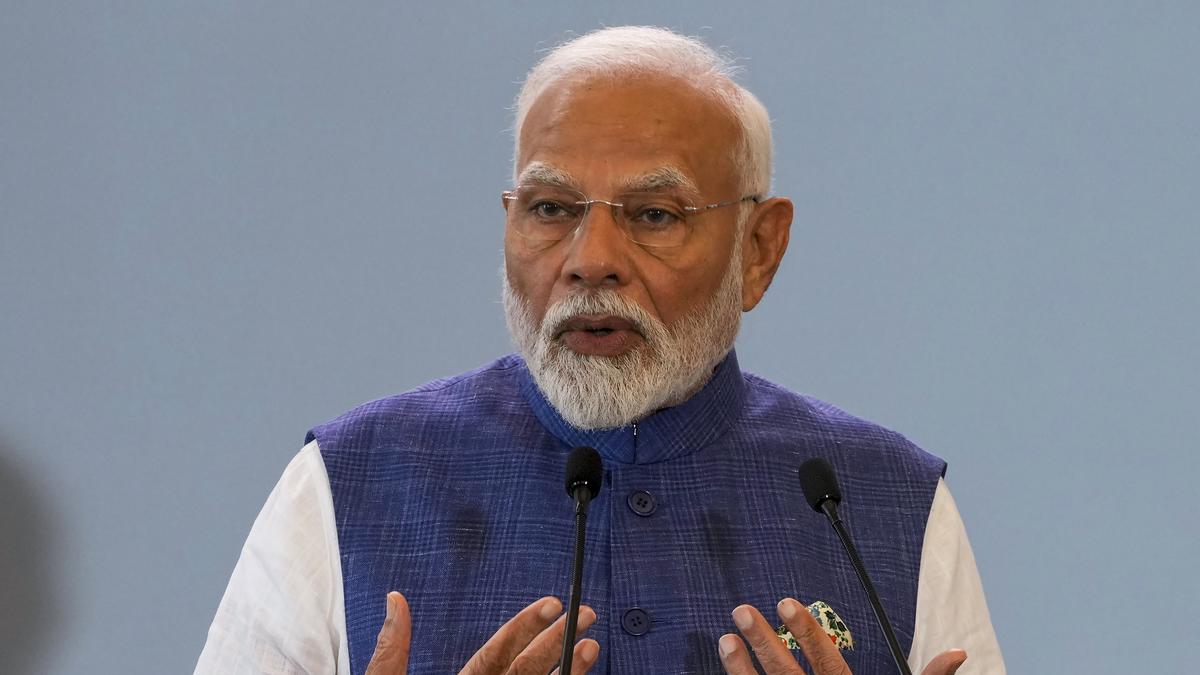
Defence cooperation in focus as PM Modi visits Ukraine
The Hindu
Prime Minister Narendra Modi's visit to Ukraine focuses on defence cooperation, addressing supply chain issues and exploring joint ventures.
The symbolism and balancing act aside, Prime Minster Narendra Modi’s visit to Ukraine, the first by an Indian Prime Minister, will focus on cooperation in defence, with India operating a large inventory of military equipment of both Russian and Ukrainian origin.
In the three years since the war in Ukraine, India has seen supplies and spares held up for some time and has attempted to diversify and reduce dependence by turning to domestic companies as well as seeking alternate vendor base in other countries.
The situation has improved since and spares, components and supplies have started coming, though not to the pre-war levels, according to official sources. Both Russia and Ukraine have assured that they would ensure timely deliveries though it is not up to the earlier schedules yet, the sources said.
Sources said Ukraine has several cutting-edge systems and technologies many of which are battle-tested. It has expressed interest in forming joint ventures with Indian companies.
The war in Ukraine in February 2022 impacted all three services of the Indian military that have huge inventories both from Russia and Ukraine. Immediately after the war began, the Indian Army terminated several contracts related to air defence, armour and artillery as it faced escalation in prices from other countries since spares and supplies became scarce and were diverted, shooting up prices, officials said. Further, quality claim resolutions became very time consuming.
The Army turned to indigenous defence manufacturers for smaller components and sub-assemblies. This was also done by the Navy and Indian Air Force (IAF).
“The Army has reached out to domestic vendors, tried to minimise imports of spares, assemblies and so on to the extent possible and diversified the vendor base where domestic options were not available to about 7-8 countries notably Poland, Estonia, Bulgaria, Czech Republic among others,” a source said. The indigenous push was particularly in small components and ammunitions, officials said.


Saudi Arabia expels Iranian military staff amid escalating tensions and ongoing missile attacks during the U.S.-Israeli war on Iran.

Russia claims control of Potapivka village in Ukraine's Sumy region amid ongoing military efforts to establish a buffer zone.

Iranian missile strikes on Israeli towns cause widespread damage and injuries, marking a significant escalation in the ongoing conflict.

As Gor makes first trip as U.S. Special envoy to South Asia, Delhi watches strategic signals closely
Sergio Gor's inaugural trip as U.S. Special Envoy to South Asia signals strategic U.S. engagement amid regional tensions.

Slovenians vote in a tight election between liberal and populist candidates, impacting the country's future domestic and foreign policies.

Netanyahu asserts U.S.-Israel alliance fights Iranian threats, emphasizing global security after missile strikes on Israeli and European targets.

Israeli settlers attack Palestinian villages in the West Bank, causing injuries and destruction amid ongoing settlement expansion.

Britain asserts no evidence of Iran planning missile strikes on Europe, despite Israeli claims of missile capabilities.

UNESCO reports over half of countries have banned phones in schools due to concerns about attention, cyberbullying, and social media impact.

Analysis reveals a U.S.-operated Patriot missile likely caused a pre-dawn explosion in Bahrain, injuring numerous civilians.

Sri Lanka raises fuel prices by 25% amid ongoing West Asia conflict, impacting petrol and diesel costs significantly.

Iran strikes near Israeli nuclear research center as Trump threatens attacks on Iranian power plants
Iran's missile strikes near Israel's nuclear site escalate tensions as Trump threatens retaliation against Iranian power plants.

Saudi Arabia intercepts one of three ballistic missiles targeting Riyadh amid ongoing regional tensions and threats from Iran.