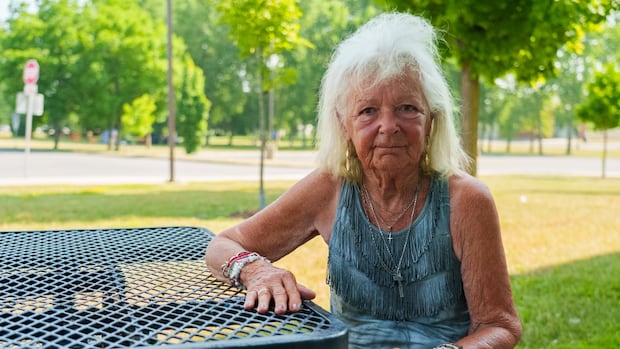
Debate on forced mental health treatment continues as one woman's costs top $800K
CBC
In the fight to better help people with severe and persistent mental illness in Ontario — which can sometimes result in costly detention in jails and hospitals — two opposing camps are lobbying the Ministry of Health in very different directions.
On one side are those who think unwell patients are given too much freedom to reject treatment, putting them at risk of having their mental illnesses progress and become entrenched.
On the other side are the patient advocates who say there are already enough mechanisms to force treatment on people, that giving patients the help they ask for leads to better outcomes, and that insufficient community support is the real problem.
Meanwhile, health and justice systems as they exist today can spend much to achieve little. In one woman's ongoing case, a CBC News analysis estimates the costs since 2018 at $811,600 — and counting. She has bipolar I disorder, characterized by episodes of extreme emotional highs that last at least a week, followed by depression.
Click here for source data
Yet despite Barbara Cleary's dozens of stints in hospital psychiatric wards, emergency housing, jail cells and living rough — as well as brief periods of stability and several months in an assisted living facility last year — today the 76-year-old is again unhoused, living in a tent encampment in Cornwall, Ont., continuing the cycle.
"It is an extremely high cost to the system when people are unwell," said Dr. Karen Shin, chief of psychiatry at St. Michael's Hospital for Unity Health Toronto and chair of the Ontario Psychiatric Association.
"And you have to remember, she's one person. If you went in and reached out to any psychiatrists in the system that are working in a hospital, they can tell you numerous people they care for that have a similar story."
Cornwall police say they're dealing with 20 people like Cleary on a daily basis. The force picked five individuals from that group and found each averaged 53 occurrences requiring police response in 2024.
So, what to do?
Shin founded and co-leads the Ontario Psychiatric Association's mental health and law reform task force, which is calling on the province to expand forced treatment in certain circumstances. From her organization's perspective, some forced care protects the right to health for vulnerable people whose illnesses can cause delusional thinking.
"Choice is extremely important, but that choice has to be a capable choice, and a capable choice needs to include that there's an understanding of the symptoms of the illness and the consequences of saying, 'No, I don't want treatment,'" Shin said.
The task force wants the province to:
An organization called the Empowerment Council takes an opposing view. It says medication comes with risks that not every patient can tolerate, including the possibility of neurological damage, and that the trauma of having something forced into the body and mind can interrupt therapeutic relationships and scare people into avoiding it altogether.


Snuneymuxw First Nation is calling for a temporary closure and environmental investigation of a hazardous waste services company following a January oil spill on Duke Point near Nanaimo, B.C.

In February, five people were killed in separate avalanches across B.C. and Alberta. That same month, more than a dozen people were killed in California and Utah, including a particularly deadly avalanche that claimed the lives of nine. In Europe, from Andorra to Slovakia, the season has recorded 125 deaths from avalanches so far.

Getting a proper vehicle to transport people for urgent medical care is an ongoing challenge in fly-in First Nations in northwestern Ontario.

A new supergroup of musicians from Six Nations of the Grand River and Mississaugas of the Credit First Nation have collaborated on a Robbie Robertson-inspired song they will perform at the Junos Honouring Ceremony later this month in Hamilton.

People as young as 45 should be invited to provincial and territorial programs to screen for colorectal cancer, the Canadian Cancer Society urged on Wednesday.

The Métis Nation-Saskatchewan (MN-S) has opened an office and retail space in Ottawa to create a stronger presence in the capital since removing itself from the Métis National Council in 2024.

Toronto resident Winhan Wong's lung cancer journey began in 2016, with a nagging cough that just wouldn't go away.

Last month, Assembly of First Nations National Chief Cindy Woodhouse Nepinak pointed out on social media that history was made this year because there are a record 164 female chiefs serving across the country.

Most of humanity has a great propensity to think in the short-term, but generally, long-term considerations — air pollution, deforestation and emissions, for example — just aren't our thing.

As the COVID-19 pandemic began to unfold in early April 2020, Kolter Bouchard was just weeks into fatherhood when he noticed a lump on his neck.

Advocates and health care providers say they remain concerned about First Nations kids seeking services under Jordan's Principle even after the Canadian government’s recent promise of $1.55 billion in funding.

Contrary to science fiction, black holes are not portals to other dimensions or cosmic vacuum cleaners that swallow up everything around them.

An attempt to preserve files documenting some of the worst harms caused by Indian Residential Schools could soon head to Parliament.