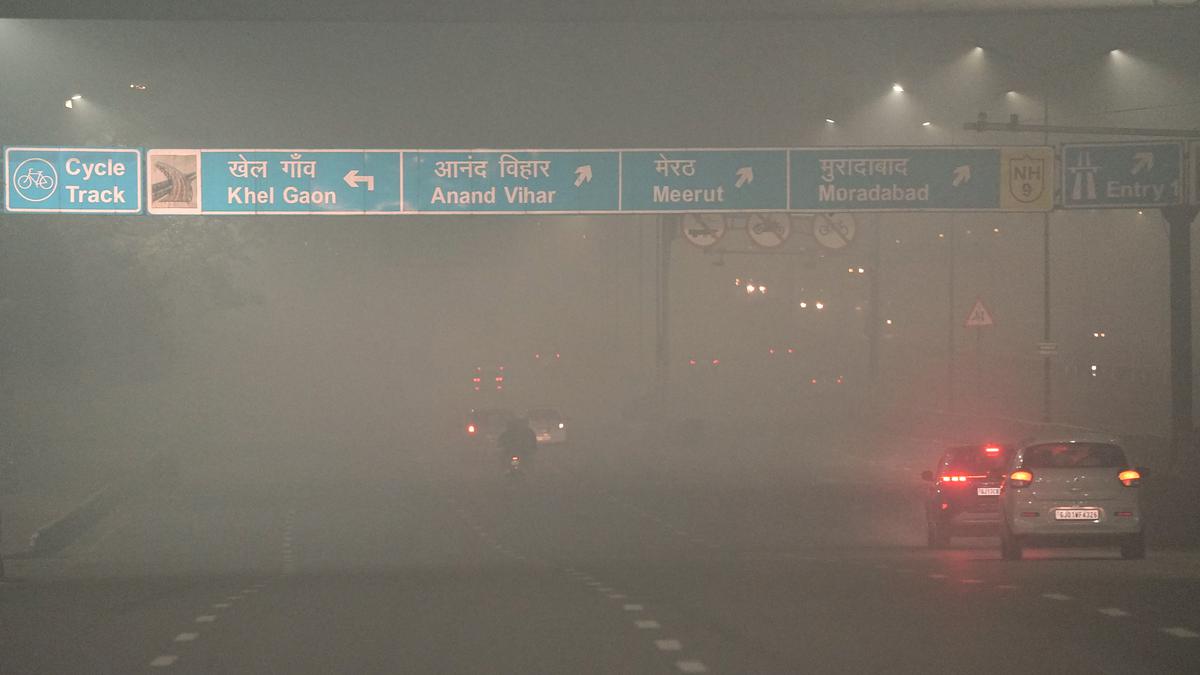
Day after Deepavali, Delhi becomes most polluted city globally
The Hindu
On November 13, Delhi was the most polluted city in the world with an air quality index (AQI) of 287 followed by Lahore, Pakistan, at 195. Mumbai, at 153, and Kolkata, 166, were also present among the top 10 of the most polluted cities.
A day after Deepavali was celebrated in most parts of the country, three Indian metropolises featured on the list of the most polluted cities in the world, according to a ranking by Swiss air purifier company, IQAir.
On November 13, Delhi was the most polluted city in the world with an air quality index (AQI) of 287 followed by Lahore, Pakistan, at 195. Mumbai, at 153, and Kolkata, 166, were also present among the top 10 of the most polluted cities. The IQAir’s AQI measures data from 109 countries, and readings change hourly. It follows U.S. methodology and varies slightly from the Indian one.
Also read: EXPLAINED | Why is South Asia the global hotspot of pollution?
The values are a measure of the quantities of PM [particulate matter] 2.5, considered most harmful for respiratory health. Though pollution from firecrackers are short-lived compared to those from persistent sources such as vehicles, waste and biomass burning, the spike in pollutants has a pronounced effect on health.
Air pollution in parts of Delhi was 30 times the safe limits prescribed by the World Health Organisation (WHO), contributed in part by the firecrackers lit on Sunday night, according to figures from the Delhi Pollution Control Committee. This is despite a ban on firecrackers in the city.
The most updated readings from these cities, as of Monday, suggested that air quality is deteriorating, with several monitoring stations reporting a value of 400, classified as in the ‘severe’ category.
The air quality of Delhi is likely to be in the “severe” category on Tuesday and Wednesday, according to the Centre’s Air Quality Early Warning System for Delhi. Air pollution in the “severe” category “affects healthy people” and “seriously impacts those with existing diseases”, according to the Central Pollution Control Board (CPCB).


Telangana's revised pay scale implementation for employees will take timer. The tenure of Pay Revision Commission extended. Govt likely to take decision on reccomendation based on its report.

Vizianagaram's SP A.R. Damodar highlights 20 accident-prone areas and urges drivers to prioritize safety with helmets and seat belts.

Kerala HC stays disqualification of SNDP Yogam leaders, reversing a single judge's order regarding financial and regulatory compliance issues.

Karnataka announces daily supply of 10,000 LPG cylinders to hotels, easing the commercial shortage for the hospitality industry.

Malayalam superstar Mohanlal will be reuniting with filmmaker Priyadarshan, it was announced recently. It will mark the 100th film of Priyadarshan and is backed by Mohanlal’s longtime collaborator, Antony Perumbavoor

Gautham Vasudev Menon loses Madras High Court appeal, ordered to pay ₹4.25 crore to R.S. Infotainment with interest.

AIADMK faces its toughest challenge in 53 years as it prepares for the crucial 2026 T.N. Assembly elections.

Lakmé Fashion Week x FDCI 2026 in Mumbai: What worked and what didn’t

Telangana CM announces underpass beneath Begumpet Airport runway to alleviate traffic congestion in Hyderabad.

Congress leader Ramesh Chennithala claims an alliance between Pinarayi Vijayan, Modi, and Shah aims to undermine UDF in Kerala elections.

CCB arrests Bengaluru couple for running a fake government job scam, cheating over 100 victims out of crores.

The enduring legacy of Araiyar Sevai

Telangana integrates with the 'Vahan' platform and eliminates 2% tax on second vehicles, enhancing transport services and transparency.