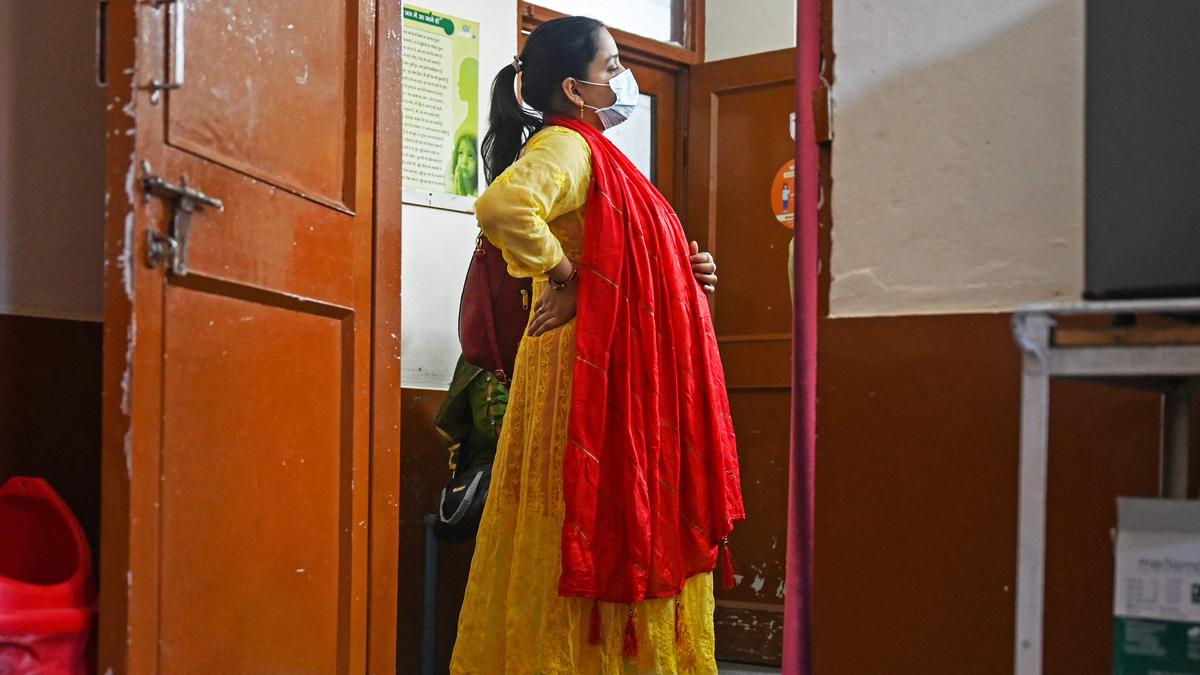
Data | Apathy of family and high costs hinder maternal healthcare
The Hindu
In 28% of the cases, either the husband or the family deemed antenatal care visits unnecessary for the pregnant woman
In May, a United Nations report showed that India was among the 10 countries that together accounted for 60% of global maternal deaths, stillbirths and newborn deaths. India accounted for over 17% of such deaths in 2020, followed by Nigeria (12%) and Pakistan (10%). The report also showed that India had the second-highest number of maternal deaths (24,000) after Nigeria.
The report reiterated the three major interventions that help reduce maternal deaths: going for four antenatal care visits or ANC visits (during pregnancy), having a skilled attendant at birth, and receiving postnatal care (after childbirth) within the first two days after birth (PNC). During antenatal care, health workers educate women about complications during pregnancy and labour, and after childbirth. The visits also help women get access to micronutrient supplementation (iron and folic acid supplements) to prevent anaemia, which can lead to maternal and perinatal mortality. It also helps them seek treatment for hypertension to prevent eclampsia, and to get immunisation against tetanus and other endemic diseases.
Table 1 | The table shows the frequency of antenatal care (ANC) visits in India and the socio-economic background of pregnant women who completed all four ANC visits
Charts appear incomplete? Click to remove AMP mode
Table 1 shows that in India, 6.1% of mothers did not go for even one ANC visit during their recent pregnancy, while 34.1% of them went once, twice or thrice, which is less than the four visits recommended by the WHO. There was also a noticeable urban-rural divide. More importantly, only 39.9% of mothers who had no school education completed four ANC visits compared to 68.6% of those who completed 12 years of schooling. Such stark differences were observed across class and caste. A much higher share of mothers from wealthier households and a relatively high share of upper castes completed four ANC visits.
Postnatal care within the first two days after birth is recommended because mothers are in their most vulnerable state in the postpartum period (42 days after childbirth). According to the WHO, “most maternal and infant deaths occur in the first month after birth, with almost half of the postnatal maternal deaths occurring within the first 24 hours, and 66% occuring during the first week.”
Table 2 | The table shows the socio-economic background of women who visited hospitals for postnatal care (PNC) after two days of childbirth or never did so (figures in %)


Former Chief Minister Narayanasamy opts out of Puducherry Assembly elections to maintain alliance harmony amidst seat-sharing talks with DMK.

Dr Prarthana Venkatesh, the founder of nutraceutical brand Longevita, talks about the inspiration behind the brand, why the longevity discourse is now exploding and how modern medicine is tackling aging

Ponmudy seeks Madras High Court's intervention to dismiss BJP councillor's complaint over alleged derogatory speech against religious groups.

Congress leader K.C. Venugopal alleges corruption in Kerala's bar license renewals, accusing CPI(M) and BJP of unethical collusion ahead of 2026 polls.

Bengaluru police arrest three in a money-doubling fraud, recovering ₹40 lakh and uncovering additional victims.

AIADMK faces perception challenges and electoral setbacks in Tamil Nadu, struggling to maintain its traditional stronghold and voter base.

K. Ashok appointed Executive Director of BHEL Tiruchi, succeeding S. Prabhakar after 36 years of experience in the company.

Garbage collection resumes in Bengaluru amid contractor disputes over payment delays and new waste segregation rules by BSWML.

Delhi High Court rules universities cannot restrict peaceful expression of dissent, emphasizing the importance of independent thought and discourse.

Mettur Dam's water level is at 82.83 feet, with an inflow of 384 cusecs and discharge of 800 cusecs.

Lebanon expels Iran's ambassador, declaring him persona non grata, while maintaining a Charge d'Affaires at the embassy.

Sunny Joseph accuses Pinarayi Vijayan of targeting Rahul Gandhi as part of a political deal with the BJP.

AIADMK faces perception challenges and electoral setbacks in Tamil Nadu, struggling to maintain its traditional stronghold and voter base.