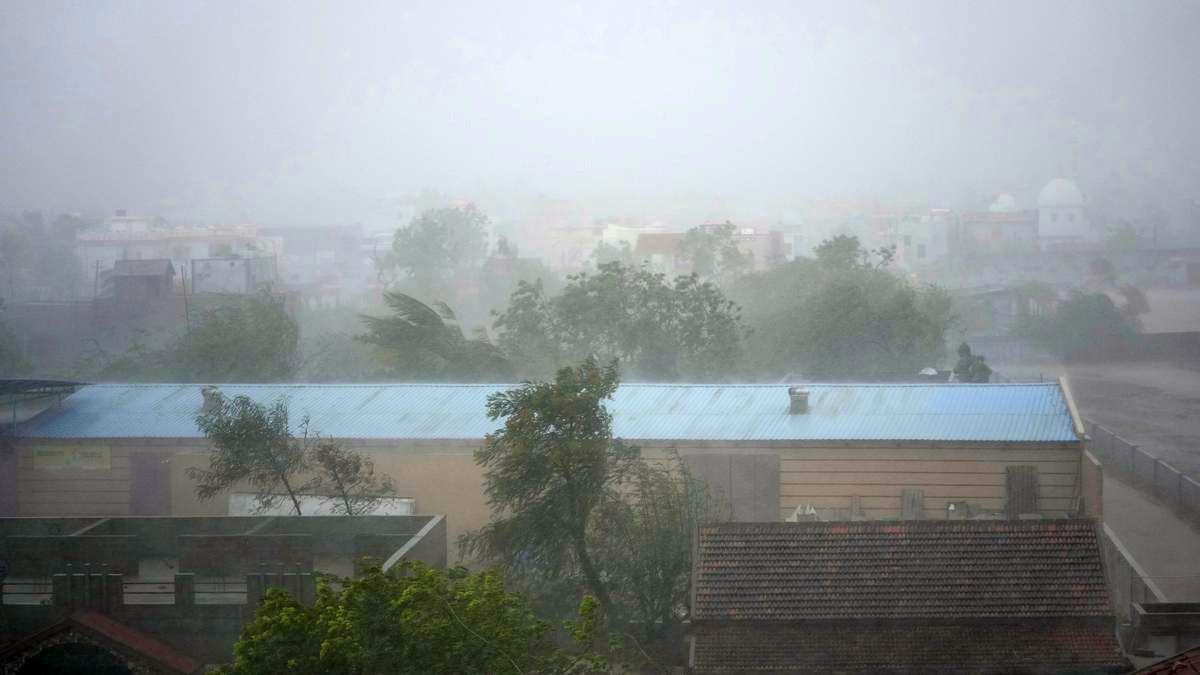
Cyclone Biparjoy was forecast very well – but can forecasts be improved? Premium
The Hindu
The IMD accurately forecast the storm and helped save many lives. Yet some shortcomings remain in its models, and India’s academic community can help.
Cyclone Biparjoy is still alive and will continue its trek northeastward, bringing some welcome rain to regions sweltering in the summer heat.
By all accounts, the forecasts have been serving the disaster management preparations extremely well. The early warnings, evacuations of tens of thousands in the path of the storm, and the operations during and after the cyclone’s landfall have been improved to a world-class-level in recent years.
The super-cyclone of 1999 caused nearly 10,000 deaths. The India Meteorological Department (IMD) received scathing criticism for not accurately forecasting that super-cyclone. Now, the reported number of deaths due to Biparjoy has just been two so far. India has successfully planned and executed integrated forecast systems and computational infrastructure to reduce cyclone mortality by nearly 90% from the first decade of the 21st century into the second decade.
The Nobel laureate Niels Bohr reportedly said that forecasting is really difficult, especially if it’s about the future. For complex and nonlinear systems like cyclones and the monsoons, our forecasts will never be perfect.
Then again, our forecasting skills must be measured not just by the errors in the forecast models we build and use but also by tracking how well they serve our disaster management and rescue-and-recovery enterprises. By this measure, India’s cyclone forecasts score quite high. India deserves the kudos it has received from across the world for its cyclone forecasts and cyclone disaster management thus far.
But there is no time to rest on these laurels. Forecasts must continue to improve and, in particular, maximise the quantitative skills of the forecasts of cyclone intensities, lifespans, speeds, and tracks. (‘Skill’ is a term for how accurate the forecasts are.)
Cyclones are guided in their tracks from above by the so-called steering winds while they feed on the energy provided by the warm upper-oceans. As such, a cyclone is a thermodynamic engine that runs on moving heat from the warm ocean energy into the cold upper atmosphere while producing deadly winds and rain. This is what an IMD-forecast cyclone track looks like:


Discover the Minor Planet Centre, the key hub for tracking and verifying observations of small solar system bodies.

In this week's Science for All newsletter, XX explains

Test your knowledge with the quiz on Science films at the Oscars through history

Set between the Siwalik hills and the plains, Butwal offers travellers a mix of regional cuisine, pilgrimage trails to Lumbini and the comfort of Hyatt’s new hospitality landmark

Explore 2026's wallpaper trends in India, highlighting botanicals and handmade designs that enhance modern homes with nature-inspired aesthetics.

Mercedes-Benz CLA 250+ with EQ Technology review: design, performance, range and features explained. Discover how the new electric CLA combines advanced AI, long range, fast charging and futuristic styling for the next generation of luxury EVs.

AI tool for sparrow conservation

BTS’s comeback with ‘Arirang’ marks a major global music event. When does the album release, and where can you watch their concert live stream? We have all the details

The 2026 U.S. cholesterol guidelines urge starting screening and treatment at 30 to prevent cardiovascular disease effectively.

Olam Festival 2026 in Thiruvananthapuram returns March 27-29 with 120+ vendors, music, art, and cultural zones.

A few storytellers in Thiruvananthapuram share their journeys, challenges, and evolving methods on World Storytelling Day, inspiring young minds.

76-year-old Kurian Jacob from Kerala triumphs with seven medals, including five golds, at the Open Masters Games in Abu Dhabi.

Explore the nature of the human mind as an emergent property of brain activity and complex neural interactions.