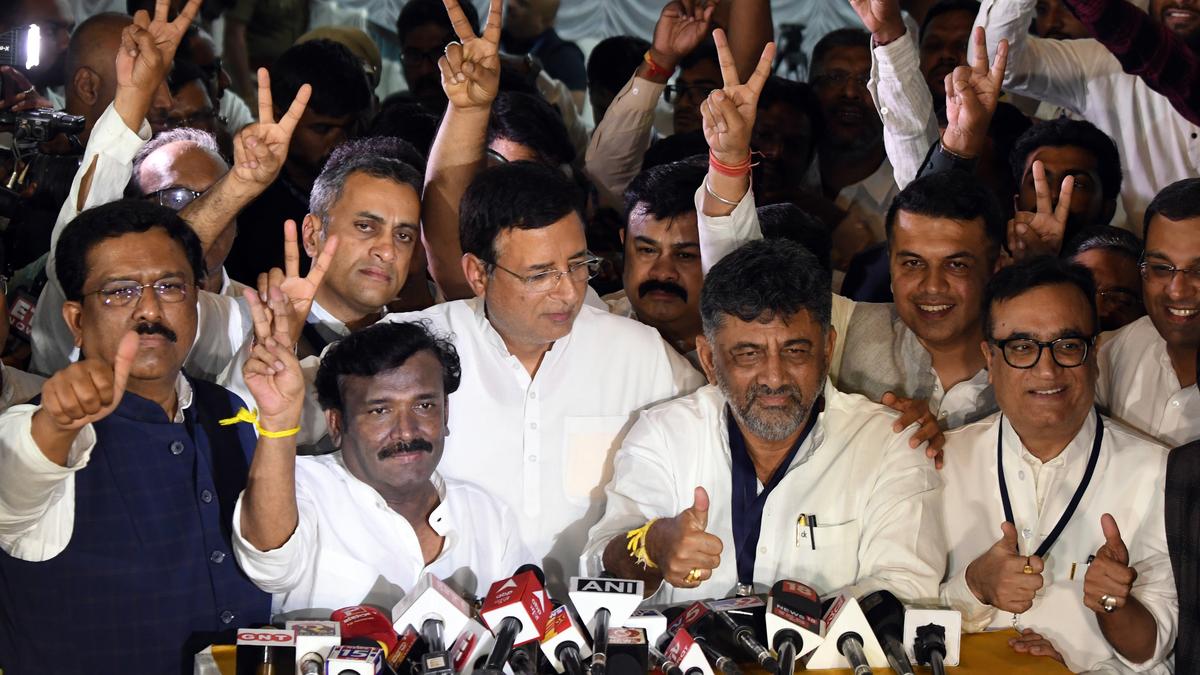
Cross-voting in Rajya Sabha elections puts the spotlight back on punitive action against rebel MLAs
The Hindu
Cross-voting in Rajya Sabha elections raises legal debate on whip issuance and anti-defection law implications.
The election to the 15 Rajya Sabha seats across Uttar Pradesh, Karnataka and Himachal Pradesh on February 27 was marked by cross-voting in all three States, despite parties issuing three-line whips, deviating from the norm.
But the move could start a legal debate as whips are not issued for Rajya Sabha elections. The absence of a whip and the appeal for a “conscience vote” makes it easy for MLAs to avoid any action under the anti-defection law or the 10th Schedule even if they cross-vote.
In Congress-ruled Himachal Pradesh, where six MLAs of the Congress voted in favour of the winning BJP candidate, the ruling party had issued a three-line whip for all its lawmakers to vote for the party’s nominee, Abhishek Singhvi.
But when the BJP challenged the Congress’s move in the Election Commission of India on February 25 and accused the ruling party of violating the rules of the conduct of elections in Himachal Pradesh, the Congress went back on the whip. “In the initial stages, we had contemplated issuing whip but when we got to know that in Rajya Sabha elections, whip don’t matter, we didn’t issue the whip,” said Harshvardhan Chauhan, a Minister in the Himachal Pradesh government.
In Karnataka, where one BJP MLA voted in favour of the ruling Congress, all the parties including the BJP and the Janata Dal (Secular) had issued whips. Commenting on the cross-voting in the southern State, Leader of the Opposition in the Assembly, R. Ashok, told reporters that the MLA had violated the party whip.
An expert on legislative affairs and former secretary general of the Lok Sabha, P.D.T Achary told The Hindu that a party cannot act against any MLA under the 10th Schedule as a whip cannot be issued for voting in the Rajya Sabha election.
“This voting is not inside the House but one that is conducted by the Election Commission. There cannot be a whip and the law is well settled here. However, there is another ground in which the 10th schedule can be applied and that is if a member voluntarily gives up the membership of a party,” he explained.


Diya Chitale and Manav Thakkar reach semifinals, while Yashaswini Ghorpade upsets top seed Sreeja Akula at National TT Championships.

DYFI criticizes A.P.'s job calendar for failing unemployed youth, demanding a revision to include 1 lakh posts and higher age limits.

‘Lethargic’ officials who left Chambal sanctuary to the mercy of sand miners will be held liable: SC
Supreme Court holds negligent officials accountable for enabling illegal sand mining in Chambal Sanctuary, emphasizing habitat protection laws.

Work on the Srisailam Left Bank Canal tunnel resumes after 13 months, with completion targeted by 2027-end, says Minister Reddy.

Ancient ‘Vanni’ tree at Sri Meenakshi Sundareswarar Temple tilts; steps on to restore it

Bengaluru Metro penalises 14 passengers for disrupting services with loud singing, following a viral clip of their antics.

ASR district plans a 122 km world-class trekking network, enhancing tourism and local employment across Araku, Paderu, and Lambasingi.

Development without impact: Coastal residents of Kanniyakumari and Nagercoil constituencies voice discontent

Environmentalists in Kakinada celebrate World Sparrow Day, urging conservation efforts for sparrows and migratory birds.

T.K. Govindan secures full support from K. Sudhakaran for Kerala Assembly polls 2026 as a UDF-backed Independent candidate.

Karnataka implements weekly reviews and control rooms to combat rural drinking water shortages during the summer months.

BJP leads candidate selection for upcoming bypolls, while Congress faces internal challenges and community pressure in Bagalkot and Davangere.

A man died in a Kolkata hospital lift, prompting accusations of negligence against the West Bengal government and hospital authorities.