Crafting joyful cities for children
The Hindu
Prioritising child-friendly urban design for inclusive, sustainable cities that cater to future generations and enhance overall quality of life.
As global urbanisation accelerates, the imperative to prioritise urban design that accommodates diverse demographics becomes increasingly clear. Among these demographic groups, the youngest members of society — children — are mostly left out in urban planning discussions. Urban spaces profoundly influence children’s development and well-being, necessitating a heightened focus on child-friendly cities globally. Much more than merely passive occupants of urban environments, children are competent actors who must be provided with settings that engender playfulness, discovery, and learning. Beyond having playgrounds supplied, the value of child-friendly urban planning also seeks to bring about settings fostering young residents’ social, mental, and bodily growth.
UNICEF reports underscore the manifold benefits of investing in child-friendly urban design, ranging from enhanced public health outcomes to stronger social bonds, and an overall elevation in the quality of life for all urban residents. Cities across the globe are increasingly acknowledging the significance of designing environments that respond to the unique needs of children, offering them opportunities for secure, stimulating, and educational experiences. By concentrating on the integrated development of children, these cities demonstrate how a lively and cheerful urban environment can be attained.
Designing cities with children’s needs in mind transcends aesthetics and functionality. It plays a crucial role in encouraging inclusive, sustainable, and resilient urban development that caters to future generations. The imperative to create cities attuned to children’s needs transcends mere urban aesthetics, bearing profound implications for the inclusive, sustainable, and resilient development of urban environments across generations.
Cities can create unifying and engaging urban landscapes for people of all ages by drawing inspiration from examples like Sydney’s Darling Quarter, where a sizeable immersive playground serves as the centrepiece of a vibrant commercial precinct. Here are some strategies for making cities more accessible, engaging, and inclusive for the younger generation.
In fostering child-friendly urban environments, prioritising walkability and universal accessibility emerges as paramount. Open spaces facilitating exploration and effortless mobility play a pivotal role in nurturing environments where children can move freely and safely.
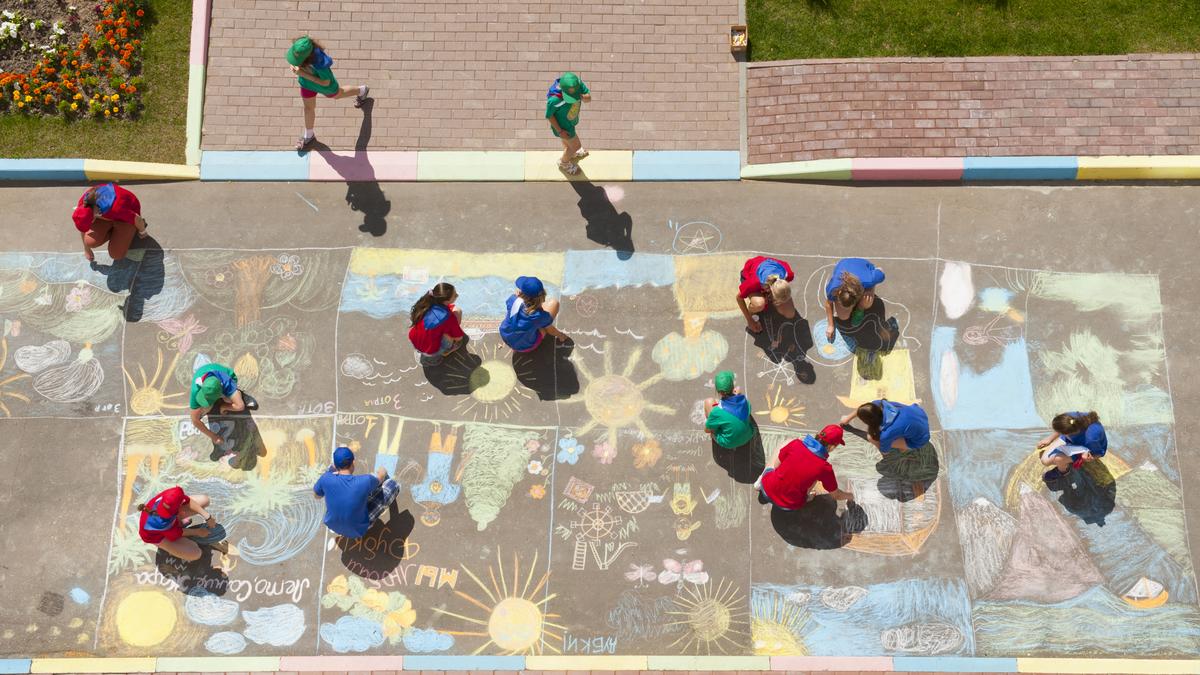
New York City’s Play Streets initiative transforms roads into temporary play areas, offering children safe recreational spaces while reducing traffic-related injuries. Evaluations conducted by the NYC Health Department and Department of Transportation have demonstrated a significant increase in children’s physical activity in these areas.
Well-designed public spaces inspire imagination and play. Unlike conventional playgrounds, themed areas invite children to explore, learn, and connect. Catalytic Action, a non-profit design studio, has reimagined public spaces in Lebanon, transforming them into vibrant, accessible play zones shaped by children’s input.


Kamal Haasan urges Tamil media to avoid the term "censorship" in films, advocating for artistic freedom and recognition of certification.

Pottalurani residents boycott elections again, demanding closure of fish waste processing units impacting health and environment.

VCK leader Thirumavalavan emphasizes the need for local candidates amid concerns over past electoral losses due to outsiders.

Women teachers over 50 express discontent after Revenue Department denies blanket exemption from SIR and census duties in Karnataka.

Union Minister skips crucial NCTP meeting amid backlash over controversial Transgender Rights Bill, raising concerns within the community.

Former Minister Semmalai urges parties to limit freebies and prioritize development for Tamil Nadu's future prosperity.

New Mangalore Port will receive 72,700 tonnes of LPG next week, including a 16,714-tonne discharge on March 22.

The Centre lifts air fare caps after three months, citing stabilized operations and rising aviation fuel costs amid geopolitical tensions.

Residents of Salem South demand solutions for traffic congestion, mosquito issues, and inadequate drinking water supply ahead of elections.

Experience Guuranda in Chennai: A captivating blend of Narungga stories, dance, music, and shadow puppetry celebrating Aboriginal culture.

Police warn against downloading APK files and clicking suspicious links to avoid falling victim to cyber fraud.

CM A. Revanth Reddy reviews Bhadrachalam temple development plans, targeting completion by March 2027 while adhering to Agama Shastra.

First-half blitz helps Punjab FC drub Kerala Blasters FC