Council approves draft construction and debris waste management rules
The Hindu
Greater Chennai Corporation approves Draft Construction and Demolition Waste Management Guidelines, 2025, with penalties for violations and waste classification.
The Greater Chennai Corporation (GCC) Council approved the Draft Construction and Demolition Waste Management Guidelines, 2025, during the meeting regarding the GCC Budget on Friday at the Ripon Buildings.
“The guidelines align with the Construction and Demolition Waste Management Rules, 2016, and utilise powers under Section 199 of the Tamil Nadu Urban Local Bodies Act, 2023,” the GCC said in the resolution.
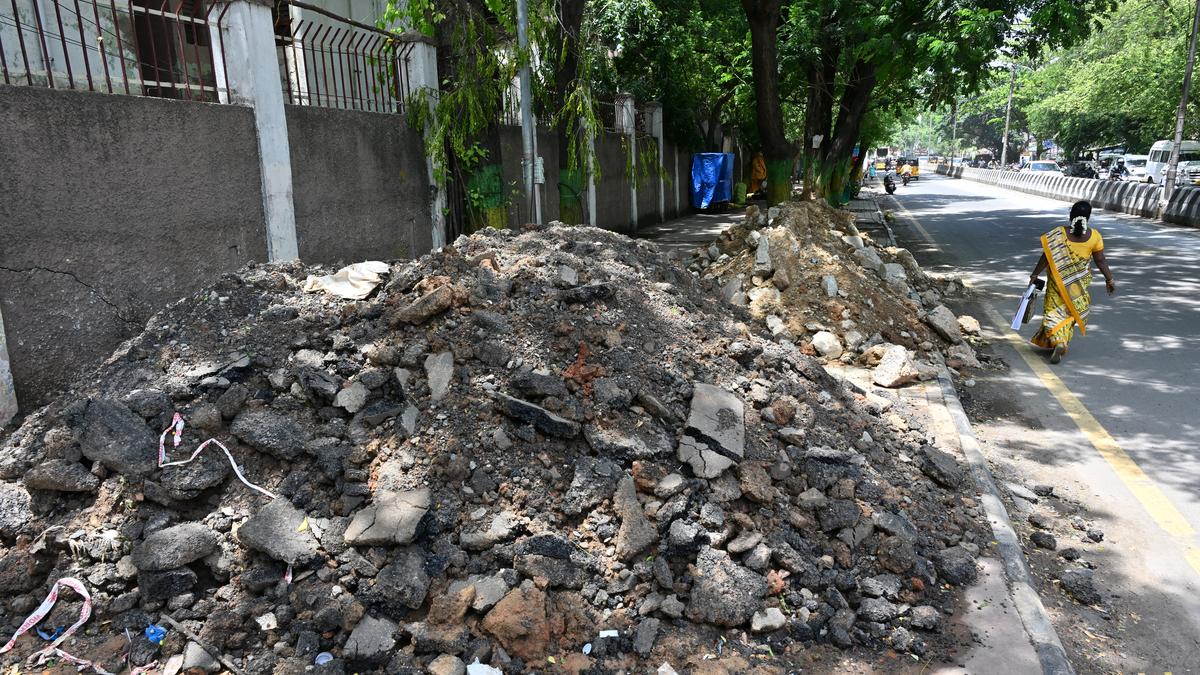
The GCC covers 426 sq.km across 200 wards in 15 zones. About 6,150 tonnes of solid waste and 800 tonnes of construction and demolition waste are generated daily, and often dumped on roadsides, sidewalks, vacant plots, and burial grounds. The guidelines classify waste into — construction, demolition, and excavation.
The resolution said suggestions from the public, based on feedback received on the draft on February 16 and 17, also made it into the finalised regulations. These include contractor-led debris removal with tender-based selection by the Public Works Department, an online system to report debris encroachment and request transport services, penalties for violations, waste segregation and adoption of best practices from other cities, and launching an app for the sale of debris and advocating its use for infrastructure projects.
According to the GCC, failure to adhere to the guidelines or dumping waste without authorisation can result in penalties ranging from ₹5,000 to ₹25,000, depending on the scale and frequency of the offence.
Penalties proposed are based on models from Hyderabad, Bengaluru, and Karnataka, depending on the severity, the civic body added.
According to the resolution, for small-scale violations — waste generated less than 1,000 kg — the disposal will be free of charge. If the volume of waste exceeds 20 tonnes per day, the fine is set at ₹2,500 per tonne, which includes expenses for equipment, such as earth movers, required for transportation and disposal. Additionally, a processing fee of ₹800 per tonne will be charged for handling and disposal.


Blasts and sirens sounded in Jerusalem as Israel warned of incoming Iranian missile threats amid escalating tensions.

275 former judges and officials criticize USCIRF's report on religious freedom, calling it biased and lacking credible evidence.

Jharkhand Police request Indian Army's help to safely defuse an active WWII-era bomb found near Subarnarekha river.

Tamil Nadu Assembly election: VCK under compulsion to consider local candidates, says Thirumavalavan
VCK leader Thirumavalavan emphasizes the need for local candidates amid concerns over past electoral losses due to outsiders.

Explore Tamil Nadu's upcoming four-cornered election contest, featuring key players DMK, AIADMK, TVK, and Naam Tamizhar Katchi.

I and EPS were appointed CMs, Stalin elected by people, says O. Panneerselvam

The ₹88.41 crore AMRUT scheme aims to eliminate Kavali's water scarcity, transforming the town’s infrastructure and services.

A 4.1 magnitude earthquake struck Sikkim's Mangan district; no casualties or property damage reported.

Telangana government updates building rules, increasing TDR usage, allowing more floors, and easing setback regulations for developers.

The escalating Israel-Iran conflict over the South Pars gas field threatens global energy security and impacts India's energy imports.

Delhi's weather forecast: clear skies, maximum temperature around 30°C, and moderate air quality with an AQI of 154.

Union Minister Kiren Rijiju meets Tamil Nadu Bishops and pastors to discuss minority welfare and counter anti-BJP narratives.

Japan may consider minesweeping in the Strait of Hormuz post-ceasefire, says Foreign Minister Motegi, amid ongoing regional tensions.