Core sectors’ growth slips to six-month low of 3.5% in April
The Hindu
Marking the slowest pace in six months with half of the sectors, India’s eight core sectors’ output growth slid from 3.6% in March to 3.5% in April
India’s eight core sectors’ output growth slid from 3.6% in March to 3.5% in April, marking the slowest pace in six months with half of the sectors, including electricity and natural gas, reporting a contraction.
Crude oil production shrank 3.5% in April, the 11th straight month of contraction. Natural gas output dropped 2.8% and refinery products plummeted 1.5% — the first such decline since November 2022 for both these sectors.
Cement, steel and fertilisers recorded a strong uptick to offset the declines in half of the sectors covered by the Index of Core Industries. Cement production bounced back from a 0.6% contraction in March to surge 11.6%, the fastest growth in five months.
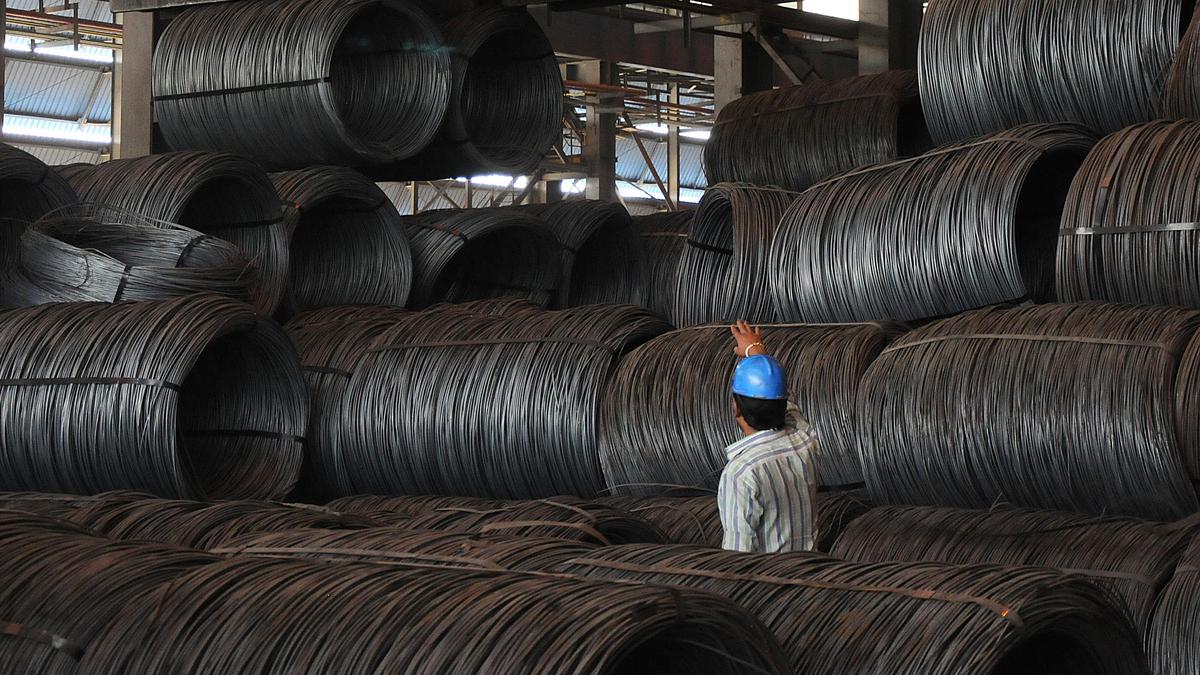
Steel production grew 12.1% in April, the swiftest pace in three months, while fertilisers production accelerated 23.5%, marking the highest growth in over a year. Coal output rose 9%, a tad slower than the 12.2% growth in March 2023.
The Commerce and Industry Ministry, which released the data on Wednesday, has further revised upwards January’s core sectors growth rate to 9.7%, from its previous estimate of 8.9%. January’s seven-month high growth has lifted core sectors’ overall growth through 2022-23 to 7.7% from 7.6% estimated earlier.
In April 2022, the core sectors had reported a 9.5% rise in production levels, with all sectors except crude oil, clocking higher volumes. However, base effects alone did not appear to be responsible for the moderating growth this April, with output levels shrinking 8.55% from March 2023.
On a sequential basis, the only two sectors to report an uptick in production levels were electricity (up 2% in April from March), and fertilisers (0.5% over March). On the other hand, coal and steel output fell the most from March levels, dropping 31.9% and 7.3%, respectively.


OpenAI on Tuesday announced key leadership appointments for its nonprofit arm and committed to investing at least $1 billion through the division

EU antitrust chief Teresa Ribera, who has voiced concerns about Big Tech extending its dominance into artificial intelligence, will meet the CEOs of Alphabet, Meta Platforms and OpenAI

OpenAI is close to securing about $10 billion in fresh funding from investors, boosting its valuation to $850 billion, including the money raised, a person familiar with the matter said, confirming an earlier report in Bloomberg News

Discover the key changes in the New Income Tax Rules 2026, simplifying compliance and enhancing deductions for taxpayers.

Palantir, which won a contract to supply AI systems to Britain’s Financial Conduct Authority, will not have access to regulatory intelligence, an FCA official said

Arm Holdings announced a new artificial intelligence data centre chip on Tuesday which it said will add billions of dollars of revenue

Amazon said on Monday its Amazon Web Services region in Bahrain has been “disrupted” amid the current conflict in the Middle East

Petroleum Ministry directs reforms to enhance natural gas infrastructure, streamline approvals, and ease transition from LPG to PNG.

The Sora decision means the end of a blockbuster $1 billion deal between Disney and the ChatGPT maker that was announced a little more than three months ago.

Regulator mandates city gas distributors to provide piped gas to educational institutions within five days, supporting India's transition from LPG to PNG.

NHAI's Raajmarga InvIT listed on BSE, enhancing investor participation in highway infrastructure with strong demand and oversubscription.

HDFC Life Insurance faces ₹172 crore Income Tax order for alleged violations, plans to appeal the decision.

Air-conditioner makers in India are looking forward to FY27 with hope as the war in West Asia threatens to impact plastic component availability and consumer sentiment, adding to the challenges around raw material price and new energy label, a senior executive of a leading company has said.