COP28: A Canadian lawyer’s backchannel strategy to force polluters to act
Global News
A Canadian human rights lawyer is trying a different approach to compel the world's biggest polluters to compel nations to drastically lower their emissions.
With the United Nations’ climate conference, known as COP, underway in Dubai this week amid the usual delegate wrangling to phase out fossil fuels, one Canadian human rights lawyer at the annual event is promoting a different approach to compel nations to lower their emissions.
Payam Akhavan made a name for himself prosecuting the perpetrators of genocides in countries such as Rwanda and Bosnia. He’s now turning his attention to the climate crisis, which he says “brings a radically new chapter to our struggle for survival.”
Akhavan is a professor of international law and senior fellow at Massey College in Toronto. He is also a special adviser to the prosecutor of the International Criminal Court and has represented parties before the International Court of Justice and is a member of the Permanent Court of Arbitration, an international agency that settles disputes between nations.
He is at the UN climate change conference in Dubai, COP28, acting as counsel to the Commission of Small Island states on climate change and international law – in essence, representing three of the world’s smallest countries at the world’s premiere climate summit.
For years, some of the world’s smallest countries – mostly islands in the South Pacific and Caribbean – have begged the international community to take action on climate change.
That’s because rising sea levels put their very existence at risk, they say.
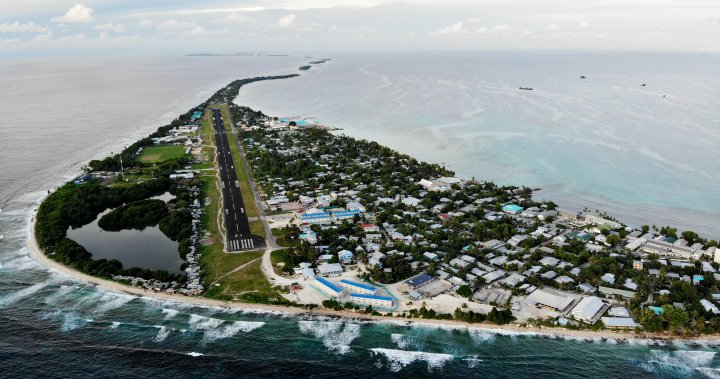
Two years ago, the foreign minister of one of those nations, Tuvalu, stood knee-deep in the ocean and implored attendees at that year’s climate conference, in Glasgow, to make a significant and lasting move to cut emissions. Instead, all delegates managed to get was an 11th-hour, watered-down pledge to reduce coal consumption to produce energy.
Now, with global average temperatures getting closer to 1.5 C of warming over preindustrial norms (1.5 C is the seemingly incremental yet hugely consequential point at which most climate experts agree there’s no turning back), the pressure is on for something beyond the usual voluntary commitments.


Finance Minister François-Philippe Champagne says the government has found ways to cut spending by $60 billion but cautions that published spending cuts require important context.

Three Canadians from Quebec who were stranded in the Persian Gulf since Feb. 28 have returned home following a coordinated repatriation effort.

Federal departments announced that they plan to cut more than 12,000 jobs over three years as part of the Carney government’s spending review plan.

Canada’s Integrated Threat Assessment Centre says the U.S.-Israeli war against Iran has heightened an already present threat against Jewish Canadians and public officials.

Edward Warner, his wife Tania and his seven-year-old step-daughter Ayla were coming back from a friend's baby shower on Saturday when they went through an ICE checkpoint in Sarita.

A fire chief from a village that battled flames during Saskatchewan's destructive wildfire season last year says the province's latest budget does not provide enough funding.

Manitoba’s upcoming budget will include more child care funding and a smaller deficit, as the NDP government aims to balance finances by 2027.

A member of the Royal Canadian Air Force in Winnipeg has just been crowned the World's Strongest Firefighter, outlifting athletes from around the world.

Muslims across Canada are celebrating Eid al-Fitr while some reflect on conflict affecting loved ones abroad, as leaders highlight unity, charity and renewal.

The Iran war has raised the price of crude oil beyond US$110 per barrel in international markets, spurring affordability concerns in Canada and around the world.

The statement from Global Affairs Canada comes a day after U.S. intelligence leaders unanimously testified that reports denying foreign involvement should be retracted.

It may be the first day of spring, but Ontario’s long winter isn’t over, with more snow and icy conditions expected before a full warm-up arrives

The policy is something of a reversal from a government that killed a similar idea shortly after taking power. Back in 2019, the province said the policy would be unenforceable.