Combating sickle cell anaemia in Chhattisgarh
The Hindu
An in-depth look at the struggles faced by individuals with sickle cell anaemia in Chhattisgarh, highlighting the need for comprehensive support.
For 22-year-old Anshul*, pain has been an unwelcome companion ever since he was diagnosed at a tender age with sickle cell anaemia, or sickle cell disease (SCD), a genetic disorder that causes red blood cells to become rigid and sickle-shaped, which can block blood flow and lead to health complications. The discomfort often clutters his thought process but his mind invariably travels to his maternal grandmother, who awaits his return to their village in Chhattisgarh’s Jashpur district.
Anshul had to quit studies after school due to frequent visits to hospital and lack of financial support after his parents died. His deteriorating health made it impossible for him to hold on to the odd jobs he did for sustenance. “Neglect by my father, who consumed liquor possibly to deal with the sickle cell anaemia he was afflicted with, marked my past. On this hospital bed, I dread my future but am more worried about what will happen to my grandmother if I cannot go home again,” he says at the Jashpur District Hospital.
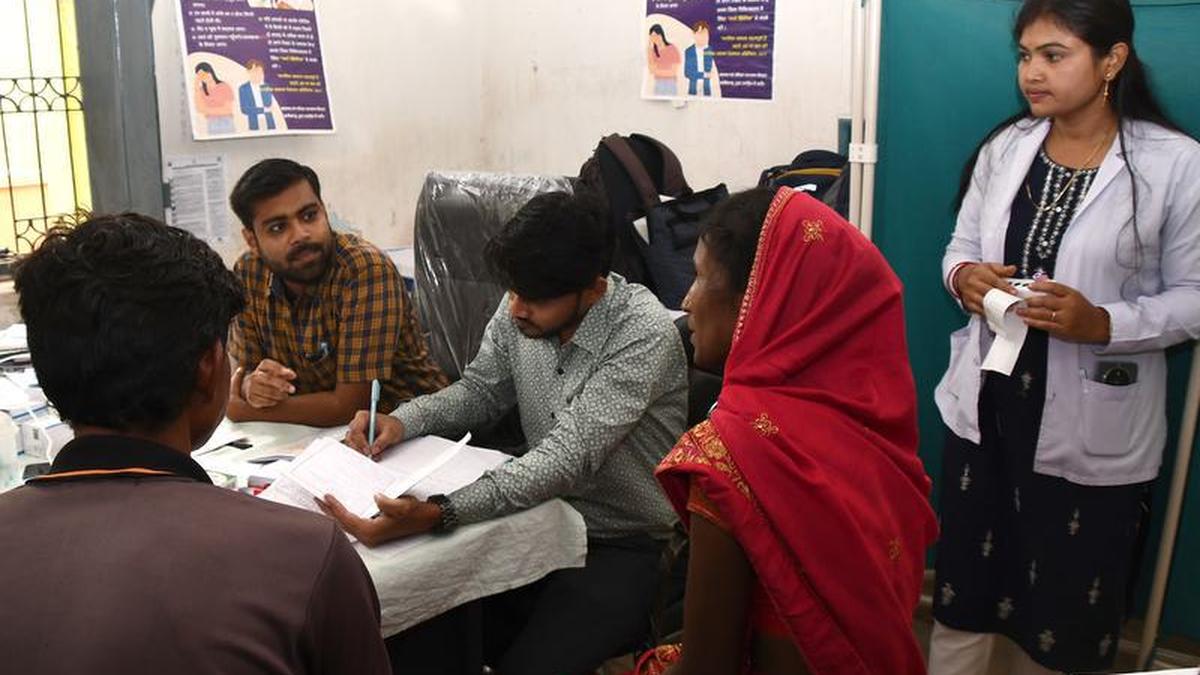
Facing similar struggles is a 13-year-old girl at the community health centre (CHC) in Bagicha, 90 km from Jashpur Nagar, the district headquarters, 480 km north-east of the State capital, Raipur. With a protruding cranial bone and swollen eyes, she has lived with SCD since the age of six. “I stay indoors when I am at home as I am embarrassed to be with other children,” the girl says, adding that she had to drop out of school due to the pain and inability to concentrate.
Over 62% of the district’s population is constituted by two communities — Pahadi Korva and Birhor, categorised as particularly vulnerable tribal groups (PVTGs). With SCD or its trait often carried by people from rural and impoverished backgrounds, the PVTGs were the main reason why Jashpur became the first district in the State to screen more than its targeted population of 6,93,393 under 40 years for SCD. District authorities screened 7,30,110 people out of the total population of 9,54,561 (2011 Census). While 5,873 people were found with sickle cell trait, 507 were diagnosed with SCD, of which 270 were women.
According to official data, 179 of those suffering from SCD are undergoing treatment with hydroxyurea, a drug that reduces the need for blood transfusion. The Chhattisgarh government undertook large-scale screening in other districts too. A recent official statement stated, “Against the targeted 1,77,69,535 sickle cell screenings in 33 districts of Chhattisgarh, 1,11,06,561 have been done. During the process, 2,90,663 carriers were found and 22,672 diagnosed with the disease.”
Officials said the “unprecedented mass exercise” would help the government maintain periodic data and document the battle against SCD.
Chhattisgarh’s Surguja district, adjoining Jashpur, designed a strategy to combat SCD a year before Prime Minister Narendra Modi launched the National Sickle Cell Anaemia Elimination Mission (NSCAEM) at Shahdol in Madhya Pradesh in 2023. The national programme was aimed at making India SCD-free by 2047.


Explore Modakkurichi's agrarian challenges, development gaps, and tourism potential as it gears up for the upcoming elections.

The Govindapura police have successfully traced an 84-year-old man suffering from dementia who had gone missing last month, following a sustained 25-day search operation across the city.

First randomisation of EVMs and VVPATs held in Dindigul, Theni districts

Madras High Court permits Dayanidhi Maran to summon Union Telecom Secretary as witness in illegal telephone exchange case.

President of Mysuru District Consumer Disputes Redressal Commission A.K. Naveen Kumari has called upon consumers to check for quality certifications like ISI on products before purchasing them.

Students and women’s self-help groups in Madurai engage in vibrant voter awareness campaigns promoting 100% voting participation.

India pledges 60% non-fossil fuel power by 2035, targeting 47% emissions reduction per GDP unit and enhanced carbon sinks.

Supreme Court rules land acquisition compensation and interest must uphold constitutional guarantees, unaffected by financial burdens.

Election officials accept 23 nominations for Bagalkot bypolls, rejecting three, with polling scheduled for April 9.

Students and women’s self-help groups in Madurai engage in vibrant voter awareness campaigns promoting 100% voting participation.

Congress signals a "friendly fight" with allies in select Puducherry Assembly seats ahead of the April 9 elections.

Airstrike in western Anbar kills 7 Iraqi soldiers, injures 13, prompting condemnation for violating international laws on medical facilities.

Plaque unveiled in Bengaluru honors 11 victims of RCB stampede, emphasizing safety responsibility for future events.