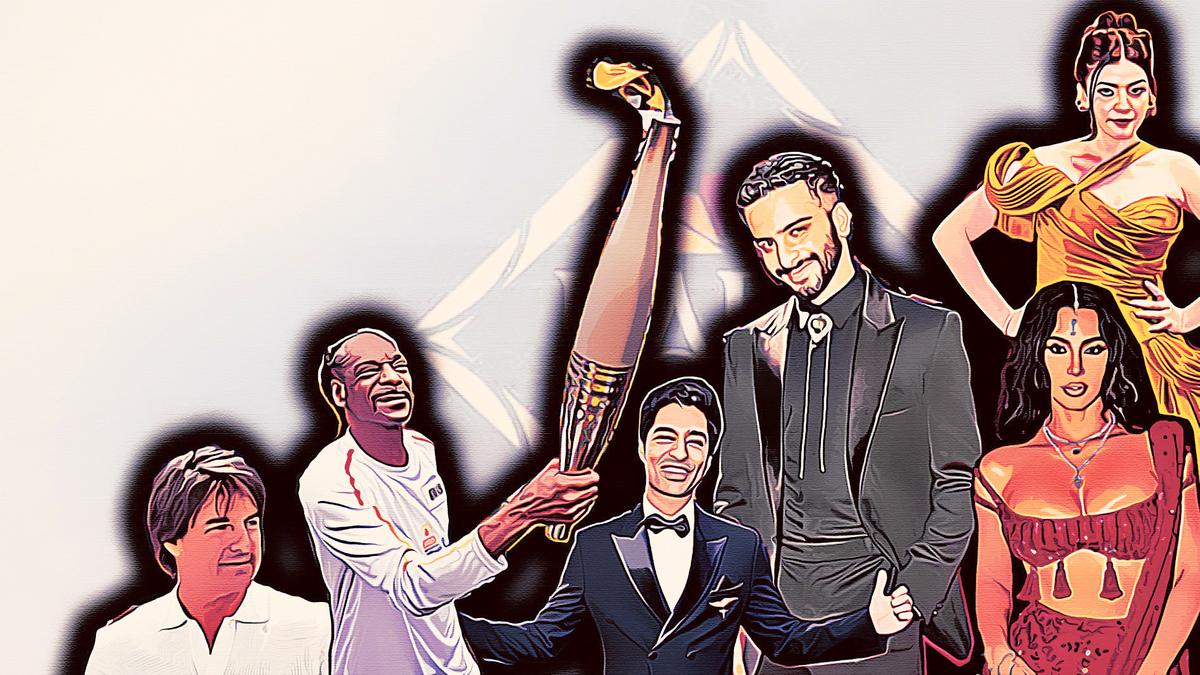
Column | From Cannes to the Ambani wedding to Paris Olympics, the call sheet of influencers is expanding
The Hindu
The Ambani wedding marked the rise of influencers, shaping events, politics, and culture in a screen-dominated world.
Look, I know you are tired of hearing about that wedding, yes the Ambani one, but it was a seminal event. Not (just) because of the number of events they managed to create and brand, or the emeralds the size of chunky chocolate bars, or the number of private flights that flew into and out of the various venues.
The Ambani wedding was a seminal event because it successfully heralded the arrival of influencers into the mainstream. While Orry, who is so famous that he neither needs a second name nor indeed a proper first, has for long been a feature at Ambani events, by the time the wedding caravan rolled into Mumbai for the big day, the call sheet of influencers attending the wedding expanded to dozens, if not hundreds.
If you followed them (or even if you didn’t, they popped up on your feed anyway), you could clearly see the agenda of the day. For example, one day was about the jewellery Ambani women re-wore, the second was about a dupatta made with flowers, the third was about the respect shown to a nanny who had helped raise the groom, and so on.
As the proceedings wore on, the organisers doubled down on influencers, finally bringing in the OG, the person who, for all practical purposes, created this industry of influencers—Kim Kardashian. The moment the visuals of Kim K, dressed in a deep red lehenga, holding hands and walking into the venue with Nita Ambani were released marked the point where influencers moved out of our phone screens and into the centrestage of our lives. I can predict with reasonable certainty that influencers will now be a part of most weddings, starting with the elite and quickly cascading down the class lines.
None of this is surprising. The last few years have seen a steady rise in the value, relevance, and well, influence, of influencers. The social media feed of the ongoing Olympic Games is predominantly created by influencers. The official Olympics site itself has a section on influencers, plus the big brands have brought in their own arsenal of sport-fluencers. If a decade ago, someone would have said the rapper Snoop Dogg would one day be goofing around with an Olympic torch, we would have laughed. Well, that’s exactly what happened last week.
Earlier this year at the Cannes Film festival, all one could see on the red carpet were influencers. It did not matter that they weren’t film stars or movie makers or related to cinema in any way. A chunk was from that allied business, fashion, but there were several whose link to a film festival was so tenuous that it was comical. I watched a video of an Indian fin-tech influencer, a stock market tipster, twirling around a promenade in the French Riviera, before tying himself into knots explaining what he was doing there. If a movie star can be paid millions to promote a sportswear brand, why can’t a regular Joe who once made a funny video that went viral be paid a million to act like a movie star at a film festival? Whoever gets the most eyeballs, wins.
Corporate brands were the first to hire influencers as paid spokespeople, thereby guaranteeing the “authenticity” of a user review that has reach and is not authentic at all. The simplicity of this business proposition — money in exchange of praise — ensured that the model spread quite quickly, so much so that an influencer who one day was extolling the virtues of taking probiotic supplements for gut health found himself, within the matter of a year, interviewing Cabinet ministers on the country’s plans for digital leadership.


‘Follower’ dives into the heated border dispute between Karnataka and Maharashtra in Belagavi while tackling the messy world of social media and its impact on friendships

India's NavIC satellite system faces setbacks, limiting its security capabilities amid concerns of reliance on foreign navigation systems

Harish Rana's last rites held, family donates his organs

Telangana's Rythu Bandhu budget allocation for FY 2026-27 is expected to decline, affecting agricultural support for farmers.

In Surendranagar, Gujarat, where only a handful of families continue to practise tangaliya weaving, we visit artisanal communities working with brands like Jaypore to revive the intricate craft for contemporary wardrobes

Madras High Court allows police to arrest YouTuber 'Savukku' Shankar if needed, dismissing claims of solitary confinement.

Lula leads Brazil's largest-ever business delegation to India, aiming for trade deals and global governance reforms amidst geopolitical challenges.

AIADMK reveals its first candidate list for Tamil Nadu Assembly election, featuring familiar names and few surprises.

A study reveals antibiotic resistance causes 87% of India's typhoid economic burden, significantly impacting children and families.

How Dikshitar was inspired by Vaduvur Rama to come up with a composition in a raganga raga

Lok Sabha passes Finance Bill 2026 with amendments, completing its budgetary approval before Rajya Sabha's consideration.

Karnataka government to consult legal experts on pursuing action against Adani Group's ACC Ltd. over ₹850 crore in disputed dues.

The FCRA amendment bill aims to create an authority for managing NGO assets after license loss, addressing misuse of foreign funds.