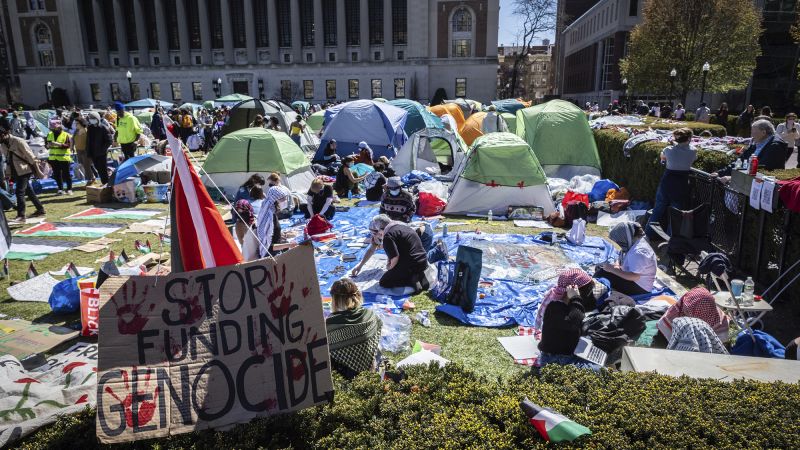
Columbia student protesters are demanding divestment. Here’s what the university has divested from in the past
CNN
One of the core demands of the Pro-Palestinian student groups at Columbia that have been protesting over the past week is for the school to withdraw investment funds from what they describe as companies profiting from Israel’s military action in Gaza.
One of the core demands over the past week by the pro-Palestinian student groups at Columbia University has been for the school to withdraw investment funds from what they describe as companies profiting from Israel’s military action in Gaza. Columbia’s endowment is worth $13.6 billion and is managed by a university-owned investment firm. The request from Columbia University Apartheid Divest — a coalition of student groups behind the movement — includes, among other steps, divesting endowment funds from several weapons manufacturers and tech companies that do business with Israel’s government. The group has described those companies as profiting “from Israeli apartheid, genocide, and military occupation of Palestine.” Israel denies accusations of genocide. This is not the first time such demands have been made. Columbia has a history of student activism, from the now-famous 1968 student occupation of multiple campus buildings to raise awareness of the Vietnam War, to hunger strikes over issues such as the university’s expansion in Upper Manhattan. And protesting students also have a history of pushing for Columbia to divest in different movements. In 2000, the university established an advisory committee on socially responsible investing, made up of students, faculty and alumni, to provide feedback to the managers of Columbia’s endowment investments. The group has a formal process for submitting divestment proposals.


Property brokerage Compass on Wednesday dropped its lawsuit against Zillow, ending a legal clash over how home listings can be marketed online.

Fed officials didn’t make any rate moves at their March meeting and released an updated forecast for the path of the American economy as the war in Iran stretches on.

Fed officials are set to announce their latest rate decision Wednesday afternoon, along with a new forecast for the path of the American economy as the war in Iran stretches on.

“The speed with which American democracy is currently dismantled is unprecedented in modern history,” one of the world’s top democracy researchers says in a new report.

Oil prices held steady Wednesday after Iraq clinched a deal to resume some crude exports via Turkey. It’s not a ton of oil, but it’s what amounts for good news these days as the Strait of Hormuz remains largely blocked.

The US-Israeli war with Iran, now stretching into its third week, is dashing hopes that the Federal Reserve will lower interest rates at all this year.

A federal judge says the Trump administration must let more than 1,000 sidelined Voice of America employees return to work by next week.

Former judges side with Anthropic and raise concerns about Pentagon’s use of supply chain risk label
Nearly 150 retired federal and state judges have filed an amicus brief on Tuesday supporting AI company Anthropic in its lawsuit against the Trump administration for designating it a “supply chain risk,” CNN has learned.

Attacks on commercial ships in the Middle East this month have all but closed the vital Strait of Hormuz to oil tankers. One of the few alternative routes for oil exports from the region goes through the Red Sea. But now even that lifeline is in danger.

When Mona Panjwani opened One40 Rooftop, a swanky restaurant in lower Manhattan last year, one of the biggest dilemmas besides the menu was choosing the reservation platform.

What could get more expensive because of the war in Iran?

Gas prices have skyrocketed due to the US-Israel war on Iran, putting even more financial strain on many Americans’ wallets.

United Food and Commercial Union Local 7, the union representing the 3,800 striking workers, said that JBS failed to meet its demands during contract negotiations over higher wages, life-saving safety equipment and improved healthcare.