CO2 rise won’t just affect crops: Prof. Lewis H. Ziska
The Hindu
Seen from the climate change lens, Lewis Ziska on how carbon dioxide impacts yield, nutrition and growth of all plants, including weeds
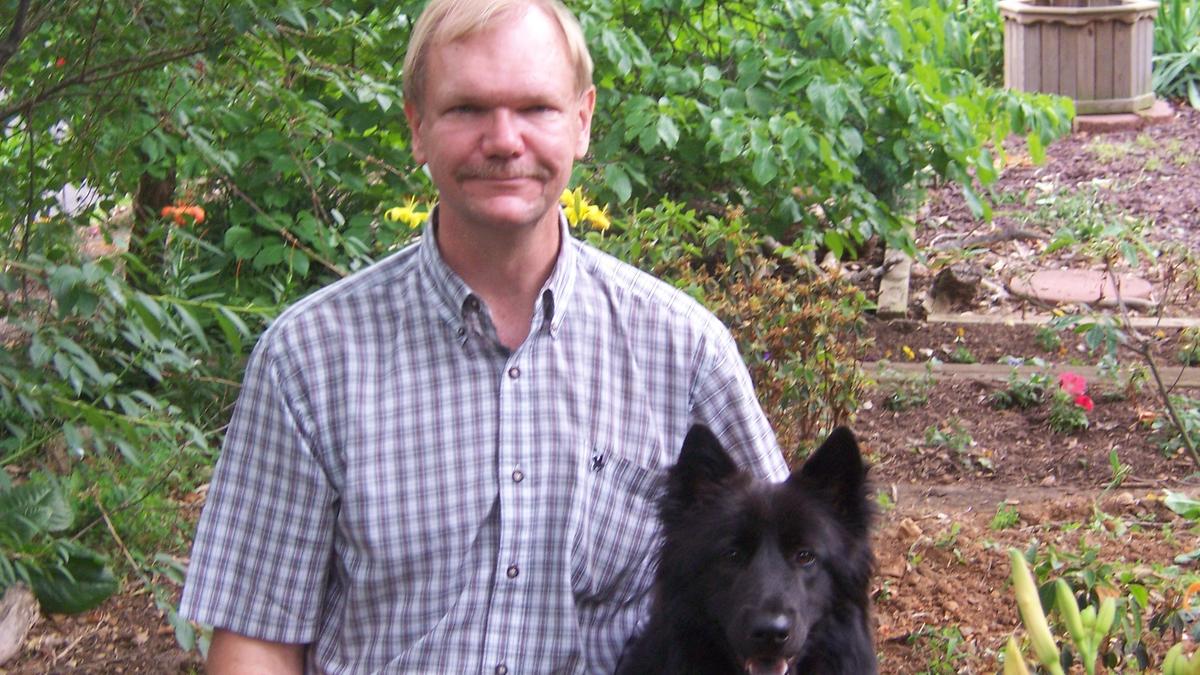
Lewis H. Ziska, associate professor at Columbia University’s Mailman School of Public Health, had to quit the U.S. Department of Agriculture after 25 years of service in 2019 to protest interference by the Trump administration in his research on the negative effects of rising carbon dioxide on nutritional composition of rice. Published in Science Advances, a top-notch scientific journal, the research found that increased carbon dioxide in the atmosphere reduced Vitamin B and E in rice plant which could impact 50% of daily calorie intake by more than 6 million rice eaters in the world. In his book Greenhouse Planet, he captures all that went behind the research while stressing the urgent need for investigating the climate-denying mantra that carbon dioxide feeds plants and greens the planet. In an e-mail interview, Prof. Ziska responded to questions on the wider implications of his research on plant biology as seen from the climate change lens.
I am hoping it will strengthen those commitments — showing that CO2 is plant food for poison ivy, or for Parthenium — or can reduce the nutritional content of rice will, if anything, bring scientific scrutiny to the assumption that ‘CO2 is plant food’, and challenge deniers’ claims.
Fair point — it won’t get the attention it deserves unfortunately. It’s hard to compete with extreme events, droughts, floods as they are visually compelling. Watching slow changes in plant species distribution, or nutritional changes in your rice bowl, while very important, don’t capture that level of dramatic immediacy.
It’s important to consider that in the plant kingdom, as with the animal kingdom, competition is important. If you farm you recognise that the biggest physical effort is to reduce weeds, as weeds are the primary limitation on crop yield. As CO2, the source of carbon for plant growth increases, it isn’t just crops that are affected. In a majority of studies to date, it is the weeds, not the crops, that are the ‘winners’ and crop yields are negatively affected. So, while individual plants can respond, in a field situation, the weeds, with their greater ability to adapt to change, may pose an even greater threat to food security.
Yes. One piece of good news, many of the worst weeds are simply wild relatives of the crop. For example in rice, the worst weed is Red Rice, or weedy rice. Right now we have data suggesting that weedy rice has already responded strongly to the 25% increase in CO2 since 1970, i.e. it yields more than the cultivated rice lines which respond roughly by about 10%. Suppose we knew why — could we look for those characteristics in weedy lines as a means to increase yields (and sequester carbon) in cultivated rice through breeding? Can crops ‘learn’ from their weedy cousins?
Great question — and a difficult one. Communicating science isn’t about the esoteric or the what might be. It is about linking the science, especially food science, to climate and CO2 increases. These links include production (of course) but also nutrition (CO2 effects) and food safety (temperature effects on pathogens). My experience has been that if you can relate these scientific issues directly to what you consume at the table; then climate/CO2 takes on a very real and immediate meaning.
Respectfully disagree, perhaps there is greater effort to push back and discredit climate science, but climate change has, if anything, become more certain. It is the science of CO2 and plant biology that needs greater explanation and exploration beyond the simple ‘CO2 is plant food’ meme. But the scientific bottom line is simple: If you think that the science of climate change (or CO2 effects on plant biology) is wrong — proof it. Write an hypothesis, test it, tell us how you tested it (so we can see what you did), and publish the findings after other experts have looked at your work. Lots of bloggers will talk about how climate science is wrong — but to date I am unaware of any who have published in the peer review literature showing that anthropogenic climate change is not occurring.


AI tool for sparrow conservation

BTS’s comeback with ‘Arirang’ marks a major global music event. When does the album release, and where can you watch their concert live stream? We have all the details

The 2026 U.S. cholesterol guidelines urge starting screening and treatment at 30 to prevent cardiovascular disease effectively.

Olam Festival 2026 in Thiruvananthapuram returns March 27-29 with 120+ vendors, music, art, and cultural zones.

A few storytellers in Thiruvananthapuram share their journeys, challenges, and evolving methods on World Storytelling Day, inspiring young minds.

76-year-old Kurian Jacob from Kerala triumphs with seven medals, including five golds, at the Open Masters Games in Abu Dhabi.

Explore the nature of the human mind as an emergent property of brain activity and complex neural interactions.

CERN's Large Hadron Collider discovers the Xi-cc-plus particle, enhancing understanding of quantum mechanics and baryon behavior.

Vibha Batra’s latest book, Spotless (Hachette India) is a novel in verse for young adults

In its first edition, the Madras Art Salon spotlights the works of journalist and artist Narayan Lakshman at The Botanical Club, a social space in the British Deputy High Commission, Chennai

Cholesterol enhances melanoma cell invasion by making nuclei squishier, revealing a potential treatment target in cancer progression.

The designers reinterpret the Swedish artist’s symbolic forms and colour energy through contemporary resortwear silhouettes

Discover the inspiring legacy of Bibha Chowdhuri, a pioneering woman in physics and a trailblazer in STEM history.