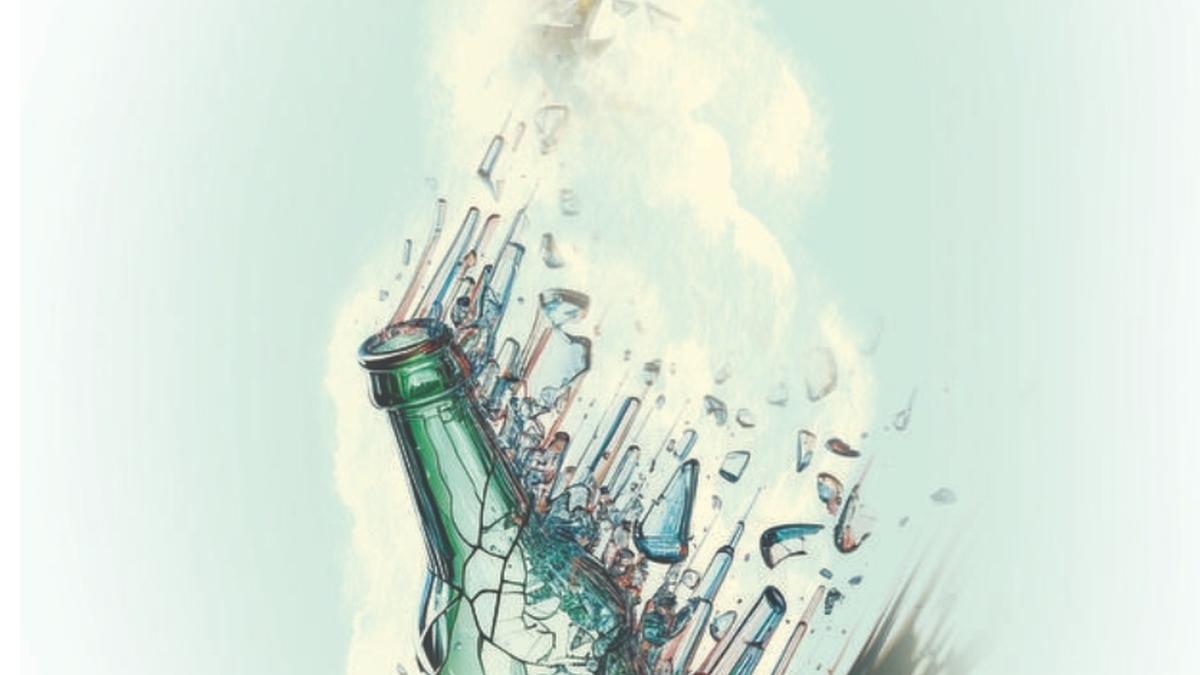
Clinging to shards of hope: glass on a difficult recycling journey
The Hindu
Chennai-based entities representing a reasonable cross-section of the waste recycling community explain why broken glass and even fully intact glass bottles have a difficult journey to make before they can enjoy a new life and purpose
Shards bring luck. The efficacy of that Germanic superstition is restricted to porcelain. It takes a beating when the shards are of glass. Take a poll among local kabadiwalas: they will vote broken glass out in a brutal landslide verdict. Many a reputed recycler from the organised sector would also turn down broken glass in polite but unambiguous terms.
In Chennai’s circular economy, Spreco Recycling Pvt Ltd is a recognised name. Its director Krishnapriya A. weighs in with her company’s stand on broken glass: “While we recycle almost all types of waste (including glass bottles), we avoid broken glass entirely. It is hazardous for our manpower, who handle waste directly, and transporting it is a logistical nightmare.”
Even when it is in one piece, glass — which includes glass bottles — is made to feel unwelcome at the hyperlocal level, with many kabadiwalas operating around the street corner spurning it for the challenges that go with just accumulating it, not to mention the low returns that hardly just the efforts.
P.S. Jayaraman, a resident of SSM Nagar, a 2500-unit gated community in New Perungalathur, spearheads a recycling initiative involving residents of the massive enclave. Jayaraman repeats the sentiments about fully-intact glass bottles, expressed by K. Gopal, a local kabadiwala operating in SSM Nagar. “The local kabadiwala mentioned that he no longer collects glass bottles unless they are accumulated in large quantities for recycling, which poses a space constraint for him. He stated that transparent glass bottles fetch anywhere between ₹3000 and ₹4000 per tonne, while brown bottles are valued lower. Bottles of other colours have no resale value and are typically broken down before being sent for recycling.”
Gopal reportedly operates on a measly 300 sq.ft which comes at a rent of ₹9,000 per month, and if he were to foray into glass bottle accumulation, he would need a minimum of 10,000 sq.ft.
These realities trace a picture of disappointment. Glass lends itself to closed-loop recycling, capable of being recycled ‘n’ number of times without registering a drop in its quality. But glass is only rarely allowed to go on this journey, as it is up against obstacles and its amazing potential is trapped in the shards and cracks of a broken recycling system. It is a pity that as most recyclables, ranging from plastic to paper, receive a second bite at the cherry, glass remains a fragile and dejected outsider.
Given these systemic hurdles, even glass aggregators are likely to be thin on the ground. Let us track the typical day lived by one of those aggregators: Antony Arul Xavier. Operating out of his modest facility, Seeman Bottles in Chitlapakkam, and focussing exclusively on glass, broken and intact in a variety of forms, Xavier is taking a road seldom taken, and he knows it.


Explore the behind-the-scenes of political strategy with "Inside the War Room," a must-read for aspiring politicians and managers.

Villivakkam faces civic challenges despite infrastructure improvements, with residents demanding better healthcare, transport, and green spaces ahead of elections.

District Collector launches e-dip lottery for Settipalle land plots, benefiting 2,111 beneficiaries with planned infrastructure development.

Chengalpattu's horticulture farm launches herbal tea, Idhazh, made from sun-dried hibiscus and organic herbs.

Hyderabad is set to become a global film hub, says CM Revanth Reddy at TGFA 2025, highlighting its cinematic potential.

Sivananda Damodara Pai appointed head of RMC Chennai, known for advancing seasonal rainfall and temperature forecasting models.

Madurai Collector chairs meeting with Election Observers

CBI interrogates Anil Ambani in a ₹2,929-crore cheating case involving alleged loan fund irregularities from State Bank of India.

Tamil Nadu's 2026 election features intense competition among established parties and a new disruptor, promising unique voter choices.

Explore the contrasting management styles of England and India cricket teams, highlighting player support and development challenges faced by Liam Livingstone and Sanju Samson.

Modi and Jaishankar advocate for dialogue as India and France collaborate to de-escalate tensions amid escalating strikes on energy infrastructure.

The star-studded event was held in Mumbai and was attended by rithik Roshan, Alia Bhatt, Bobby Deol, Shahid Kapoor, Vijay Varma, Sonakshi Sinha, Jyotika, Ali Fazal, Sonali Bendre, Preity Zinta, Ravi Kishan and others

Shorts News:We are working on securing LPG, petroleum to meet our energy security needs: MEA