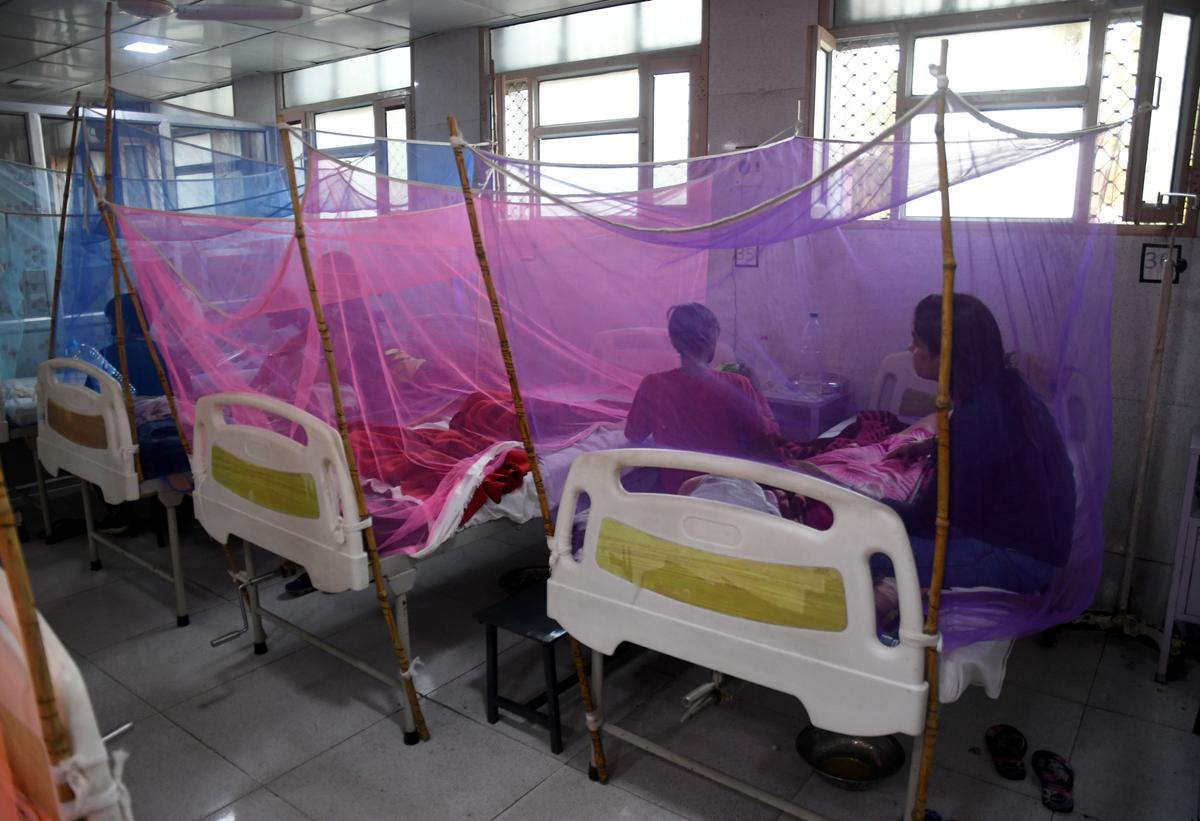
Climate change a leading reason for rise in number of dengue cases: study
The Hindu
Around half the population of the world now lives in areas where dengue is present, the Lancet report says.
Climate change has caused a spike in the number of recorded vector-borne diseases like dengue and malaria, a new study has revealed.
The 2022 report of the Lancet Countdown on health and climate change: health at the mercy of fossil fuels outlines the impact of climate change on worsening health hazards and extreme weather events, as well as its economic fallout and possible actions for mitigation.
The study finds that changing climate patterns, coupled with other factors like urbanisation and increased movement of people and goods, have boosted the spread of disease-causing mosquitos. The climatic conditions needed for mosquitos to thrive increased by 11.5% and 12% from 1951-60 to 2012-21 for Aedes aegypti and Aedesalbopictus respectively — the species of mosquitos that cause diseases like dengue and chikungunya. The length of the transmission season for malaria also increased by 31.3% in American highlands and by 13.8% in African highlands from 1951–60 to 2012–21, the Lancet report said.
This is not the first time that climate change and increased movement have emerged as the reason for an increased spread of diseases, affecting all forms of life. The European Centre for Disease Prevention and Control states that Aedesalbopictus has undergone a “dramatic global expansion” aided by human activities like the movement of used tyres and ‘lucky bamboo’ plants. Passive transit has spread this mosquito globally.
The 2022 Living Planet Report, released a few weeks ago, said that beetles and moths that attack forests in northern regions, like the temperate and taiga zones of North America and Europe, survive better in warmer climates. These insects kill trees on a mass scale, wiping off certain vegetation from large areas. Many disease-causing insects and worms also survive better in warmer climates and have now moved to once-colder regions of the Arctic and Himalayan highlands.
Around half the population of the world now lives in areas where dengue is present, the Lancet report says. Arthropod-transmitted viruses, or arboviruses, have spread rapidly in the past two decades. Dengue, chikungunya, Zika virus, yellow fever, and Japanese encephalitis are a few common arboviral diseases, and all of these are caused by the bite of an infected mosquito.
The basic reproduction number (R 0) for the transmission of dengue increased by 11·5% for Aedes aegypti and 12% for Aedes albopictus on average during 2012–21.


The government plans to amend the FCRA, introducing new regulations for NGO asset management and accountability for key functionaries.

The draft policy for “Responsible Digital Use Among Students”, released on Monday by the Department of Health and Family Welfare, has recommended that parents set structured routines with clear screen-time rules and prioritise privacy, safety, and open conversation with children on digital well-being.

Police Observer Sushant Kumar Saxena conducts surprise inspection at Shencottai police station, reviewing warrants and security arrangements ahead of elections.

Andhra Pradesh government to launch key projects in April, focusing on industrial growth and infrastructure development, says Nara Lokesh.

Lok Sabha refers the Corporate Laws (Amendment) Bill to a JPC amid opposition concerns over CSR provisions dilution.

SHG members in Kanniyakumari use snakes and ladders to raise election awareness and boost voter turnout.

Government accelerates consultations for early implementation of the Women’s Reservation Act to ensure women’s representation in 2029 elections.

CM A. Revanth Reddy distributes ₹1 crore insurance cheques to families of deceased Electricity department employees, enhancing financial security for workers.

The Bengaluru Traffic Police (BTP) registered 634 cases of drunk driving during a week-long special enforcement drive conducted across the city between March 16 and March 22.

GHMC intensifies action against property tax defaulters, seizing properties and offering a One Time Settlement scheme for payments.

CCB arrests three drug peddlers in Mangaluru, seizing ₹2.5 lakh worth of MDMA and other valuables.

TVK's 28 candidates in Puducherry include former BJP MLAs, a sitting Independent, and a retired police IG.

BRS submits notice on private member bill to Speaker