Citing ‘unjust racial discrimination’, Trump grants asylum to White Afrikaners Premium
The Hindu
Trump administration fast-tracks White Afrikaner refugee applications, citing "white genocide" in South Africa, despite lack of data supporting claims.
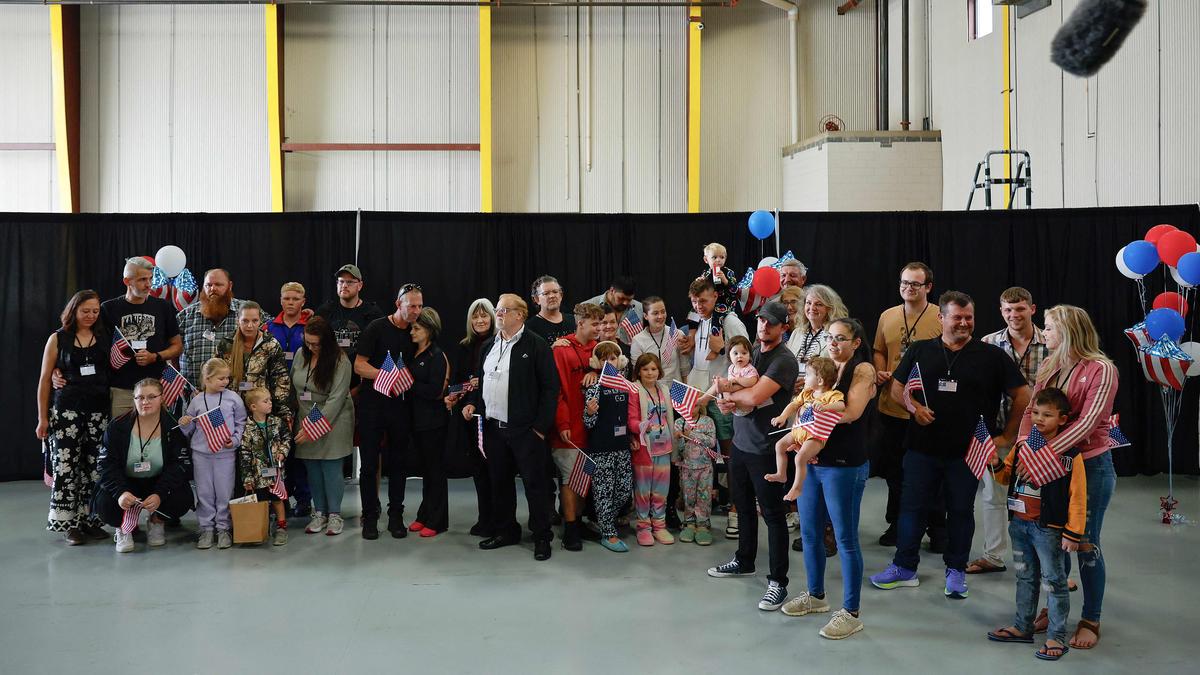
On May 12, 49 White Afrikaners landed at the Washington Dulles International Airport — making them the first group resettled under a new Trump administration initiative. U.S. officials greeted them as beneficiaries of President Donald Trump’s new resettlement programme.
Mr. Trump endorsed the Afrikaner community’s claims of “white genocide” and endangered “Afrikaner” identity. Subsequently, he offered them asylum by fast-tracking their applications. He cited “unjust racial discrimination” to defend the urgency behind the move.
White Afrikaners have expressed growing resentment since the passage of a new land-reform law in January 2025. This law permits the government to seize privately owned land without compensation. This is only if it is “just and equitable and in the public interest” to do so.
The law aims to correct historically disproportionate land ownership. The Black African population comprises approximately 80% of South Africa’s 63 million-strong population. Yet, they only own 4% of the total land. More than 72% land is under White ownership, although they form only 7% of the total population.
The reform has triggered a backlash among segments of the Afrikaner community, who frame it as systemic racial persecution. Many claim threats to their life and land. However, no land has either been seized or formally taken over under the new act to date. Even so, existing crime patterns are used to portray a picture of targeted killings. These claims have not been scrutinised, but are relayed by the Trump government publicly.
The United States Refugee Act, 1980 limits the applicability of refugee status. They must demonstrate a well-founded fear of persecution based on race, religion, nationality, political opinion, or membership of a particular social group. Neither U.S. law nor the UN Refugee Convention, 1951, makes concessions for economic insecurity or country-wide crime. On this count, the choice to accord refugee status does not comply with legal requirements. Further, international refugee law also disallows voluntary return to the refugee’s home country. In this case, many of the refugees intend to go back home for holidays and to attend to business.
There are also inconsistencies in the broader narrative.


Protests escalate in Minnesota as federal agents clash with demonstrators following the fatal shooting of a woman by ICE.

Iranians regain some ability to call abroad as internet access remains blocked amid ongoing protests and government crackdowns.

Marine Le Pen's appeal trial could impact her 2027 presidential ambitions following a conviction for misusing EU funds.

France's emissions cuts are slowing, jeopardizing its climate goals and highlighting urgent challenges in transitioning to a low-carbon future.

G7 Finance Ministers meet to explore strategies for reducing reliance on China's rare earths and enhancing alternative supply chains.

Exxon Mobil plans a Venezuela visit despite Trump’s concerns, focusing on legal reforms and investment security in the oil sector.

U.S. lawmakers visit Denmark to reinforce ties amid Mr. Trump's controversial Greenland acquisition threats and rising geopolitical tensions.

The Taliban appoints its first envoy in India, signaling deeper diplomatic engagement despite India's non-recognition of the regime.

Australia's Ambassador to the U.S., Kevin Rudd, resigns after a contentious tenure marked by tensions with President Trump.

Iran protest live updates: Death toll reaches 648 as security forces escalate crackdowns amid a nationwide internet blackout. Follow The Hindu for LIVE updates

New York City Mayor Zohran Mamdani and wife Rama Duwaji move into Gracie Mansion, leaving behind their Queens apartment.

Canadian Prime Minister Mark Carney visits China to strengthen ties and reduce reliance on U.S. amid trade challenges.

Minnesota sues the Trump administration over immigration enforcement, claiming violations of free speech and escalating public safety concerns.