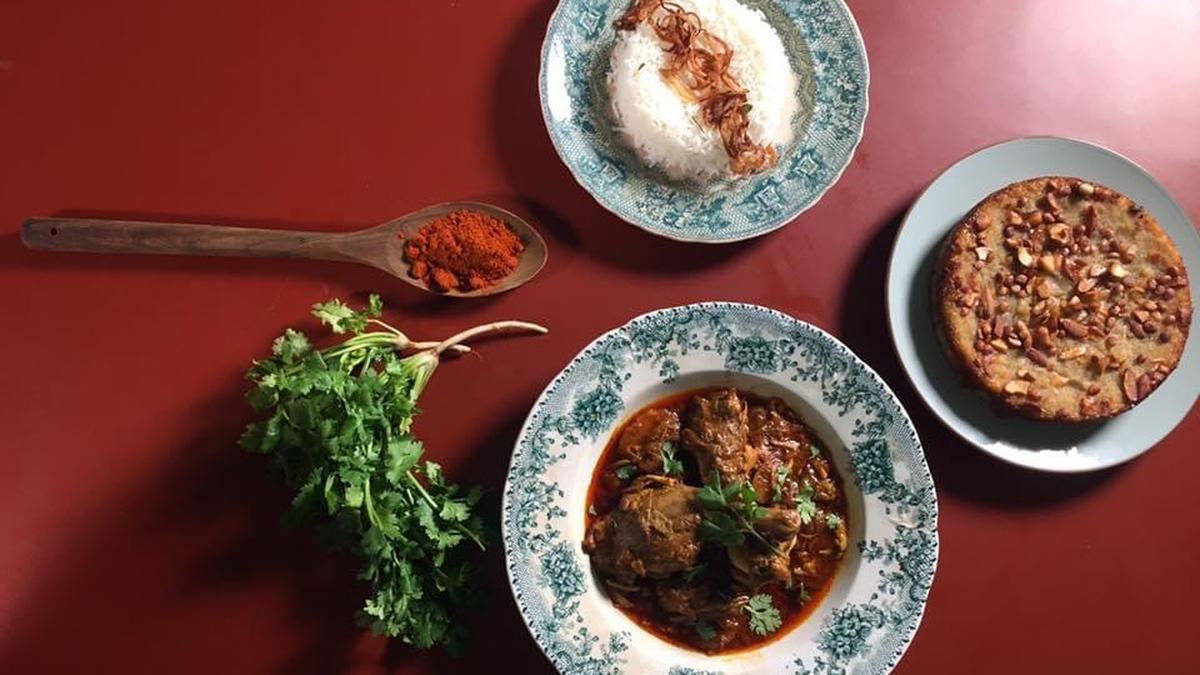
Christmas in the East Indian Catholic community is a table full of stories
The Hindu
Experience the rich culinary heritage of East Indian Christmas traditions in the coastal town of Uttan, North of Mumbai.
In the coastal town of Uttan, North of Mumbai, known for its East Indian Catholic community, the salty sea breeze from the nearby beach brings a refreshing coolness into homes built with sturdy stone walls. Here, the air is filled with the sounds of fluttering curtains and birdsong. In one such home, 37-year-old Alefiya Jane is preparing Christmas cakes using a recipe handed down from her grandmother.
This Christmas holds special significance for Alefiya, as it will be her last in her over 200-year-old ancestral home before it undergoes redevelopment. For her, these cakes are more than just festive treats; they embody the rich traditions of the East Indian community, which she has upheld since childhood.
“Christmas celebrations at home were always about the entire family coming together. My grandmother has a knack for turning any meal into a celebration. For instance, she’d stuff and roast a pig on a spit. It was unheard of in Uttan,” says Alefiya.
A few days before Christmas, Alefiya’s home kitchen would transform into a hive of activity. Food, for the family, was never just food; it was always grand, always celebratory. “Nana’s meals were never mediocre. But for Christmas, the spread was something else. There’d be potato chops, beef roast, pork vindaloo (or indyal, as the East Indians refer to it), salted meat (a spicy East Indian preparation), and wedding rice, or what we call arroz fugad. And, of course, there’d be salads, pancake rolls — though ours weren’t just sweet; they were filled with pork mince — and something we call ‘latee’ in our community, which is steamed rice noodles,” she says.
The East Indian community, often considered Mumbai’s original inhabitants, traces its roots to the Portuguese influence in the 16th Century. When the British East India Company arrived, the local Catholic population — mainly agrarian landowners — adopted the name East Indians to distinguish themselves.
Christmas for the community is a time to showcase their rich culinary heritage. But despite their name, East Indians are deeply rooted in Maharashtra, and their cuisine is heavily influenced by Marathi cooking traditions. The use of coconut, rice, and local spices like goda masala ties their food to the Konkan region. The community is not monolithic; it comprises various sects that bring their nuances to the table. The Samavedi Christians, for instance, have retained many of their pre-Christian Marathi cultural traditions. They are known for their strong agrarian roots and tend to prepare food that highlights the abundance of their farmland, like dishes featuring seasonal vegetables and grains.
The Koli Christians, originally from fishing communities, emphasise seafood in their Christmas feasts. You will find prawn, crab, and dried fish incorporated into their festive meals alongside traditional dishes. Then there are the Bassein East Indians (from Vasai), whose Portuguese influences are perhaps the strongest, seen in dishes like indyal and the use of vinegar in many preparations.


AIADMK reveals its first candidate list for Tamil Nadu Assembly election, featuring familiar names and few surprises.

A study reveals antibiotic resistance causes 87% of India's typhoid economic burden, significantly impacting children and families.

How Dikshitar was inspired by Vaduvur Rama to come up with a composition in a raganga raga

Lok Sabha passes Finance Bill 2026 with amendments, completing its budgetary approval before Rajya Sabha's consideration.

Karnataka government to consult legal experts on pursuing action against Adani Group's ACC Ltd. over ₹850 crore in disputed dues.

The FCRA amendment bill aims to create an authority for managing NGO assets after license loss, addressing misuse of foreign funds.

Telangana Minister assures adequate petroleum stocks for three months, warns against illegal fuel carrying amid panic buying rumors.

TMC calls for the removal of Bhabanipur returning officer, citing alleged ties to BJP and concerns over neutrality.

Kerala CM Pinarayi Vijayan condemns UDF's misogynistic attacks on CPI(M) legislator U. Prathibha, highlighting political degeneration.

Selected from 9,400 submissions across 37 countries, the 100 photographs on display traverse intimate and political terrains. In MRC Nagar, photographer Swastik Pal captures life in the Sundarbans, where severe climate change has brought humans and wildlife into closer contact. Shane Hynan’s Beneath Beofhod reflects on Ireland’s boglands as sites of memory and restoration, while Mateo Trevisan’s More than the Sun examines the impact of coal-driven industrialisation in the Western Balkans.

Hyderabad officials assure sufficient fuel supply for 60 days, warn against misinformation and illegal sales amid panic buying.

Telangana MP urges Centre to expedite ₹1,270 crore dues transfer from Andhra Pradesh for financial fairness and development.

A Karnataka man was detained with ₹62.5 lakh in cash during election checks on NH 544, claiming it was from a property sale.