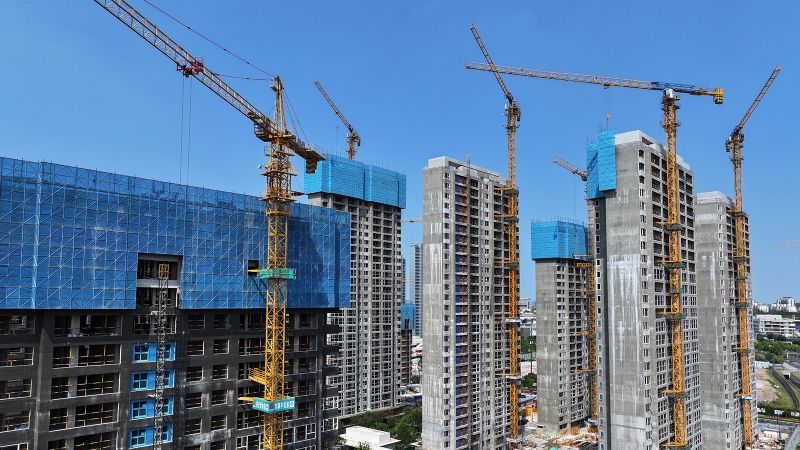
Chinese cities desperate for cash are chasing companies for taxes — some from the 1990s
CNN
Authorities in cash-strapped Chinese cities are chasing companies for taxes dating back years, and in some cases decades, as they try to plug a hole blown in their finances by the real estate crisis.
Authorities in cash-strapped Chinese cities are chasing companies for taxes dating back years, and in some cases decades, as they try to plug a hole blown in their finances by the real estate crisis. At least eight major listed companies in China have disclosed that they’ve received demands to pay historical taxes, in one case going as far back as the 1990s, in a development that has caused an uproar online and damaged already fragile business confidence. V V Food & Beverage, the country’s largest soy milk producer, said last week that one of its subsidiaries had received a demand for payment totaling 85 million yuan ($11.7 million) from the government of Zhijiang city in the central province of Hubei. The Zhijiang tax bureau said it recently found that the company had failed to file tax returns for 16 years from 1994 to 2009, the company said in a June 12 statement. The beverage maker isn’t the only one to fall foul of the apparent tax crackdown. At least seven other listed companies have reported similar demands over the past few months. In some cases, the companies have had to suspend production and lay off workers because they couldn’t absorb the hefty tax bills and penalties. The crackdown suggests local governments are searching for another way to fill their coffers, as they struggle under mounting financial stress because of a persistent property slump and economic weakness. The authorities have also publicized efforts to work more closely with police to find tax offenders, which has caused even more alarm.


Oil prices rose Tuesday after fresh fighting overnight between Israel and Iran diminished hopes that an end to the Middle East war, now in its fourth week, might be imminent.

President Donald Trump made an ALL-CAPS reversal on Iran strikes Monday morning. That sent oil prices plunging.

Undeterred by a federal judge’s recent rebuke, the Pentagon has announced another set of restrictions on the press corps that regularly covers the US military.

If you’ve been paying attention to, like, the news, you may be tempted to see Wall Street’s Monday morning 180 from despair to euphoria as a sign that stock traders are all a bunch of rubes.

“Linda from Arizona,” a caller on Clay Travis’ conservative talk radio show, might deserve the credit or blame for ICE agents deploying to airports across the US today.

Artificial intelligence could widen the problem of income inequality, said BlackRock CEO Larry Fink in his annual letter to shareholders.

Stocks soared and oil prices fell after President Donald Trump on Monday said the United States would postpone further strikes on Iran’s energy infrastructure, pending the outcome of negotiations.

The national average price for a gallon of regular unleaded gasoline is on the verge of hitting $4 for the first time since 2022.

Oil prices rose Monday after the United States and Iran threatened fresh attacks on energy facilities in the Middle East, including power plants, signaling that the conflict may yet escalate.

The war in Iran is pushing up prices for already-strained farmers, with higher costs for fertilizer and energy on top of last year’s tariffs. And the increasing pressure on American agriculture could lead to even bigger price tags at the grocery store.

If you only watched Fox News over the weekend, you didn’t hear about President Donald Trump’s widely condemned reaction to Robert Mueller’s death.

Oil prices rose Sunday after President Donald Trump threatened to “obliterate” Iran’s power plants if the Strait of Hormuz is not reopened by Monday evening.

Defense Secretary Pete Hegseth has been taking steps to thwart news coverage of the Pentagon for more than a year. Now he has finally met some resistance.