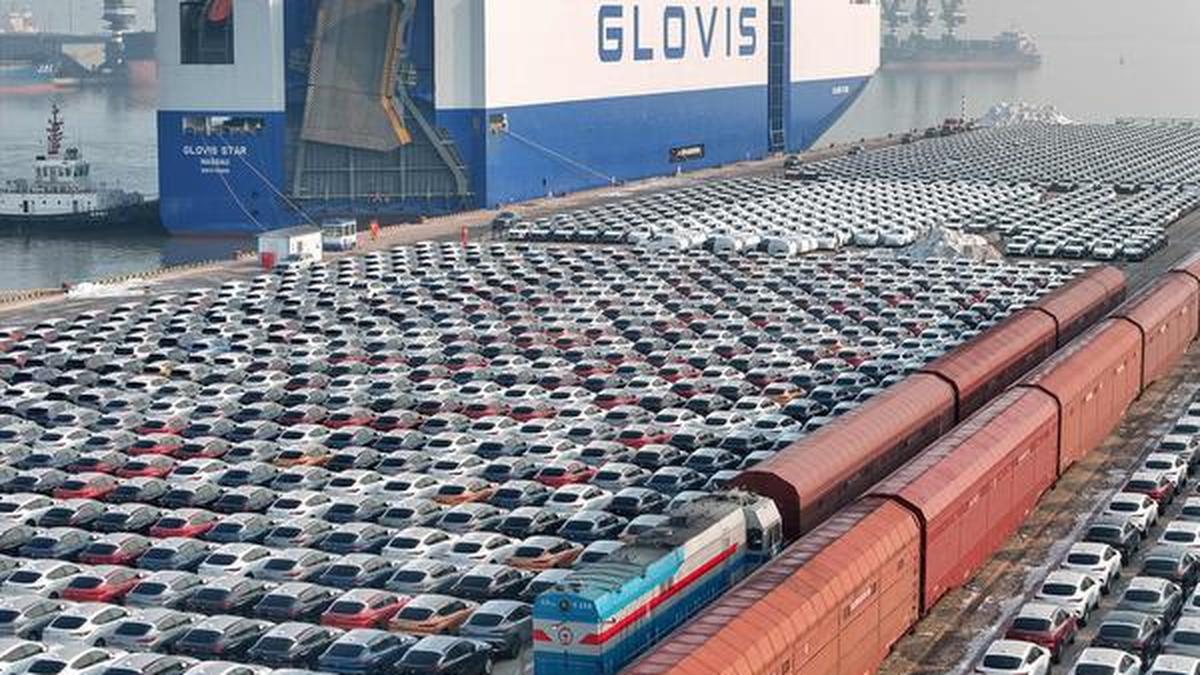
China’s tumbling prices push some exporters to the brink
The Hindu
Prolonged factory deflation threatens smaller Chinese exporters as falling prices and rising competition squeeze profit margins.
When Kris Lin, who owns a lighting factory in China, received this year’s first order from a close overseas client, he faced a distressing choice: take it at a loss, or tell workers not to come back after the Lunar New Year.
“It was impossible for me to lose this order,” said Mr. Lin, who plans to re-start his factory in the eastern city of Taizhou at around half its capacity after the February 10-17 holiday break.
“I could have lost this client forever, and it would have endangered livelihoods for so many people. If we delay resuming production, people might start doubting our business. If rumours spread, it affects the decisions of our suppliers.”
Prolonged factory deflation is threatening the survival of smaller Chinese exporters who are locked in relentless price wars for shrinking business as higher interest rates abroad and rising trade protectionism squeeze demand.
Producer prices have been falling for 15 straight months, crushing profit margins to the point where industrial output and jobs are now at risk and compounding China’s economic woes, which include a property crisis and debt crunch.
About 180 million people work in export-related jobs, Commerce Ministry data from 2022 shows.
Raymond Yeung, chief China economist at ANZ, says fixing deflation should be a higher policy priority than reaching the expected growth target of around 5% for this year.


L&T confirms 95% of its West Asia project sites are safe, while addressing logistics challenges amid ongoing regional conflicts.

Mines Ministry to auction 19 critical mineral blocks on March 23, expanding strategic resources for clean energy and technology sectors.

Mines Ministry to auction 19 critical mineral blocks on March 23, expanding strategic resources for clean energy and technology sectors.

Five top firms lose ₹1 lakh crore in market value, with HDFC Bank experiencing the largest decline of ₹56,124.48 crore.

HDFC Bank terminates three senior officials over client onboarding issues at its DIFC branch amid ethical concerns following chairman's resignation.

Air India CEO warns of potential flight cuts and reduced travel demand due to rising fuel costs amid ongoing Gulf conflict.

Options are widely used by retail traders to speculate on the value of the stock for immediate gains and such behaviour in large scale can distort the market

India achieves 1 billion tonne coal production for the second consecutive year, ensuring stable energy supply and economic growth.

Generic drugmakers in India launch affordable Semaglutide versions, targeting a $1 billion diabetes and weight loss market.

Indian and Asian refiners eye Iranian oil purchases as U.S. waives sanctions amid energy crisis linked to the Iran-Israel war.

Iran war impacts pesticide prices, warning of a 20-25% rise and increased risk of counterfeit products during the kharif season.

India's forex reserves fell by $7 billion to $709.76 billion, according to RBI data for the week ending March 13.

Natco Pharma will launch its Semaglutide injection (multi dose vials) in the domestic market on Saturday.