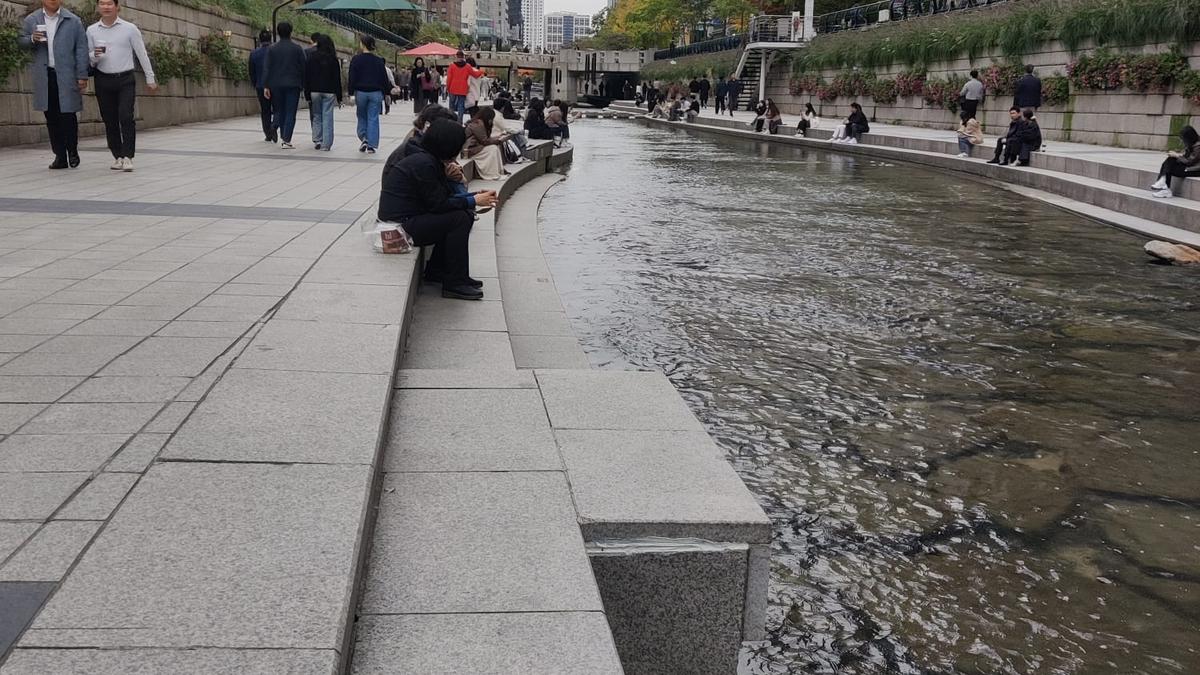
Cheonggyecheon: A stream in South Korea destroyed and revived
The Hindu
Cheonggyecheon stream in Seoul, South Korea: a restored stream with historical significance and environmental benefits.
A shallow brook created at the centre of the Seoul City in South Korea over 20 years ago has become the favourite haunt of senior citizens, youth and tourists alike.
Older persons and tourists take strolls on the lengthy promenade, and professionals from the corporate giants take a break from work to relax along the 10.9 kilometer stream.
Though now reduced to a stream of re-routed water from the Han river, the Cheonggyecheon (Cheong Gye Cheon as per the installed stone tablet) has a history.
It had been a seasonal stream flowing from the hillocks for major portion of its life. In 17th Century, a major attempt was made to strengthen its banks and create bridges, for the purpose of storm water drainage for the city.
Eventually, industrialisation and modernisation of South Korea had turned the stream into a sewage canal, which was worsened by large number of migrant population settling on its banks. Attempts were made in mid 20th Century to get rid of what was an eyesore in the city, by pouring concrete over the water channel. In 1976, an elevated expressway built over it served the dual purpose of hiding the view and aiding the commuters.
“It was almost dry. Till about fifty years ago, there was a shantytown on the banks, but government authorities removed the wooden hutments for the express highway. No compensation was paid, as Korea was very poor then,” recalled Lee Kevin, owner of a shipping agency, who had seen the stream in its worst condition.
In 2002, the then Mayor of Seoul Lee Myung-bak took the audacious decision of removing the expressway and restoring the stream by diverting water from the Han river, because the stream would not receive water from its natural source anymore.


Women teachers over 50 express discontent after Revenue Department denies blanket exemption from SIR and census duties in Karnataka.

Union Minister skips crucial NCTP meeting amid backlash over controversial Transgender Rights Bill, raising concerns within the community.

Former Minister Semmalai urges parties to limit freebies and prioritize development for Tamil Nadu's future prosperity.

New Mangalore Port will receive 72,700 tonnes of LPG next week, including a 16,714-tonne discharge on March 22.

The Centre lifts air fare caps after three months, citing stabilized operations and rising aviation fuel costs amid geopolitical tensions.

Residents of Salem South demand solutions for traffic congestion, mosquito issues, and inadequate drinking water supply ahead of elections.

Experience Guuranda in Chennai: A captivating blend of Narungga stories, dance, music, and shadow puppetry celebrating Aboriginal culture.

Police warn against downloading APK files and clicking suspicious links to avoid falling victim to cyber fraud.

CM A. Revanth Reddy reviews Bhadrachalam temple development plans, targeting completion by March 2027 while adhering to Agama Shastra.

First-half blitz helps Punjab FC drub Kerala Blasters FC

Vellore Mayor Sujatha Anandakumar and a councillor face legal action for violating the Model Code of Conduct by distributing sports equipment.

Supreme Court judge Justice Nagarathna highlights government's role in court backlog, urging judicial reforms for effective litigation management.

Kerala LDF ministers declare assets nearing ₹2 crore each amid upcoming elections, revealing financial details and legal challenges.