Chennai likely to emit 232 million tonnes of carbon dioxide by 2040, say IIT-M researchers
The Hindu
The team suggest replacing traditional cement with a low-carbon alternative, reusing demolition waste for future construction and switching to renewable resources to meet the energy requirements of buildings
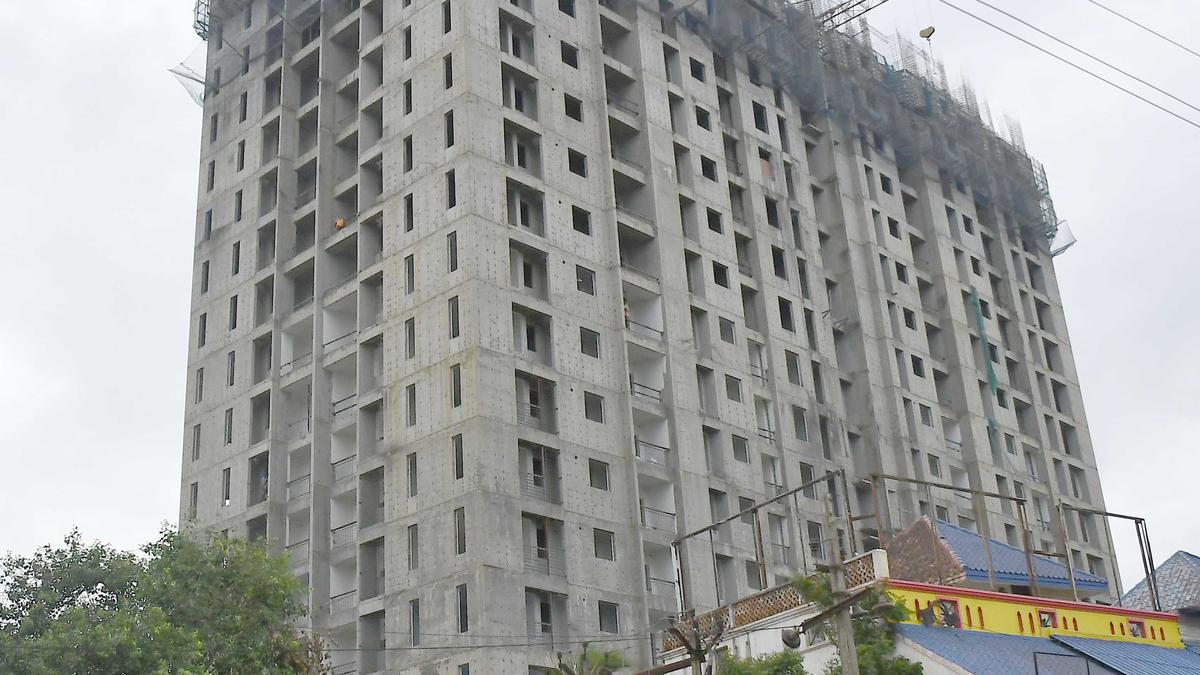
Researchers at the Indian Institute of Technology Madras (IIT-M) predicted that Chennai would emit around 232 million tonnes of carbon dioxide (CO 2) by 2040.
Construction activities and operations of the buildings in the city could lead to as much as 231.9 million tonnes of CO 2 emissions. The buildings consume around 75% of energy to remain functional, the researchers found. A team from the Centre for Technologies for Low Carbon and Lean Construction at the institute and the Indo-German Centre for Sustainability (IGCS) conducted the study and have suggested utilising renewable sources of energy.
Ashwin Mahalingam, a professor at the institute’s civil engineering department, said to achieve the emissions target, it was necessary to benchmark what ‘business as usual’ emissions were likely to be in future and work backwards from there.
The researchers developed a futuristic map of the city in 2040, taking into account past trends and future constraints. The study showed an increase in urban built-up area and a decrease in the area of waterbodies and wetlands. It used life cycle analysis of construction activities and estimated the CO 2 released during demolition, transportation and construction activities and operation of buildings.
The team suggested replacing traditional cement with a low-carbon alternative, reusing demolition waste for future construction and switching to renewable resources to meet the energy requirements of buildings. By shifting to clean energy sources to supply 50% of the building’s energy needs, the cumulative CO 2 emission can be reduced by up to 115 million tonnes by 2040, the researchers found.


U.S.-Israeli war on Iran LIVE: Iran faces deadline of US President Donald Trump warning to open Strait of Hormuz. Follow The Hindu for more LIVE updates on March 23 2026 on Iran-Israel war.

KPCC chief Sunny Joseph emphasizes UDF's focus on Sabarimala and corruption while expressing confidence in winning Kerala's upcoming Assembly elections.

A military plane crash in Colombia leaves 125 aboard, with at least 48 survivors rescued amid ongoing recovery efforts.

‘Symposium’, a new platform to promote lifelong learning and counter misinformation among youth, was launched in Hyderabad.

By using TB as an entry point, integrated healthcare delivery can optimise and improve public health efficiency

Residents of Chettichavadi express concerns over deteriorating groundwater quality due to long-standing garbage dumping issues in Salem West.

Community Health Officers in Vijayawada protest for reduced workload and continued incentives amid growing dissatisfaction over salary changes.

Telangana faces 13,929 healthcare vacancies, primarily in doctors and nurses, as recruitment efforts aim to address the shortage.

For most patients with TB who are severely underweight, nutritional support is an essential and not optional part of treatment

Family of custodial death victims demands harsh punishment for nine convicted policemen to prevent future abuses of power.

Rajinikanth refutes TVK leader's claims about DMK threats preventing his political entry, expressing gratitude to supportive political figures.

CM announces Cabinet Sub-Committee on Musi rejuvenation; rehabilitation for all displaced

Ramanathapuram identifies 145 polling stations as sensitive, ensuring security with paramilitary forces ahead of assembly elections, says DEO.