Chaotic railway entry points to Bengaluru: A mess that needs sorting out Premium
The Hindu
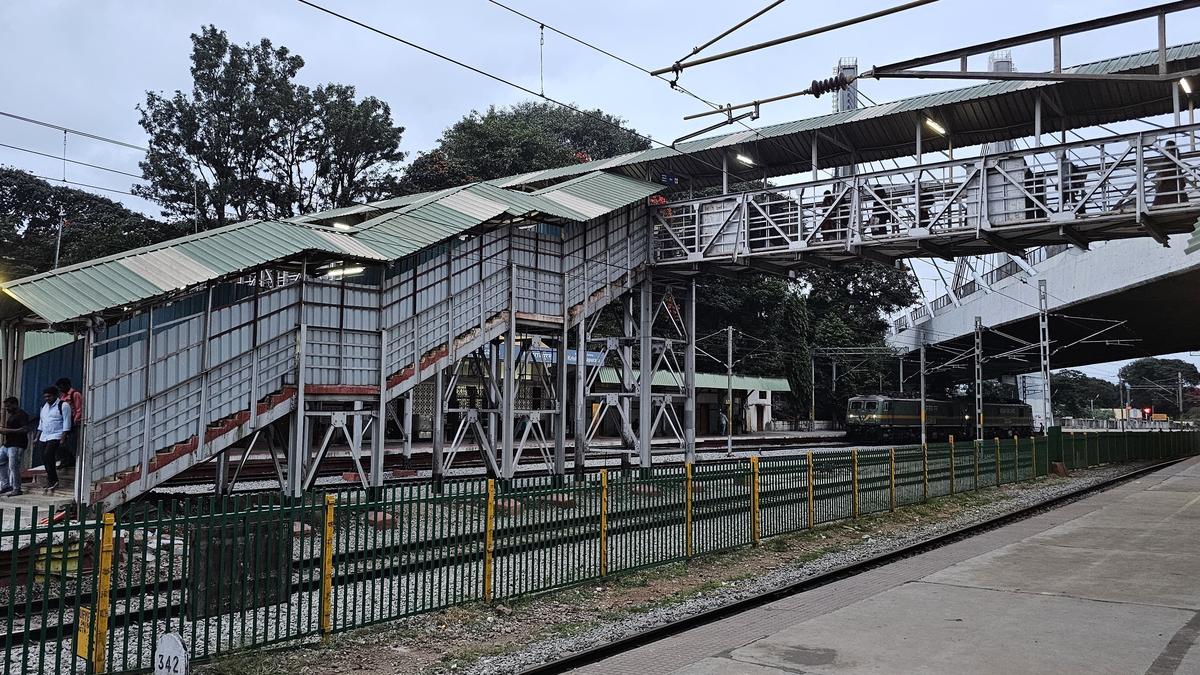
A chaotic mess of narrow stairways, broken pathways and poorly lit platforms in deep decay. This is how a hi-tech city with global ambitions greets you with the creaky infrastructure of its railway entry points. On the outer periphery of Bengaluru, as lakhs of people struggle with their heavy luggage to get in and out of trains, stations cry out for an urgent functionality upgrade. Redevelopment, as passengers scream out in desperation, should go beyond aesthetics.
A chaotic mess of narrow stairways, broken pathways and poorly lit platforms in deep decay. This is how a hi-tech city with global ambitions greets you with the creaky infrastructure of its railway entry points. On the outer periphery of Bengaluru, as lakhs of people struggle with their heavy luggage to get in and out of trains, stations cry out for an urgent functionality upgrade. Redevelopment, as passengers scream out in desperation, should go beyond aesthetics.
Off the bizarrely crowded Old Madras Road, the K.R. Puram railway station stands as a telling proof of everything that a critical rail head, a gateway to the city, should not be. Stretched far beyond its capacity, the station is today one of the city’s most crowded. Over 180 trains halt and pass by the four platforms here, serving an estimated 25,000 passengers daily. Yet, the station lies there in desperate need of a total overhaul.
At Yeshwanthpura railway terminal, another hyper-busy rail head at the city’s other end, a flashy steel canopy built at ₹14 crore is pulled down to make way for a redevelopment plan. No one asked for the canopy, nor did they know how the new plan will improve their access to the trains. As aesthetic structures are dismantled and refitted, thousands of passengers – young, old and the disabled – struggle without a bridge to get into the nearby Metro Station.
Connectivity is a joke at most of these stations, with passengers left at the mercy of the expensive auto rickshaws and cabs. BMTC buses, if present, are grossly inadequate, while Metro stations are often a struggling distance away without access-friendly bridges. Escalators and lifts are conspicuous by their absence, inevitably forcing the harried passengers to precariously hang on to rusted railings as they take one step after another on unfriendly stairs.
“There is a total lack of any consultation with the actual users in station redevelopment. Someone sitting in Hubli or Delhi or maybe, even Bengaluru, decides in their own silos, designs something and executes it,” notes Rajkumar Dugar, a seasoned advocate for sustainable rail mobility. “They just go with looks. For instance, we have seen how so many things went wrong with the Sir M. Visvesvaraya Terminal in Baiyappanahalli,” he points out.
Built from scratch, the new SMVT Terminal mimics the Kempegowda International Airport (KIA) in its aesthetic canopy and frontage but severely falls short in functionality. Leakages, and flooding are recurring complaints. But the biggest problem is inadequate connectivity to other modes of transport. “It is like putting the cart before the horse. You make the station and then land up in a mess. The moment you improve a station with so many platforms and other facilities, new trains will start and for those new services and new footfalls, additional connectivity is required,” says Rajkumar.
This, he observes, clearly indicates a lack of coordination between the railways, which are under the Central government and the State Government agencies such as the Bruhat Bengaluru Mahanagara Palike (BBMP) and the Bengaluru Metropolitan Transport Corporation (BMTC). The SMVT Terminal is far from the Baiyappanahalli Metro Station, with proposed pedestrian connectivity through the NGEF land nowhere in sight.


Taiwan warns of China's military threat, emphasizing the need for strong deterrence to prevent potential invasion plans.

A folktale from Australia tells how the crane and kangaroo rat discovered fire.

Lockie Ferguson will miss the start of IPL 2026 with Punjab Kings, prioritizing family after the birth of his son.

BJP fields seven Christian candidates in Kerala 2026 elections, aiming to win Christian votes through focused outreach and issue advocacy.

FIFA mandates female coaches in women's tournaments, aiming to enhance opportunities and visibility for women in soccer.

Follow The Hindu's live updates on the Telangana state budget for 2026-27, presented on March 20, 2026

Iran's women's soccer team celebrated a warm welcome in Tehran after returning home, despite some players seeking asylum in Australia.

Assembly elections 2026 LIVE: First EVM, VVPAT randomisation conducted ahead of Assam Assembly polls
Assembly polls 2026: Follow updates from The Hindu on the upcoming elections in five States, on March 20, 2026

Protests surge in India against the Transgender Persons Bill, threatening the right to gender self-identification for trans communities.

Gudi Padwa celebrations in Maharashtra feature vibrant processions, traditional music, and community gatherings, attended by key political figures.

U.S. issues a new 30-day waiver for Russian oil sales, excluding transactions involving Cuba, North Korea, and Crimea.

Kim Jong Un and his daughter ride a tank during army training, showcasing their bond amid military preparations in North Korea.

The Hindu Morning Digest gives a select list of stories to start the day. Read the top news today on March 20, 2026