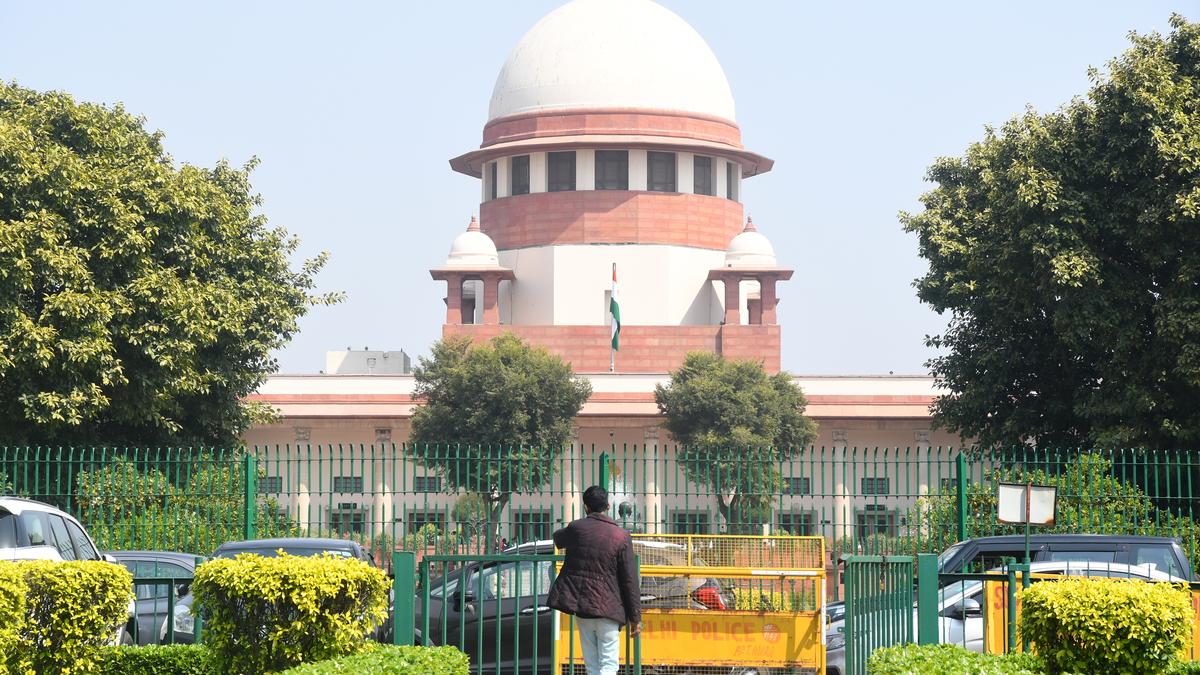
Centre avoided stay of CAA five years ago saying rules had not been framed, says IUML plea in SC
The Hindu
The Indian Union Muslim League (IUML) on March 12 moved the Supreme Court against the Citizenship (Amendment) Act (CAA), 2019 and its rules. It highlighted how the Centre averted a stay of the implementation of the controversial CAA in the Supreme Court nearly five years ago by arguing that the rules had not been framed. “These persons are already in India and they do not have any threat of being deported or expelled from India. There was no urgency,” the IUML said.
The Indian Union Muslim League (IUML) on March 12 moved the Supreme Court seeking a stay of the Citizenship (Amendment) Act (CAA), 2019 and its rules notified by the government on March 11.
The IUML highlighted how the Centre averted a stay of the implementation of the controversial CAA in the Supreme Court nearly five years ago by arguing that the rules had not been framed.
Now, after four-and-half years of ominous quiet, the IUML, whose petition leads the 250 ones challenging the CAA, said the government had suddenly notified the rules even as the case remained pending in the Supreme Court.
“The petitioner had pressed for a stay of the Act. However, the Union of India had told the Supreme Court that the rules have not been framed and therefore the implementation will not take place. The writ petitions have been pending for 4.5 years,” the IUML, represented by advocates Haris Beeran and Pallavi Pratap, said.
The IUML sought a stay of the Citizenship Amendment Rules notified by the government on March 11. The rules would govern the actual implementation of the CAA at the ground level.
The rules facilitate a “highly truncated and fast-tracked process for grant of citizenship to illegal migrants” belonging to Hindu, Sikh, Buddhist, Jain, Parsi, Christian communities from Afghanistan, Bangladesh or Pakistan who enter into India on or before December 31, 2014.
The rules have done away with the independent and tiered scrutiny of applications of citizenship by District Collectors on the ground, and recommendations of State governments as to the wisdom of granting citizenship to the applicants have been done away with. The Citizenship Rules of 2009 had required the Centre to consult the State governments in the grant of citizenship process.


Erode (East) voters prioritize pollution control, traffic solutions, and urban infrastructure as key issues ahead of upcoming elections.

G. Sudhakaran, former CPI(M) minister, files as "people's independent" in Ambalapuzha, challenging the LDF and sparking electoral tensions.

CPI(M) meeting in Chennai to decide on seat-sharing with DMK amid disputes over seat allocation for the Tamil Nadu Assembly election.

Probe launched into trainee vet's death after hippo attack, raising safety concerns at Shivamogga zoo.

Explore Chennai’s thriving late-night biriyani culture, from Adambakkam to Puliyanthope, and from Pudupet to Triplicane, to where midnight food hubs serve fresh, aromatic biriyani to night owls across the city.

Two more bodies recovered from Godavari River after five youths drowned during a bathing incident in Eluru district.

A suspected kidnapping attempt on Himachal CM's aide's son was reported near Mashobra, prompting a police investigation.

Sobha Surendran refutes V.D. Satheesan's claims of a BJP-CPI(M) deal, attributing them to fear of electoral defeat.

V.D. Satheesan praises G. Sudhakaran as a just administrator, highlighting respect amid political differences in Kerala Assembly polls.

Kerala court sentences G. Sandeep to life imprisonment for the murder of Dr. Vandana Das, with appeals for a death penalty pending.

Erode (East) voters prioritize pollution control, traffic solutions, and urban infrastructure as key issues ahead of upcoming elections.

Civil supplies department seizes 55 illegal LPG cylinders, booking 19 individuals to prevent domestic supply shortages in Vizianagaram.

Hyderabad police bust illegal samosa unit, seizing 500 stale eggs and used cooking oil, risking public health.