Central scientific committee says sulphur-cleaning device in most coal plants ‘not necessary’
The Hindu
Experts recommend India exempt most coal-fired power plants from installing costly equipment to reduce harmful emissions, citing low pollution levels.
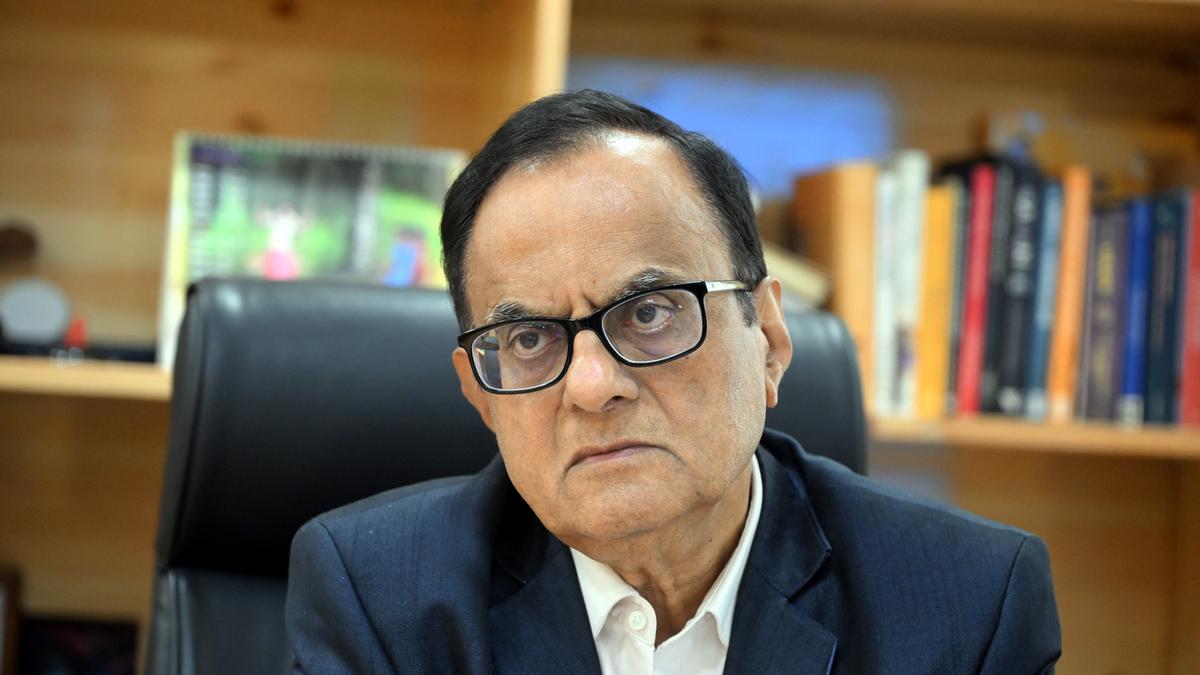
A high-powered committee of experts, chaired by Principal Scientific Advisor (PSA) Ajay Sood, has recommended that India do away with a decade-long policy of mandating equipment, called Flu Gas Desulphurisation (FGD) units, in all coal-fired thermal power plants (TPPs), according to documents perused by The Hindu.
These FGD units are required to be retro-fitted in TPPs to cut harmful sulphur dioxide (SO2) emissions. While 92% of India’s 600 TPPs have not yet installed FGD units, the recommendation would exempt about 80% of them from needing to install such equipment.
The limited number of vendors capable of installing such equipment in India, the high installation costs, the potential rise in electricity bills, and disruptions due to the COVID-19 pandemic have been some of the reasons historically cited by the Power Ministry, the overseer of India’s TPPs, for plants’ inability to adhere to previous deadlines. In theory, the costs of non-compliance could run to crores of rupees in fines, though these have not materialised thanks to deadline extensions.
However, this was the first time that multiple arms of the government congregated to deliberate on whether FGDs were required in the first place. Their verdict draws on three reports by the CSIR-NEERI, the National Institute of Advanced Studies, and the Indian Institute of Technology, Delhi. The lead scientists of these three institutions – each “supported” by different arms of the government – were at the meeting on April 23, along with representatives from the Office of the PSA, the Union Power Ministry, and the NITI Ayog. They were all largely unanimous that FGD “was not necessary.”
The guiding principles informing the committee’s recommendation are that: SO2 levels in ambient air across the country are around 10-20 micrograms/cubic metre, well below India’s air quality norms of 80; Indian coal is low in sulphur; SO2 levels in cities near plants with operational FGD units do not differ significantly from those without these units, and all of these were anyway well below permissible levels.
The committee opined that concerns about sulphates – a potential by-product when SO2 emissions reach certain atmospheric levels, thus forming particulate matter (PM) – are unfounded. They cited an analysis of 5,792 PM samples across the country, which found “low elemental sulphur” content (max 8 micrograms/m3 after outlier removal) which was deemed “insignificant — for considering PM removal as a benefit of FGD.”
One argument mentioned in the report was that using FGDs might result in additional carbon dioxide emissions and accentuate global warming. “Installing FGDs in all TPPs by 2030 will increase the Auxiliary Power Consumption (APC) of the TPPs, thereby adding approximately 69 million tons of CO2 emissions to the atmosphere (2025-30) while reducing SO2 emissions by —17 million tons. Adding more long-lived CO2 emissions while removing short-lived SO2 emissions by installing FGDs indiscriminately in all TPPs in India despite the low Sulphur content of Indian coal will enhance global warming.”


Discover the Minor Planet Centre, the key hub for tracking and verifying observations of small solar system bodies.

In this week's Science for All newsletter, XX explains

Test your knowledge with the quiz on Science films at the Oscars through history

Set between the Siwalik hills and the plains, Butwal offers travellers a mix of regional cuisine, pilgrimage trails to Lumbini and the comfort of Hyatt’s new hospitality landmark

Explore 2026's wallpaper trends in India, highlighting botanicals and handmade designs that enhance modern homes with nature-inspired aesthetics.

Mercedes-Benz CLA 250+ with EQ Technology review: design, performance, range and features explained. Discover how the new electric CLA combines advanced AI, long range, fast charging and futuristic styling for the next generation of luxury EVs.

AI tool for sparrow conservation

BTS’s comeback with ‘Arirang’ marks a major global music event. When does the album release, and where can you watch their concert live stream? We have all the details

The 2026 U.S. cholesterol guidelines urge starting screening and treatment at 30 to prevent cardiovascular disease effectively.

Olam Festival 2026 in Thiruvananthapuram returns March 27-29 with 120+ vendors, music, art, and cultural zones.

A few storytellers in Thiruvananthapuram share their journeys, challenges, and evolving methods on World Storytelling Day, inspiring young minds.

76-year-old Kurian Jacob from Kerala triumphs with seven medals, including five golds, at the Open Masters Games in Abu Dhabi.

Explore the nature of the human mind as an emergent property of brain activity and complex neural interactions.