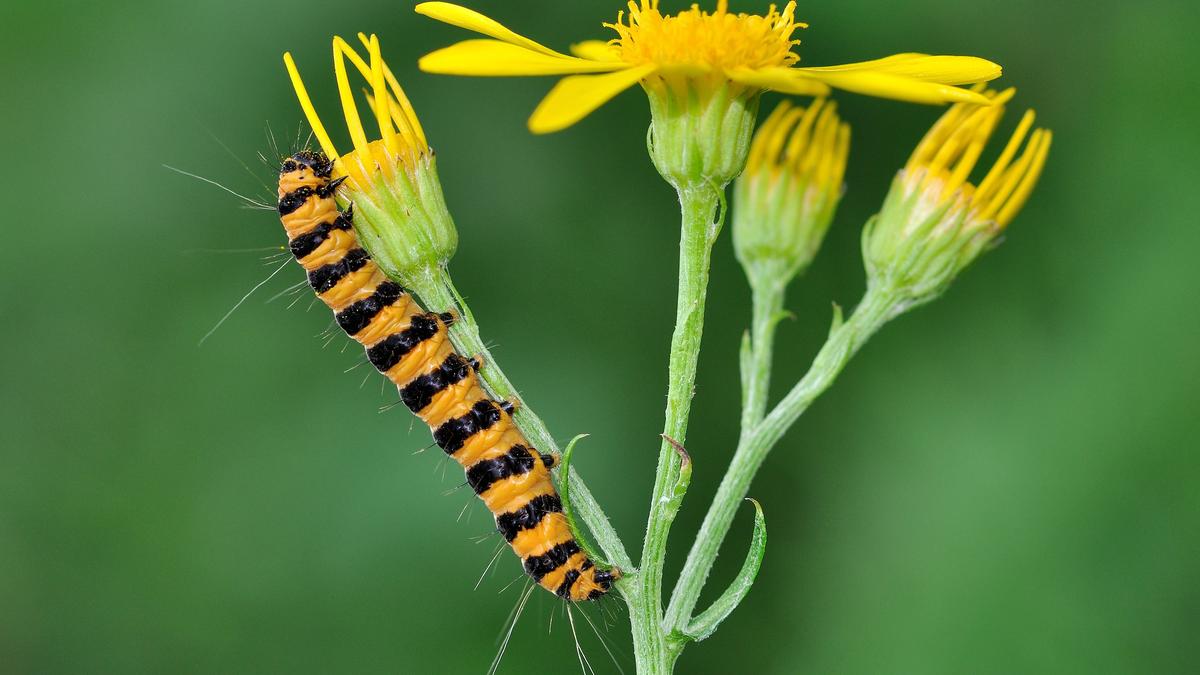
Caterpillars may sense threats using electric fields Premium
The Hindu
Caterpillars possess a unique sixth sense, electroreception, allowing them to sense electric fields and detect predators.
Caterpillars have a sixth sense that most land-based animals do not. They can sense electric fields around them with small bristles called setae on its body — a feat called electroreception. British researchers have discovered this in laboratory experiments and their findings were published recently in the Proceedings of the National Academy of Sciences.
They studied four species of caterpillars: cinnabar moth, scarce vapourer moth, European peacock butterfly, and common wasp.
Researchers have long known that aquatic and amphibious use electroreception to detect both predators and prey. Since 2013, scientists have also found electroreception in arthropods like bumblebees, hoverflies, and spiders. However, none of these land-based creatures use the ability to defend against predators.
Caterpillars, which are also arthropods, may break this mould, using electroreception to sense predatory insects nearby.
“It works exactly the same way as [brushing a] rubber balloon on your hair,” said first author Sam England. He is a postdoctoral researcher at the Museum für Naturkunde in Berlin and was at the University of Bristol before.
Static charges accumulate on both the balloon and the hair, leading to a mutual electrostatic attraction. The balloon can then move the hair without needing contact.
As an insect’s wings flap through the air, static charges build up on them. When it nears the caterpillar, the setae senses these charges by building up charges of its own. This mutual interaction gives rise to an oscillating electric field.


Can nations unite to protect the endangered Hudsonian godwit and address the challenges of climate change and habitat loss?

Discover the Minor Planet Centre, the key hub for tracking and verifying observations of small solar system bodies.

Discover the Minor Planet Centre, the key hub for tracking and verifying observations of small solar system bodies.

In this week's Science for All newsletter, XX explains

Test your knowledge with the quiz on Science films at the Oscars through history

Set between the Siwalik hills and the plains, Butwal offers travellers a mix of regional cuisine, pilgrimage trails to Lumbini and the comfort of Hyatt’s new hospitality landmark

Explore 2026's wallpaper trends in India, highlighting botanicals and handmade designs that enhance modern homes with nature-inspired aesthetics.

Mercedes-Benz CLA 250+ with EQ Technology review: design, performance, range and features explained. Discover how the new electric CLA combines advanced AI, long range, fast charging and futuristic styling for the next generation of luxury EVs.

AI tool for sparrow conservation

BTS’s comeback with ‘Arirang’ marks a major global music event. When does the album release, and where can you watch their concert live stream? We have all the details

The 2026 U.S. cholesterol guidelines urge starting screening and treatment at 30 to prevent cardiovascular disease effectively.

Olam Festival 2026 in Thiruvananthapuram returns March 27-29 with 120+ vendors, music, art, and cultural zones.

A few storytellers in Thiruvananthapuram share their journeys, challenges, and evolving methods on World Storytelling Day, inspiring young minds.