Carney's Bill C-5 summit does little to allay concerns, say Manitoba chiefs
CBC
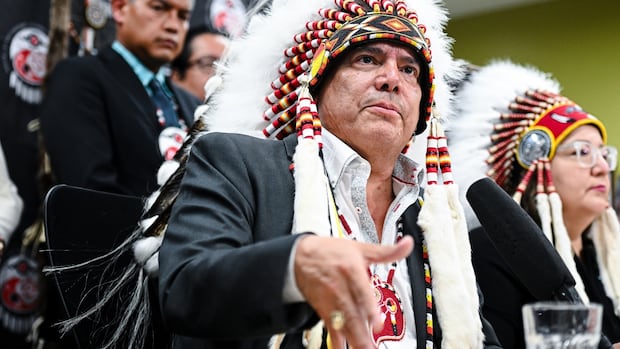
A group of Manitoba chiefs have emerged from a summit with Prime Minister Mark Carney with many of their concerns remaining over his government's major projects legislation, and how its fast-tracked approval process could sidestep consultations and threaten Indigenous sovereignty.
Chiefs from the Prairie provinces held a joint press conference Thursday night in Ottawa after a day of discussions in neighbouring Gatineau, Que., with Carney, members of his administration and other leaders from some of the 600 First Nations from across the country.
"The prime minister said in one of his comments at the beginning that trust begins with acts and partnership, and that's something he has asked us to do — to trust him that he will honour those words," said Garrison Settee, grand chief of Manitoba Keewatinowi Okimakanak, which represents First Nations in northern Manitoba.
"It's hard to trust any government after 150 years of eroded treaties and eroded promises."
The second day of the two-day summit at the Canadian Museum of History in Gatineau wrapped Thursday with Settee, Assembly of Manitoba Chiefs Grand Chief Kyra Wilson and Angela Levasseur, chief of Nisichawayasihk Cree Nation, echoing concerns sounded by chiefs across Canada in the lead-up and during the passing of the Carney government's Bill C-5, which became law June 26.
The trio joined chiefs from Alberta and Saskatchewan in Ottawa at the end of the day to provide their impressions of how the back and forth with Carney and his administration went this week.
Carney had characterized the bill as a means of steeling Canada's economy against tariff and trade threats from the U.S.
Now the law of the land, C-5 enables the prime minister's cabinet to streamline approval processes of some major projects by skirting previous provisions, so long as those projects are deemed as being in the national interest.
The Liberals called the summit to allay fears expressed by some First Nations leaders over how that language could enable violations of treaty rights.
The prime minister has tried to reassure Indigenous leaders that consultation is a core part of the bill.
Grand Chief Wilson said it remains unclear how the government will adhere to Section 35 of the Constitution Act, 1982, which affirms the rights of Indigenous people to be consulted in the case of a project that could adversely impact them or their land.
First Nations do have a right to be consulted based on past Supreme Court rulings, though they do not have a final veto on whether a project may go ahead.
"We need to [know] from Canada how they're going to respect and recognize our laws," Wilson said.
"What is that going to look like? There are so many questions…. This meeting was not consultation, this meeting was a discussion, and it's going to be one discussion of many."


RCMP officers in Lower Sackville and Cole Harbour, N.S., posed as panhandlers to catch drivers who were committing traffic offences this week.

Moncton quadruple-medallist Courtney Sarault is back in her hometown for a post-Olympic celebration and rest.

Thousands of Muslims in Winnipeg gathered Friday at various locations to celebrate Eid al-Fitr, which marks the end of the holy month of Ramadan.

The spring sitting of the P.E.I. Legislature will prorogue for a second time — but this time just by a day.

Two years after an Edmonton man sustained fatal injuries while on shift at a northern Alberta pulp mill, workplace safety charges have been laid in his death.

About 30 properties in the Fraser Valley are under evacuation alert as the atmospheric river pummeling B.C. increases flood and landslide risks in several parts of the province.

WARNING: This story references allegations of child abuse.

Police say it was a 67-year-old Chatham man who died while scuba diving at the Erieau marina on Wednesday morning.

Enmax declared its lowest dividend, to be paid to the City of Calgary, in four years in its 2025 financial results.

Rilee Willianen says the City of Thunder Bay has received wide-ranging feedback about its plans to create designated encampment sites.

The Ontario government is planning to outlaw sky-high ticket resale prices, according to a news release.

As March break comes to an end, there are lots of fun events happening on the weekend in Waterloo region, Guelph and Wellington County.

Yukon RCMP are renewing their plea for public help in the investigation into an unsolved 2023 double homicide near Mayo.