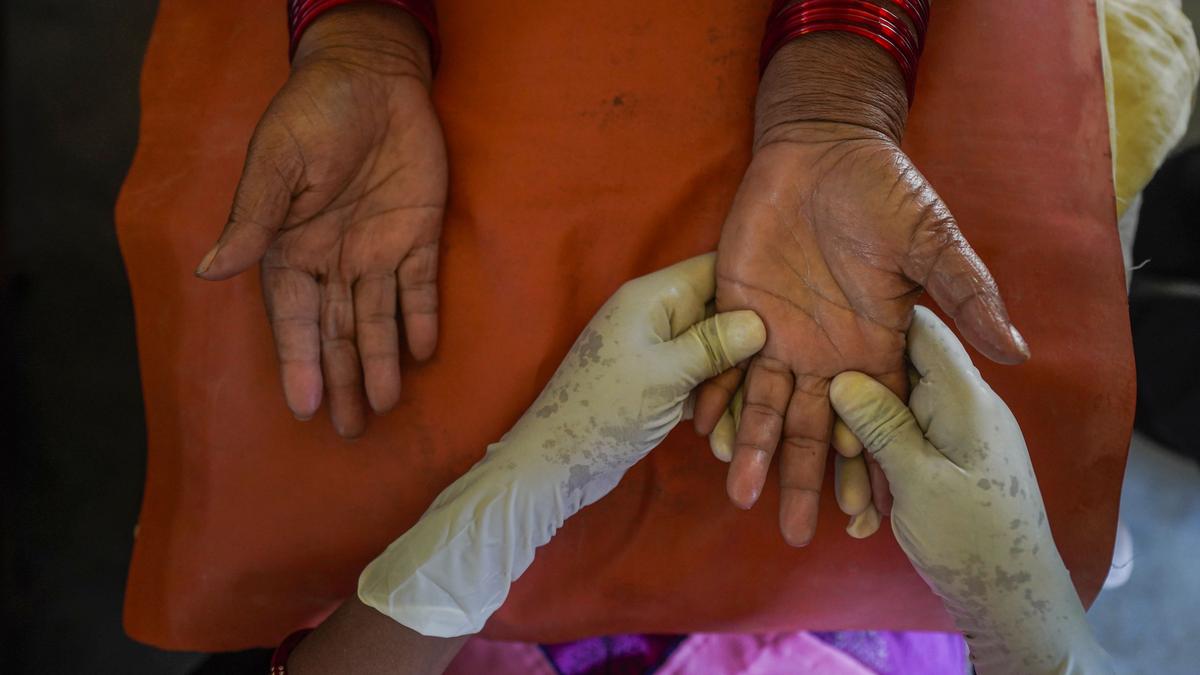
Capturing the cruelty of leprosy in a dark and merciless language Premium
The Hindu
The Hindu's Tamil Nadu InFocus on January 28, 2026
Leprosy is as old as humanity itself. The disease and those afflicted by it appear in the Bible, testament to its long and troubling presence in human history. For centuries, sufferers have been stigmatised, ostracised and pushed to the very edges of society, condemned to lives of exclusion and silence. The Nazis branded them worthless and executed them. In Tamil, the disease is known as Peruviyathi — a term that encapsulates its reputation as the most dreaded of afflictions, even though it rarely claims the lives of its victims. The fear it evokes arises not from death, but from disfigurement, isolation and the slow, relentless erosion of human dignity.
The anguish and alienation associated with leprosy have long made it a potent subject in literature, inspiring some of the modern writing in Tamil. To this tradition, a Sahitya Akademi Award–winning author has now added Noiputtru, perhaps the darkest and most unflinching literary exploration yet of a disease that has haunted civilisation for millennia.
Editorial | Taking the leap: on leprosy in India and discrimination
The writer, Imayam does not confine himself merely to depicting the squalid living conditions and loss of dignity imposed upon patients by society. In his characteristic prose — spare, relentless and unsentimental — he chronicles the disease itself with minute precision: its progression, the methods of treatment, the institutions created to contain the afflicted, and the grim resignation with which patients ultimately confront their fate.
“You will survive only if you feel the pain. Otherwise, your story is all but over. Your face itself bears witness. The hairs of your eyebrows have fallen. Your ears have thickened. Your nose has flattened. There is no doubt — it is leprosy.” Thus begins Imayam’s novel, as a doctor explains Chinnasami’s condition to him.
By juxtaposing Chinnasami’s condition with that of Ganesan, the protagonist of Pasitha Manidam, who is also afflicted by leprosy, it becomes clear that the disease respects neither social status nor privilege. Ganesan is a wealthy Brahmin, yet his suffering is no less brutal.


The Clamorous reed warbler is as loud as they come, but in the urban environment, it is outshouted. Weed clearing in urban habitats brings down its home, the bulrushes. Bulrushes in wetlands are not encroachments, but ‘legal homes’ to birds in the crake and rail family and warblers, so government line agencies ought to tread on them thoughtfully

Uttar Pradesh ATS arrests a dental student for alleged connections to an ISIS online module, probing extremist recruitment activities.

Rajinikanth refutes TVK leader's claims about DMK threats preventing his political entry, expressing gratitude to supportive political figures.

Tamil Nadu CM Stalin celebrates the Union government's approval for archaeological excavations, crediting DMK's persistent advocacy for the win.

Dilip Ghosh will contest Kharagpur Sadar in the 2026 West Bengal polls, aiming for increased BJP votes.

A hotel fire in Pahalgam leads to one death from a reversing fire tender; multiple LPG blasts hinder firefighting efforts.

The Clamorous reed warbler is as loud as they come, but in the urban environment, it is outshouted. Weed clearing in urban habitats brings down its home, the bulrushes. Bulrushes in wetlands are not encroachments, but ‘legal homes’ to birds in the crake and rail family and warblers, so government line agencies ought to tread on them thoughtfully

The people of at least one State will heave a sigh of relief now that the schedule for five Assembly elections — all in April — has been announced.

Four charred bodies discovered in a car near Tirunelveli; police investigate potential murder or suicide.

Five insurgents linked to PREPAK and KYKL arrested near India-Myanmar border; explosives and arms recovered in separate operation.

A.P. DGP pays tribute to Potti Sriramulu on his 125th birth anniversary, honouring his sacrifice for a separate Andhra Pradesh.

Discover the cultural and health significance of neem and jaggery during Ugadi, explained by author Ratna Rajaiah.

A minor fire at Thiruvananthapuram government hospital led to patient evacuations; no casualties reported, situation now under control.