Canadians want urgent climate action, but cost of living stands in the way: poll
Global News
The Ipsos survey conducted for Global News found one-third of Canadians agree the cost-of-living crisis and other economic concerns should take priority over climate action.
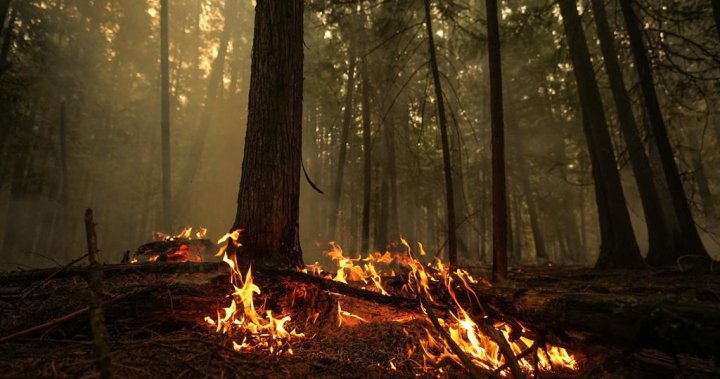
A growing majority of Canadians say more needs to be done by government and business to combat the climate crisis, a new poll suggests. Many respondents agree this year’s record-breaking wildfire season has driven home the need for urgent action.
However, those Canadians are torn over when action should be taken, according to the Ipsos survey conducted for Global News. One-third of respondents agree the cost-of-living crisis and other economic concerns should take priority.
“There are competing narratives here — yes, there is increased urgency to fight climate change, but there also is increased urgency to battle the affordability crisis that we’re seeing in Canada,” said Sean Simpson, vice president of Ipsos Public Affairs.
“The challenge, at least as perceived by Canadians, is that government doesn’t seem to have a plan to do either.”
Overall, the poll found six in 10 Canadians agree Canada should do more to fight climate change, and that the federal government would be failing the country if it does not act now. A similar number also said Canadian businesses should take urgent climate action or risk failing their employees and customers. More Canadians agree with those sentiments now than they did the last time Ipsos conducted a similar survey in February.
Yet, just 26 per cent of those surveyed said they believe Ottawa has a clear plan in place for government, businesses and individuals to tackle the climate crisis together — a number that is up three points since February.
The federal government’s latest greenhouse gas emissions target is a 40 per cent reduction below 2005 levels by 2030, with an aim for net-zero emissions by 2050. Last month, draft regulations were released that the government says would achieve a net-zero electricity grid by 2035.
The Alberta government has loudly opposed those targets, arguing they will require costly and burdensome production cuts in the province’s oil and gas sector, and have called for longer timetables to achieve net-zero. Saskatchewan has also voiced objections to Ottawa’s plans.


Hundreds of flights were cancelled or delayed Tuesday, one day after powerful storms swept across the eastern half of the country and upended air travel in multiple cities.

The parent company of Bell Canada is planning to build a new data centre outside Regina that is billed to be a major contribution to Canada’s artificial intelligence sovereignty.

Kinew now says the province is taking a step back from this approach and ensuring that different health-care interventions are built within the site before opening.

In Thailand, an order for civil servants to work from home for the foreseeable future came with another – use the stairs while the energy squeeze continues.

The police agency in a news release on Monday said it was continuing a trend of 'persistently high levels' of both types of interpersonal violence.

Ontario Premier Doug Ford saw his attempts to stop his cellphone records being partially released blocked by a panel of judges. Critics say he's changing the law as a result.

It is believed to have been left by local troublemakers, though RCMP said in an email there was no criminality involved in the situation.

Hypothermia contributed to the deaths of 62 people in 2023, with nine of them considered homeless, and 57 deaths in 2024 with 11 people listed as homeless.

According to Transport Canada, 'the seatback recliners for the second-row seats may not have been manufactured properly' on certain vehicles.

The teen originally pleaded not guilty in February 2025, before changing her plea in December. The Crown and defence jointly submitted a maximum youth sentence of three years.

The government in 2024 banned supervised consumption sites within 200 metres of a school or daycare, targeting 10 sites across the province for closure by the end of March 2025.

A few weeks ago, Eric Sauvageau received a call from someone he believed was his son. He withdrew thousands from the bank and paid it before realizing he'd been scammed.

The federal weather agency says most of southern and central New Brunswick and western and eastern Nova Scotia will be impacted.