Canada will let Germany return turbine to Russia’s Gazprom, citing ‘hardship’
Global News
Russia has blamed the turbine being serviced for lowered natural gas flow through Nord Stream 1 but German politicians dismiss that, calling the gas cutoffs a political gambit.
The Canadian government says it will allow Germany to return controversial turbines being serviced in Canada to Russia’s Gazprom, which has blamed the turbines for its decision to halve the flow of gas.
The turbines from the Nord Stream 1 pipeline had been sent to Montreal for a scheduled overhaul but their return has been complicated by sanctions imposed on Russia over the war in Ukraine. Germany has pressed Canada to let it return the turbines to Russia despite the sanctions and despite Russia’s continued assault on Ukraine.
Canada’s minister of natural resources, Jonathan Wilkinson, said in a statement late Saturday that “Canada will grant a time-limited and revocable permit for Siemens Canada to allow the return of repaired Nord Stream 1 turbines to Germany.”
That, Wilkinson said in the statement posted on Twitter, will support “Europe’s ability to access reliable and affordable energy as they continue to transition away from Russian oil and gas.”
He said that “absent a necessary supply of natural gas, the German economy will suffer very significant hardship.”
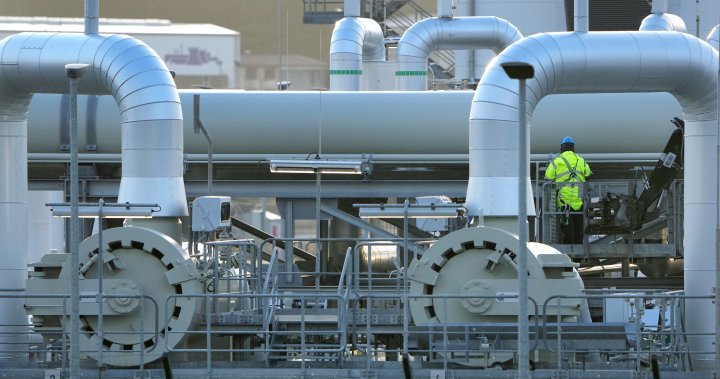
Siemens Energy said after Gazprom started reducing gas flows in mid-June that it had been unable to return a gas turbine that powers a compressor station on the pipeline, which had been overhauled after more than 10 years in service, to the customer, Gazprom.
German politicians have dismissed the Russian explanation for the 60 per cent reduction in gas flows through Nord Stream 1, saying that equipment shouldn’t have been a significant issue until the fall and the Russian decision was a political gambit to sow uncertainty and push up prices.
“We must not fool ourselves: The cut in gas supplies is an economic attack on us by (Russian President Vladimir) Putin,” Economy Minister Robert Habeck said in a statement last month, adding Germans would have to reduce consumption.


Canada is amongst several nations who 'condemn in the strongest terms recent attacks by Iran on unarmed commercial vessels in the Gulf.'

Gas prices in Canada have been climbing sharply since the Iran war began, but how much higher they could go is unclear as consumers struggle with the higher cost of living.

The Oscar-winning actor has denied all allegations against him and maintains that the incidents raised in the lawsuits either did not happen or were consensual.

European leaders have deflected entreaties from U.S. President Donald Trump to send military assets to secure the Strait of Hormuz.

All six crew members of a KC-135 Air Force refueling aircraft were killed last week in a plane crash over friendly territory in western Iraq, supporting operations against Iran.

U.S. Director of National Intelligence Tulsi Gabbard testified that the regime remains intact and Tehran and its proxies remain capable of attacking U.S. and allies' interests.

James 'Jimmy' Gracey was reported missing after he didn't return to the short-term rental where he was staying with friends during spring break.

The U.K. Health Security Agency described the event as 'rapidly evolving' and warned of the potential for further cases.

U.S. benchmark crude fell US$1.24 to US$94.53 per barrel. Brent crude, the international standard, rose to US$104.17 per barrel. That's down from more than US$106 on Monday.

Volodymyr Zelenskyy urged Ukraine's allies not to forget about his country, and suggested the U.S. and others should make use of Ukraine's anti-drone technology during the war.

Trump’s visit to China is seen as an opportunity to build on a fragile trade truce, but it has become tangled in his effort to find an endgame to the war in Iran.

White House economic adviser Kevin Hassett said oil tanker traffic in the Strait of Hormuz starting to move is "a sign of how little Iran has left."

The secretary of Iran’s Supreme National Security Council, and the head of the Revolutionary Guard’s all-volunteer Basij force, were “eliminated last night," Israel said.