Can police personnel be ‘authorised officer empowered’ under Mines and Minerals Act? HC refers matter to Full Bench
The Hindu
MADURAI
The Madurai Bench of the Madras High Court has referred the issue of whether police personnel could be brought under the ambit of ‘authorised officer empowered’ under Sections 21(4), 22 and 23-A of the Mines and Minerals (Development and Regulation) Act, 1957, to a larger Bench.
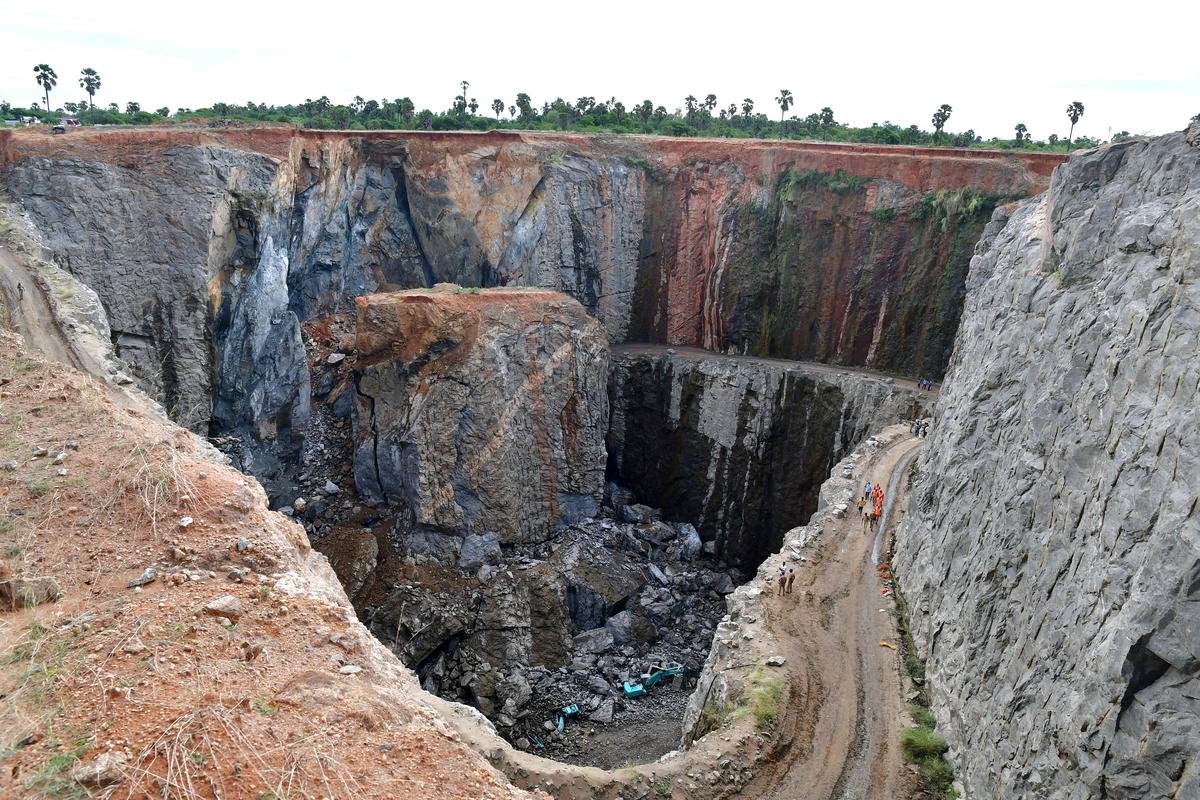
A Division Bench of Justices M.S. Ramesh and N. Anand Venkatesh, while hearing a petition seeking the release of vehicles engaged in illegal quarrying, referred a set of questions to the Full Bench to decide. The petition had sought the release of vehicles that were seized following a stone quarry accident in Tirunelveli district, in which four workers were killed and two sustained injuries after a giant boulder rolled down the quarry pit.
The judges observed that there was an apparent conflict between the directions issued by the court, recognising only a revenue official as the authorised officer, and the Government Order, which recognises even a police official as the authorised officer, apart from a revenue official.
Some of the questions that came up were: If the police officer cannot be brought within the fold of an authorised officer, and hence, he does not have the power to seize the vehicles/materials, what will be the effect of such seizure that had taken place after the G.O. was issued?
Whether the police officer, who also happens to be the authorised officer and registers an FIR for an IPC offence and an offence under the Act, can partly compound the offence under the Act and proceed further only for the IPC offence with respect to the very same transaction?
Can the authorised officer, who seizes the vehicle under Section 21(4) of the Act alone, initiate a private complaint under Section 22 of the Act, or should a different officer be appointed for initiation of criminal proceedings under the Act? In other words, should the officer who seizes the vehicle and the officer who initiates the private complaint be the same?
If the Special Court alone is entitled to try offences under the Act, can the power of compounding be given to an authorised officer, or should such power only be exercised by the Special Court?


Former Chief Minister Narayanasamy opts out of Puducherry Assembly elections to maintain alliance harmony amidst seat-sharing talks with DMK.

Dr Prarthana Venkatesh, the founder of nutraceutical brand Longevita, talks about the inspiration behind the brand, why the longevity discourse is now exploding and how modern medicine is tackling aging

Ponmudy seeks Madras High Court's intervention to dismiss BJP councillor's complaint over alleged derogatory speech against religious groups.

Congress leader K.C. Venugopal alleges corruption in Kerala's bar license renewals, accusing CPI(M) and BJP of unethical collusion ahead of 2026 polls.

Bengaluru police arrest three in a money-doubling fraud, recovering ₹40 lakh and uncovering additional victims.

AIADMK faces perception challenges and electoral setbacks in Tamil Nadu, struggling to maintain its traditional stronghold and voter base.

K. Ashok appointed Executive Director of BHEL Tiruchi, succeeding S. Prabhakar after 36 years of experience in the company.

Garbage collection resumes in Bengaluru amid contractor disputes over payment delays and new waste segregation rules by BSWML.

Delhi High Court rules universities cannot restrict peaceful expression of dissent, emphasizing the importance of independent thought and discourse.

Mettur Dam's water level is at 82.83 feet, with an inflow of 384 cusecs and discharge of 800 cusecs.

Lebanon expels Iran's ambassador, declaring him persona non grata, while maintaining a Charge d'Affaires at the embassy.

Sunny Joseph accuses Pinarayi Vijayan of targeting Rahul Gandhi as part of a political deal with the BJP.

AIADMK faces perception challenges and electoral setbacks in Tamil Nadu, struggling to maintain its traditional stronghold and voter base.