Can IV cocktails cure hangovers or boost immunity?
CBC
This story is part of CBC Health's Second Opinion, a weekly analysis of health and medical science news emailed to subscribers on Saturday mornings. If you haven't subscribed yet, you can do that by clicking here.
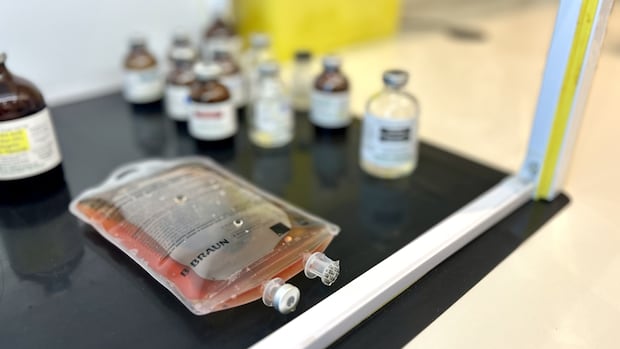
Intravenous drips have long been used in hospitals to send life-saving drugs right into patients’ veins. They’re also a booming business in wellness spas, where customers are told that pricey IV cocktails can boost their immunity, combat hangovers or even offset the grueling side effects of chemotherapy.
However, medical experts warn there’s no evidence to back up many clinics’ bold promises — and there are a range of possible health risks.
IV hydration clinics are part of the rapidly growing medical spa industry, which exploded from roughly 5,000 across the U.S. in 2018 to nearly 9,000 just four years later. There’s no shortage of them in major Canadian cities either, with med spas typically charging upwards of $200 for customized supplement cocktails, which can include electrolytes, magnesium and various vitamins. In advertisements, providers claim they can help treat a range of conditions.
So who’s regulating this emerging industry? There's no one regulatory body acting as a watchdog in either the U.S. and Canada, according to recent research and reporting by CBC News.
A first-of-its-kind research paper, published earlier this month in the peer-reviewed JAMA Internal Medicine, found that in the U.S., state-level policies — and clinic practices and claims — vary widely, with potentially dangerous consequences.
“They fall into a bit of a grey zone in terms of regulatory oversight,” said study author Dr. Joseph Ross, a professor of medicine and public health at Yale University.
“If consumers are going to go off and use these [IV spas], often without their doctors even knowing that they're using these, we have to make sure that safeguards are in place so that nobody gets hurt.”
The research team looked at state policies and guidance alongside provider websites, and conducted secret shopper studies involving dozens of randomly selected facilities.
Those studies found that while 86 per cent of the businesses recommended therapies targeting specific headache or cold symptoms, less than a third described potential health risks or required consultation with a licensed medical professional before providing an IV session.
CBC News found a similar landscape in Canada.
There are layers of complex regulations, and various licensing bodies, dealing with different pieces of the pie: the contents of the IV drips, the array of medical professionals involved and the safety of the actual clinics, such as ensuring tools are sterile. Given that patchwork approach across the country, there’s growing concern these sites lack oversight on this side of the border, as well.
“The situation here is actually the same or worse than in the U.S. in the regulation of these health spas, and particularly these new IV spas,” said Bernie Garrett, a researcher and associate professor at the University of British Columbia.
IV health products are regulated as drugs, must be authorized by Health Canada before being legally sold, and require supervision by a health-care professional, a spokesperson for the federal department said.


This story is part of CBC Health's Second Opinion, a weekly analysis of health and medical science news emailed to subscribers on Saturday mornings. If you haven't subscribed yet, you can do that by clicking here.

Lac La Ronge Indian Band's Woodland Wellness Centre has received funding to start a mobile addictions outreach program to address the opioid and mental health crisis.

Adriana Avelina Ruíz Márquez uses fake eyelash glue to attach a tiny transmitter to the thorax, just behind the head, of the monarch butterfly.

After several delays to the mission that will take four astronauts around the moon, NASA held a press conference today announcing that Artemis II is on track to launch as early as April 1.

Snuneymuxw First Nation is calling for a temporary closure and environmental investigation of a hazardous waste services company following a January oil spill on Duke Point near Nanaimo, B.C.

In February, five people were killed in separate avalanches across B.C. and Alberta. That same month, more than a dozen people were killed in California and Utah, including a particularly deadly avalanche that claimed the lives of nine. In Europe, from Andorra to Slovakia, the season has recorded 125 deaths from avalanches so far.

Getting a proper vehicle to transport people for urgent medical care is an ongoing challenge in fly-in First Nations in northwestern Ontario.

A new supergroup of musicians from Six Nations of the Grand River and Mississaugas of the Credit First Nation have collaborated on a Robbie Robertson-inspired song they will perform at the Junos Honouring Ceremony later this month in Hamilton.

People as young as 45 should be invited to provincial and territorial programs to screen for colorectal cancer, the Canadian Cancer Society urged on Wednesday.

The Métis Nation-Saskatchewan (MN-S) has opened an office and retail space in Ottawa to create a stronger presence in the capital since removing itself from the Métis National Council in 2024.

Toronto resident Winhan Wong's lung cancer journey began in 2016, with a nagging cough that just wouldn't go away.

Last month, Assembly of First Nations National Chief Cindy Woodhouse Nepinak pointed out on social media that history was made this year because there are a record 164 female chiefs serving across the country.

Most of humanity has a great propensity to think in the short-term, but generally, long-term considerations — air pollution, deforestation and emissions, for example — just aren't our thing.