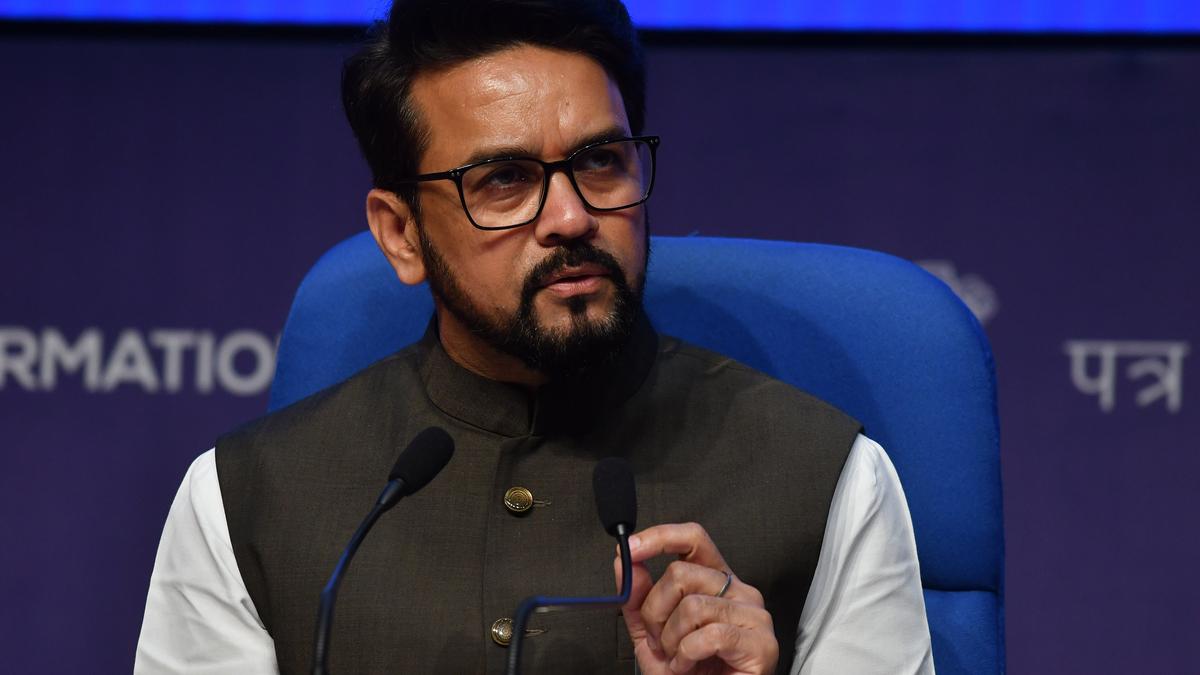
Cabinet approves royalty rates for lithium, two other strategic minerals
The Hindu
The decision on the royalty rates for the three critical and strategic minerals was taken by the Union Cabinet chaired by Prime Minister Narendra Modi, according to an official statement.
The Centre on Wednesday said it has approved royalty rates of 3% each for lithium and niobium and 1% for Rare Earth Elements (REEs).
The decision on the royalty rates for the three critical and strategic minerals was taken by the Union Cabinet chaired by Prime Minister Narendra Modi, according to an official statement.
The approval by the Cabinet will enable the Centre to auction lithium, niobium and REE blocks for the first time in the country, it said.
The royalty rate on minerals is an important financial consideration for bidders during auction of mines.
Further, the method for calculating Average Sale Price (ASP) of these minerals has also been prepared by the Centre which will allow determining of bid parameters.
"The Union Cabinet... approved amendment of Second Schedule of the Mines and Minerals (Development and Regulation) Act, 1957 (MMDR Act) for specifying rate of royalty in respect of 3 critical and strategic minerals, namely, lithium, niobium and Rare Earth Elements," the mines ministry said in a statement.
Critical minerals have become important for the nation's economic development and national security. Lithium and REEs have gained significance keeping in mind the country's commitment towards energy transition and achieving net-zero emission by 2070.


The Sora decision means the end of a blockbuster $1 billion deal between Disney and the ChatGPT maker that was announced a little more than three months ago.

Regulator mandates city gas distributors to provide piped gas to educational institutions within five days, supporting India's transition from LPG to PNG.

NHAI's Raajmarga InvIT listed on BSE, enhancing investor participation in highway infrastructure with strong demand and oversubscription.

HDFC Life Insurance faces ₹172 crore Income Tax order for alleged violations, plans to appeal the decision.

Air-conditioner makers in India are looking forward to FY27 with hope as the war in West Asia threatens to impact plastic component availability and consumer sentiment, adding to the challenges around raw material price and new energy label, a senior executive of a leading company has said.

Rupee falls 23 paise to an all-time low of 93.76 against the U.S. dollar amid foreign fund outflows and global uncertainties.

Stock markets surged nearly 2% as Trump paused strikes on Iran, boosting investor confidence amid easing geopolitical tensions.

Coal Minister urges State leaders to maintain stable coal prices amid rising global costs, assuring ample domestic supply.

Mahanagar Gas ensures reliable PNG and CNG supply in Maharashtra and Karnataka, offering customer benefits to encourage adoption.

OpenAI Chief Executive Sam Altman said on Monday he has stepped down from the board of directors of Helion Energy, the fusion startup he has backed since 2015

Nikhil Kamath and Quant MF back Swan Defence's oversubscribed ₹500 crore Offer for Sale, reflecting strong investor interest in defence stocks.

HDFC Bank appoints law firms to investigate allegations by former Chairman Atanu Chakraborty following his resignation.

Airlines are cancelling numerous flights amid escalating West Asia conflicts, leaving tens of thousands of passengers stranded worldwide.