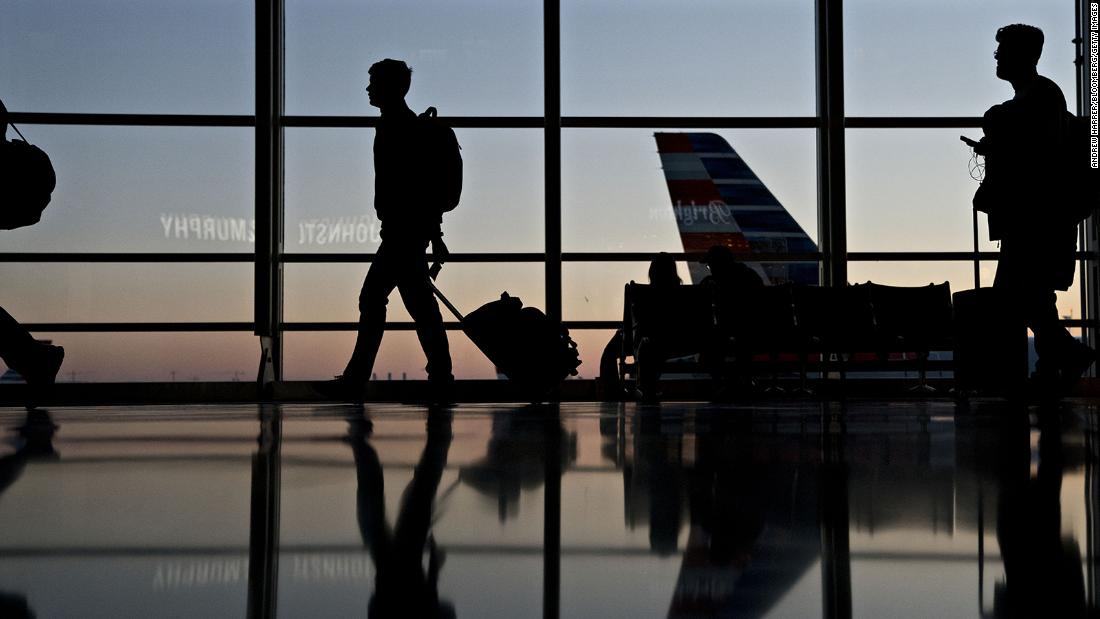
Business travel has disappeared. Will it ever come back?
CNN
Book tickets. Schedule meetings. Obsess over your presentation. Pack a carry-on. Rush to the airport. Check out the lounge. Priority boarding. Take off. Land. Get to the hotel. Meet clients. Seal the deal. Fly home. Repeat.
For countless executives and salespeople, business trips have been a bedrock of corporate life — loathed by some, loved by others but accepted by all as a necessity (sweetened by millions of frequent flyer miles). Employees needed to fly to meet clients, drum up new business and grab some face time with the boss at headquarters. Then came the coronavirus pandemic, which grounded travelers and forced many companies to find news ways of doing things. Zoom replaced face to face meetings, even if there is something awkward about video chats. Phone calls filled the gaps. Clients stayed clients, deals got done and revenue rolled in.

Haitian security forces on Wednesday bombed three houses belonging to top gang leader Jimmy “Barbecue” Cherizier, local outlet Gazette Haiti reported on Wednesday, after unverified footage showed a large explosion in the capital Port-au-Prince.

Depending on how the department chooses to implement the change, costs could range from $10 million to $125 million, the CBO said in a letter to two Democratic senators.

Tensions flare in Minneapolis after federal agent shoots and injures man who allegedly assaulted him
Law enforcement and demonstrators clashed last night near where a federal agent shot and injured a man after he allegedly assaulted the agent. The city is reeling over last week’s fatal shooting by an ICE agent of Renee Good sparked nationwide protests. Follow for live news updates.

President Donald Trump seems to be running out of ways to assure everyone that he’s dead-serious about taking over Greenland.

Three-quarters of Americans say they oppose the US attempting to take control of Greenland, according to a new CNN poll conducted by SSRS, indicating that President Donald Trump’s push to expand America’s territory faces stiff headwinds with the public.

As millions of Venezuelans wait to see what will become of their economically and politically ravaged country, a battle has emerged between two female leaders for control over the nation’s future – and for the American president’s favor.

The Trump administration is preparing to use private military contractors to protect oil and energy assets in Venezuela rather than deploying US troops, according to two sources familiar with the plans, setting up a potential boon for security firms with experience in the region and ties to the administration.

Senate Republicans blocked an effort to curb the Trump administration’s military action in Venezuela, a victory for the president who was incensed that some Republicans tried to tie his hands on a key foreign policy.

A federal three-judge panel on Wednesday allowed California to use a new voter-approved US House map that is designed to boost Democrats in the 2026 midterms.

Maria Corina Machado, the Venezuelan opposition leader and 2025 Nobel Peace Prize winner, arrives in Washington this week for high-stakes talks with US President Donald Trump on the future of Venezuela following the ouster of Nicolás Maduro. The meeting comes after Trump surprised many by allowing Maduro’s vice president, Delcy Rodríguez, to assume control, dashing opposition hopes for a new democratic era.

A judge decided not to issue a temporary restraining order after Minnesota and the Twin Cities sued federal officials, claiming their immigration enforcement operation involves warrantless arrests and excessive force.

After an Immigration and Customs Enforcement (ICE) agent shot and killed Renee Nicole Good in Minneapolis one week ago, reactions on social media and among politicians and political influencers rapidly polarized.

Most Americans see an immigration officer’s fatal shooting of Minneapolis resident Renee Good as an inappropriate use of force, a new CNN poll conducted by SSRS finds. Roughly half view it as a sign of broader issues with the way US Immigration and Customs Enforcement is operating, with less than one-third saying that ICE operations have made cities safer.