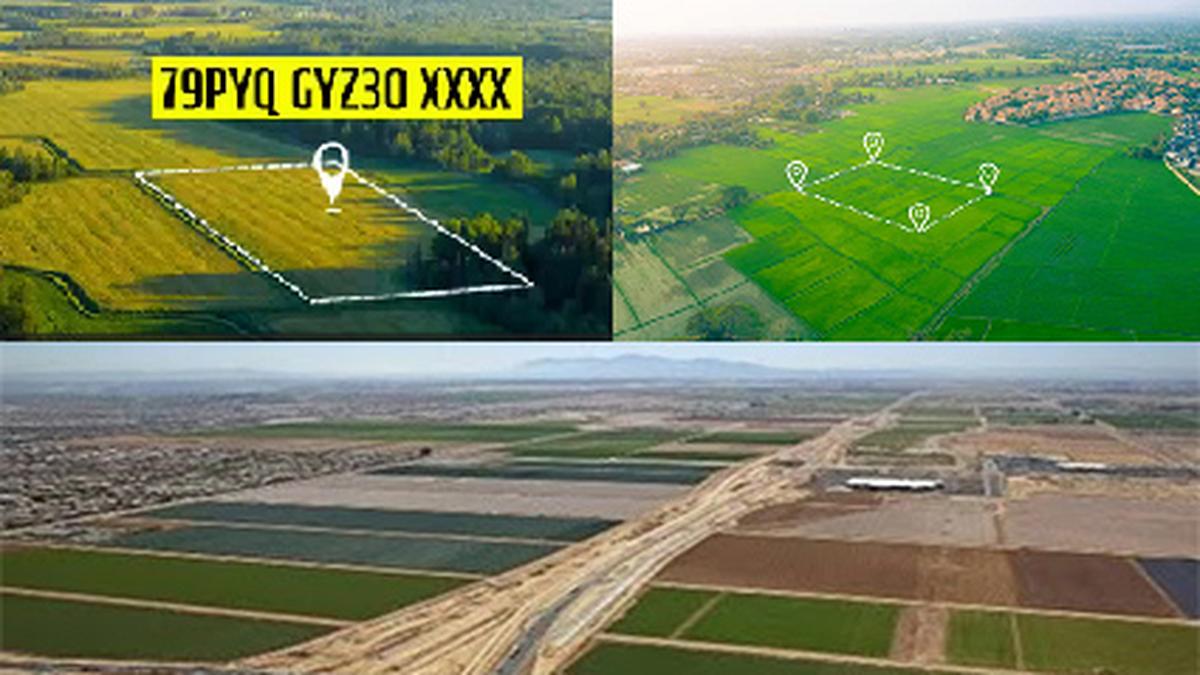
Budget 2024: Urban, rural land reforms ‘welcome move’ by government
The Hindu
The 2024-2025 Union Budget promises land reforms, including digitization, mapping, and modernization, to improve land administration and planning.
The 2024-2025 Union Budget presented by Finance Minister Nirmala Sitharaman promised a few reforms related to land and land use in the country ranging from their identification to planning and potentially drawing from multiple domains.
Ms. Sitharaman said “land-related reforms and actions, both in rural and urban areas, will cover land administration, planning and management, and urban planning, usage and building bylaws”. According to her, these activities are to be completed in three years with “appropriate fiscal support”.
She added that “rural land-related actions will include assignment of unique land parcel identification numbers or Bhu-Aadhaar for all lands, digitisation of cadastral maps, survey of map sub-divisions as per current ownership, establishment of land registry, and linking to the farmers registry”.
On the urban front, the Minister continued saying: “Land records...will be digitised with GIS mapping. An IT-based system for property record administration, updating, and tax administration will be established. These will also facilitate improving the financial position of urban local bodies.”
Ms. Sitharaman also said that on the back of a successful pilot project, the Indian government “in partnership with States will facilitate the implementation of the Digital Public Infrastructure (DPI) in agriculture for coverage of farmers and their lands in 3 years.” This programme will include a “digital survey” of the kharif crop in 400 districts and the land details being brought into a “land registry”.
Ms. Sitharaman said these actions will “facilitate credit flow and other agricultural services” vis-a-vis rural land.
“Incentivising States for action on reforms around land, in both rural and urban areas, is a welcome move,” Deepa Jha, who works on land governance issues at the Indian Institute of Human Settlements, Bengaluru, told The Hindu. “It also points towards a recognition that States are the key actors on these issues, and that approaches and constraints can vary across States.”


Vibha Batra’s latest book, Spotless (Hachette India) is a novel in verse for young adults

In its first edition, the Madras Art Salon spotlights the works of journalist and artist Narayan Lakshman at The Botanical Club, a social space in the British Deputy High Commission, Chennai

Cholesterol enhances melanoma cell invasion by making nuclei squishier, revealing a potential treatment target in cancer progression.

The designers reinterpret the Swedish artist’s symbolic forms and colour energy through contemporary resortwear silhouettes

Discover the inspiring legacy of Bibha Chowdhuri, a pioneering woman in physics and a trailblazer in STEM history.

Discover the inspiring legacy of Bibha Chowdhuri, a pioneering woman in physics and a trailblazer in STEM history.

Ashdeen’s Spring 2026 collection features saris inspired by the designer’s Parsi gara archive

Red ochre burials, ritual markings and myths across cultures show that red repeatedly marks liminal thresholds such as puberty, sacrifice and death; anthropologists argue that the colour functions as a technology of collective ritual and value, binding communities through shared symbolic acts

India approves 23 institutions for quantum labs under the National Quantum Mission, aiming to advance quantum technology and research.

India approves 23 institutions for quantum labs under the National Quantum Mission, aiming to advance quantum technology and research.

The Gaza conflict exacerbates environmental damage, emitting millions of tonnes of CO2 and threatening climate stability in West Asia.

Chefs and cookery experts share smart kitchen hacks, hybrid cooking methods and appliance tips to help households reduce LPG use without compromising on food

Discover groundbreaking research on Titan's lakes, bat vaccinations, and the unique aroma of ripening bananas in just one minute.