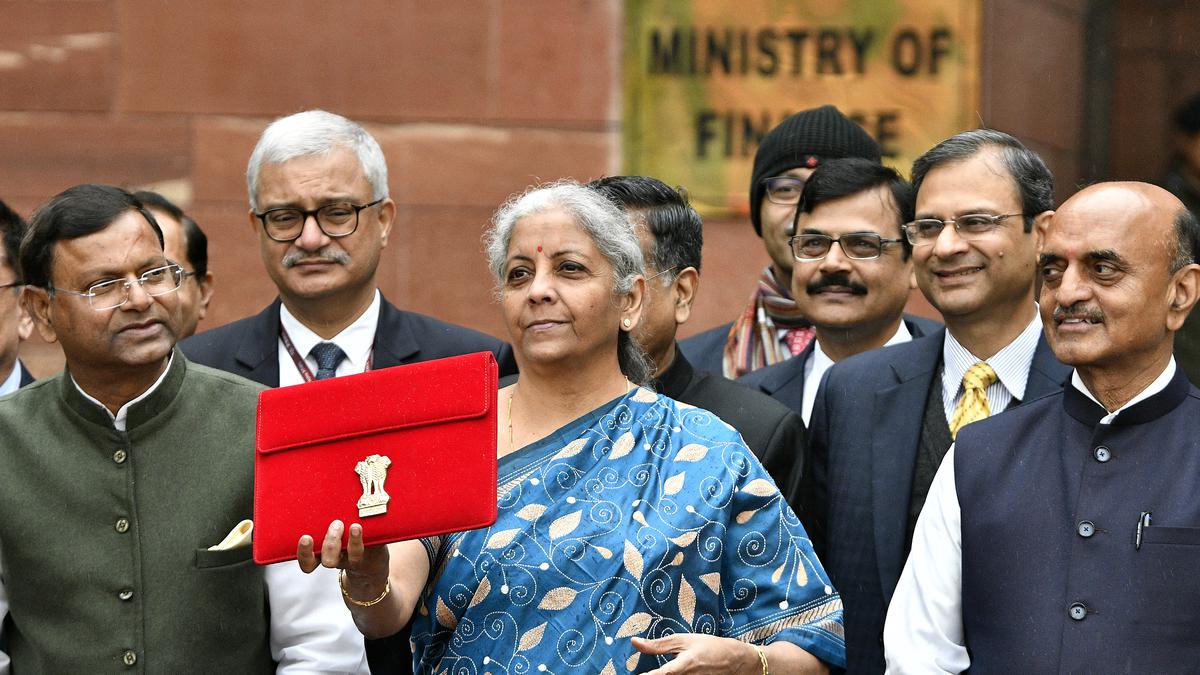
Budget 2024 | Government to withdraw certain long-pending, un-reconciled direct tax demands
The Hindu
Finance Minister Nirmala Sitharaman proposes to withdraw small, non-reconciled and disputed direct tax demands, benefiting about a crore taxpayers.
Whilst maintaining the status quo with respect to direct and indirect taxes, Finance Minister Nirmala Sitharaman in her maiden interim budget presentation proposed to withdraw small, non-reconciled and disputed direct tax demands. This implies tax demands of up to ₹25,000 pertaining to the period up to FY 2009-10, and up to ₹10,000 for FY 2011 to 2015 — would be withdrawn. Ms Sitharaman held that that the moves were part of the treasury’s intent to improve ‘ease of living and doing business’.
Also read: FM Nirmala Sitharaman delivers her shortest Budget speech till date
This turned out to be the major policy announcement on February 1 as Ms. Sitharaman maintained the status quo for direct and indirect taxes, including import duties.
Elaborating the rationale for the withdrawal, she told the House that there existed a “large number of petty, non-verified, non-reconciled or disputed direct demands”. Many of which went as far back as 1962., she said, as they continue to remain on the books, they were “causing anxiety to honest taxpayers and hindering refunds of subsequent years.”
The Finance Minister said the move would benefit “about a crore taxpayers”.
Gouri Puri, Partner at law firm Shardul Amarchand Mangaldas & Co. told The Hindu that the issue (about direct tax demands) has been pertinent to smaller taxpayers. Further, this would help address “legacy demands” that have been existing in the system but might be lacking merit. “There are clients that have non reconciled demands that have not been resolved for five, six or may be ten years,” she said. “The concerned officer will now have an administrative basis to resolve such tax demands,” Ms. Puri added. Terming it as a “welcome move”, Ms. Puri said, “It may not be worthwhile for the government or taxpayers’ time or effort to keep such demands pending or disputed.”
Before announcing the tax proposals, Ms. Sitharaman had highlighted the government’s prerogative to improve taxpayer services. She pointed to how the “age-old jurisdiction-based assessment system” was transitioned to “faceless assessment and appeal”. This, according to her, imparted greater efficiency, transparency and accountability. The finance minister also said the introduction of updated income tax returns, a new form 26AS and prefilling of tax returns have made filing “simpler and easier”. Further, the average processing time for returns stands reduced from 93 days, as observed in 2013-14, to 10 days at present, she stated.


The Thane police have arrested two co-founders of cryptocurrency exchange platform CoinDCX in connection with an alleged fraud of Rs 71.6 lakh, officials said

Meta Chief Executive Mark Zuckerberg is building a CEO agent to help him do his job, the Wall Street Journal reported

Insurance penetration and density are often misunderstood and do not reveal how many families are insured or whether they would be financially secure if the main earning member were to die. The real issue is not reach but adequacy, as households may have life insurance but not enough cover to replace lost income, leaving them financially vulnerable.

Five top firms lose ₹1 lakh crore in market value, with HDFC Bank experiencing the largest decline of ₹56,124.48 crore.

L&T confirms 95% of its West Asia project sites are safe, while addressing logistics challenges amid ongoing regional conflicts.

Mines Ministry to auction 19 critical mineral blocks on March 23, expanding strategic resources for clean energy and technology sectors.

Mines Ministry to auction 19 critical mineral blocks on March 23, expanding strategic resources for clean energy and technology sectors.

Five top firms lose ₹1 lakh crore in market value, with HDFC Bank experiencing the largest decline of ₹56,124.48 crore.

HDFC Bank terminates three senior officials over client onboarding issues at its DIFC branch amid ethical concerns following chairman's resignation.

Air India CEO warns of potential flight cuts and reduced travel demand due to rising fuel costs amid ongoing Gulf conflict.

Options are widely used by retail traders to speculate on the value of the stock for immediate gains and such behaviour in large scale can distort the market

India achieves 1 billion tonne coal production for the second consecutive year, ensuring stable energy supply and economic growth.

Generic drugmakers in India launch affordable Semaglutide versions, targeting a $1 billion diabetes and weight loss market.