Budget 2024-25: A look at the sector-wise allocations in ten charts
The Hindu
Analysis of Union Budget 2024 impact on sectors and schemes through graphs, highlighting changes in allocations and expenditures.
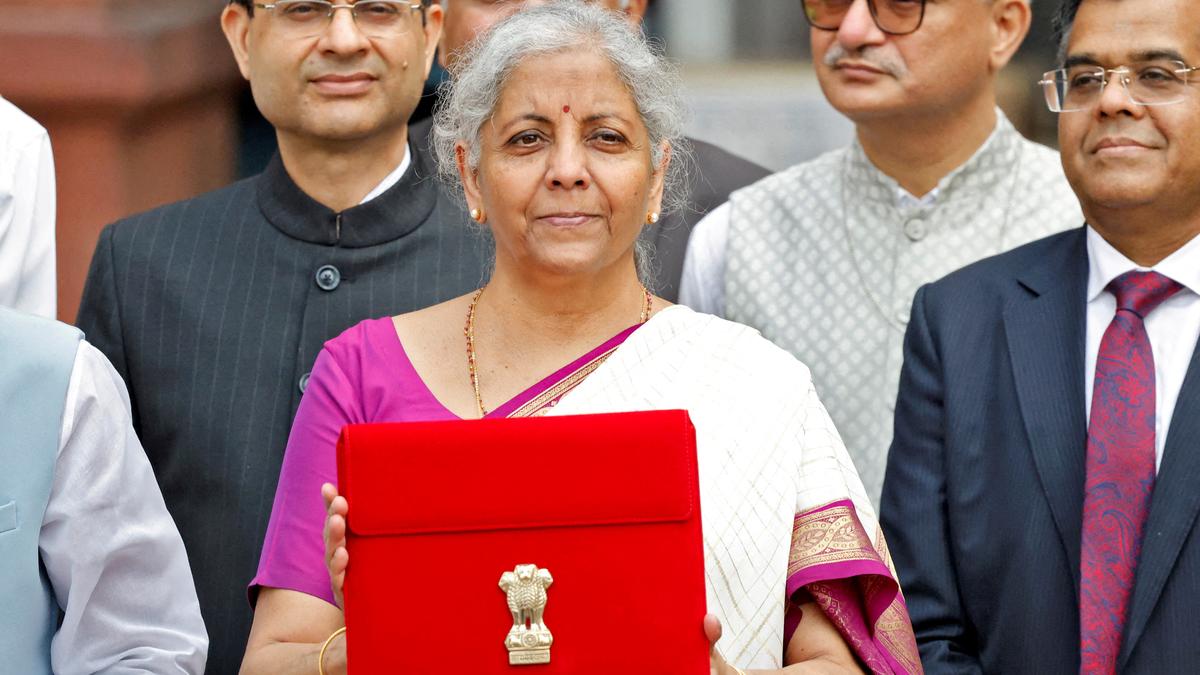
Union Finance Minister Nirmala Sitharaman, on Tuesday, presented the first Union Budget of the third term of the Narendra Modi-led NDA government. The Hindu Data team has compiled a series of graphs to analyse the impact of the Budget on select sectors and schemes.
Data shows that expenditure as a share of the total budget on infrastructure has increased. In contrast, expenditure on major schemes in the social sectors, which includes education, pension and health, have either stagnated or declined. Spending on agriculture too, when considered as a share of the total budget, has stagnated.
Before delving into individual sectors and schemes, the graph below provides an overview.
The graph below depicts the budgeted expenditure (Rs crore) for FY25BE and the change from FY24RE in percentage points. The bigger the rectangle, the higher the allocation for a sector. The deeper the blue, the higher the increase compared with FY24RE. The deeper the red, the higher the decrease compared with FY24RE.
As usual, interest payments garnered a lion’s share of the budget this year. In absolute figures, Rs 11,62,940 crore was allocated for interest payments. If expressed as a share of FY25BE’s total Budget, it comes to 24.12%, which is 0.62 percentage points more than its share in FY24RE. Apart from interest payments, the transport sector formed the bulk of the expenditure in FY25BE at 11.29%. However, transport’s share in the total Budget came down by 0.4% points from last year.
Click to subscribe to our Data newsletter
The allocation to agriculture remained stagnant at around 3.1% of the total budget. Allocation to flagship schemes such as Pradhan Mantri Fasal Bima Yojana (PMFBY) and Pradhan Mantri Kisan Samman Nidhi (PMKSN), as a share of total budget, declined in FY25BE.


L&T confirms 95% of its West Asia project sites are safe, while addressing logistics challenges amid ongoing regional conflicts.

Mines Ministry to auction 19 critical mineral blocks on March 23, expanding strategic resources for clean energy and technology sectors.

Mines Ministry to auction 19 critical mineral blocks on March 23, expanding strategic resources for clean energy and technology sectors.

Five top firms lose ₹1 lakh crore in market value, with HDFC Bank experiencing the largest decline of ₹56,124.48 crore.

HDFC Bank terminates three senior officials over client onboarding issues at its DIFC branch amid ethical concerns following chairman's resignation.

Air India CEO warns of potential flight cuts and reduced travel demand due to rising fuel costs amid ongoing Gulf conflict.

Options are widely used by retail traders to speculate on the value of the stock for immediate gains and such behaviour in large scale can distort the market

India achieves 1 billion tonne coal production for the second consecutive year, ensuring stable energy supply and economic growth.

Generic drugmakers in India launch affordable Semaglutide versions, targeting a $1 billion diabetes and weight loss market.

Indian and Asian refiners eye Iranian oil purchases as U.S. waives sanctions amid energy crisis linked to the Iran-Israel war.

Iran war impacts pesticide prices, warning of a 20-25% rise and increased risk of counterfeit products during the kharif season.

India's forex reserves fell by $7 billion to $709.76 billion, according to RBI data for the week ending March 13.

Natco Pharma will launch its Semaglutide injection (multi dose vials) in the domestic market on Saturday.