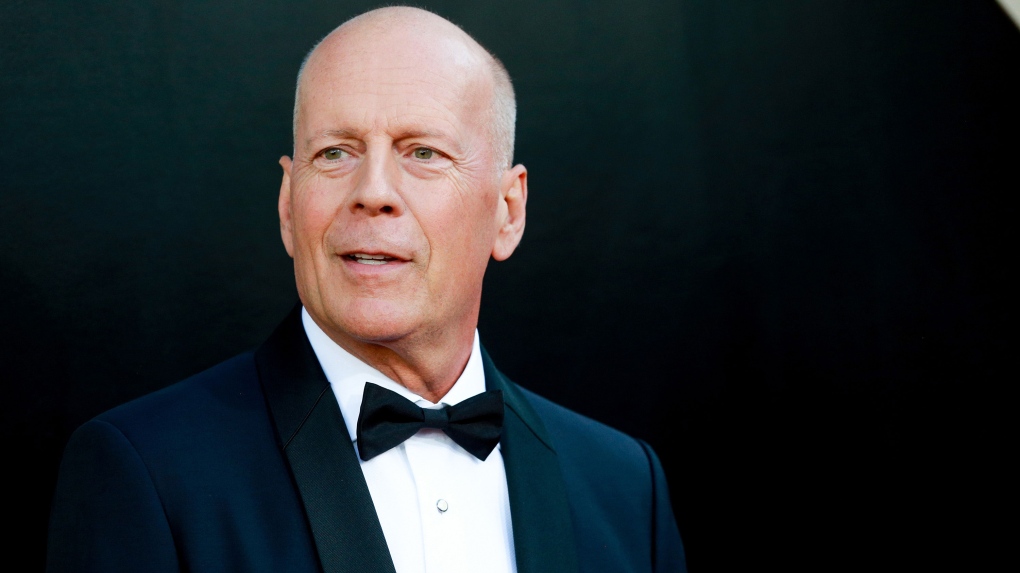
Bruce Willis has a progressive brain condition you may not have heard of
CTV
After retiring from acting in March 2022 due to a speaking disorder called aphasia, Bruce Willis, 67, has since been diagnosed with frontotemporal dementia, his family announced Thursday.
After retiring from acting in March 2022 due to a speaking disorder called aphasia, Bruce Willis, 67, has since been diagnosed with frontotemporal dementia, his family announced Thursday.
"Since we announced Bruce's diagnosis of aphasia in spring 2022, Bruce's condition has progressed," the Willis family noted in a statement. "Unfortunately, challenges with communication are just one symptom of the disease Bruce faces. While this is painful, it is a relief to finally have a clear diagnosis."
Frontotemporal dementia, or FTD, is a group of disorders caused by a buildup of tau and other brain cell destroying proteins in the brain's frontal lobes (behind your forehead) or temporal lobes (behind your ears). The condition typically strikes between the ages of 45 and 64, according to Alzheimer's Research U.K..
"The most common dementia for people under 60, FTD can cause challenges in communication, as well as changes to one's behavior, personality, or movement," according to a statement from the Association for Frontotemporal Degeneration.
People with FTD typically live six to eight years with the condition, according to the US National Institute on Aging. Between 10 per cent and 30 per cent of FTD cases are inherited. Other than genetics, there are no other known risk factors, although researchers are investigating what role the thyroid and insulin may play in the onset of the disease.
Because his symptoms began with difficulty speaking, Bruce Willis would be classified as having a type of FTD called primary progressive aphasia, said Dr. Henry Paulson, a professor of neurology and director of the Michigan Alzheimer's Disease Center at the University of Michigan.
"Aphasia really means problems with language, and that can vary from having trouble finding your words to understanding what people say. It can occur because of a tumor on the brain, a stroke or from a progressive neurodegenerative condition," Paulson said.


Sean Penn, who scored an Oscar for best supporting actor for “One Battle After Another” on Sunday, is in Ukraine to show support to the war-torn country, a senior Ukrainian official told AFP.

The 98th Academy Awards on Sunday saw “One Battle After Another” win big with six awards, including best picture, director, supporting actor and casting.

When Melanie Galeaz posted a fan edit of “Heated Rivalry,” she didn’t know it would lead to her dream job.

The 98th Academy Awards will take place in Los Angeles on Sunday, although things may be done a little differently on Hollywood’s biggest night.

The winners of the 46th Razzie Awards have been announced, and one film had a bit of a sweep when it comes to the best of the worst.

Richard Grenell, an ally of U.S. President Donald Trump who oversaw far reaching changes at the Kennedy Center that prompted many artists to abandon the iconic performing arts venue, will step down as the institution’s president.

Ryan Coogler understands what Sunday night could mean for Oscar history. He’s just not dwelling on it.

Quebec’s newest breakout band wears paper-mâché masks with giant phallic noses and polka-dot-speckled costumes that cover their entire bodies.

British rock star Morrissey won’t perform a concert in Valencia after festivities in the Spanish city kept him from getting a proper night’s rest, the former frontman of The Smiths said Thursday.

René Redzepi, founder and celebrity chef at the iconic Danish restaurant Noma that won three Michelin stars and other international accolades for its innovative “New Nordic” cuisine, has stepped down from his post following allegations of abuse and assault at the Copenhagen landmark.

When Montreal filmmaker Alison McAlpine first noticed a group of donkeys ambling around an observatory in Chile’s Atacama Desert, she couldn’t help but wonder what they were thinking.

Jill Biden is breaking her silence about Joe Biden’s decision to abruptly end his 2024 presidential reelection bid under pressure from Democrats concerned about his age, health and viability against Republican Donald Trump in a rematch of their 2020 campaign.

Joyce Borenstein spent hours in her Montreal-area apartment, surrounded by the paintings of her famous artist father, carefully watching every Oscar-nominated film from 2025.